




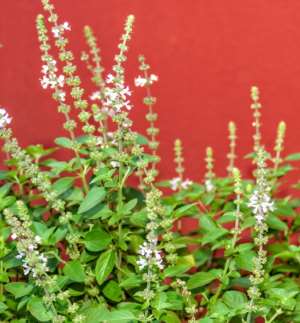
What Is Holy Basil (Nunum)?
Tulsi, more commonly known as Holy Basil and called Nunum in Ghana is considered one of the most powerful superfood herbs available. The name "Tulsi" means "The Incomparable One," reflecting its array of health benefits. It was a staple of Hindu mythology and considered sacred by Indian royalty. The plant belongs to the Labiatae (mint) family and is native to South Asia, where it has been used for centuries in Ayurvedic medicine for its ability to increase resilience, balance, and adaptive capacity. Widely found across West Africa, Nunum has long been a familiar herb in Ghanaian homes and traditional medicine.
An Adaptogenic Herb
Holy Basil (Nunum) is classified as an adaptogenic herb meaning it helps the body function at its optimal level during times of stress by modulating the production of stress hormones like cortisol and adrenaline. Importantly, adaptogenic herbs don't directly alter mood; rather, they support the body's ability to cope.
Chronic, low-grade stress is a modern-day epidemic that creates sluggish metabolism, chronic inflammation, and abnormal immunity. Elevated cortisol levels are linked to digestive problems, leaky gut syndrome, increased appetite, weight gain, thyroid disorders, and accelerated brain degeneration. Many autoimmune conditions and cancers are also connected to chronically elevated stress hormones as a catalyst for abnormal immune responses.
Stabilizing Cortisol Levels
A key benefit of Holy Basil (Nunum) is its ability to lower and stabilize cortisol levels. High cortisol depletes the precursors to major hormones such as testosterone, progesterone, and estrogen, which can accelerate aging and contribute to sex hormone deficiency. Healthy individuals have cortisol that naturally peaks in the morning and remains consistently low through the day Holy Basil helps support this natural rhythm.
Anti-Cancer Properties
A 2007 study published in the Journal of Medicinal Food described Holy Basil's ability to combat cancer development. It significantly reduced the formation of cancerous micronuclei while increasing antioxidant levels and healthy enzyme activity.
Nunum is also a good source of ursolic acid, a compound with notable anti-cancer potential. Ursolic acid has been studied in relation to cancers of the skin, colon, breast, lung, cervix, prostate, esophagus, and pancreas. Specifically, it has been shown to reduce tumor size and distant organ metastasis of colorectal cancer cells, likely by blocking the expression of proteins needed for cancer cell survival, proliferation, and spread.
A Note of Caution
While the research on Holy Basil (Nunum) is promising, much of the cancer-related evidence remains preliminary largely based on laboratory and animal studies rather than large-scale human clinical trials. Anyone considering Nunum for a serious health condition should consult a qualified healthcare provider before use.
Mustapha Bature Sallama.
Medical/ Science Communicator,
Private Investigator, Criminal investigation and Intelligence Analysis.
International Conflict Management and Peace Building.USIP
[email protected]
+233-555-275-880

 Massive reactions as woman allegedly snatches her daughter’s boyfriend
 Chinese factory gutted by fire in Prampram
 2026 May Day: I will let the economic growth filter down to your pockets – Maha...
 Police kill 2, arrest 4 in Upper East robbery gang bust
 China opens tariff-free trade to nearly all African countries
 UG, KNUST and UCC lecturers to withdraw services over unpaid promotion arrears
 "24-hour economy markets will transform the economy" — Hon Jerry Ameko
 Mahama begins Eastern Region tour with May Day address and key projects
 Free Zones boss alleges political sabotage in Akosombo sub-station fire
 Akosombo substation fire an opportunity to modernise power infrastructure — Maha...


