




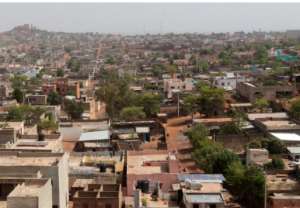
Since April 25, 2026, a series of coordinated attacks have been carried out by the Azawad Liberation Front (FLA) and the al-Qaeda-linked Jama'at Nusrat al-Islam wal-Muslimin (JNIM) across multiple locations in Mali, making it the largest offensive since the 2012 rebellion. Defense Minister Gen. Sadio Camara was killed when a suicide bomber drove a vehicle into his residence in Kati, near Bamako. He died alongside members of his family. Other senior officials, including military ruler Gen. Assimi Goïta, were reported to have gone into hiding.
The attacks targeted sites spanning from Bamako in the south to central and northern Mali. In the north, FLA forces reclaimed Kidal, a longstanding symbolic and strategic stronghold.
A Government Under Siege
Analysts have called the coordinated nature of the offensive "a very dangerous development." Security expert Ulf Leasing noted that since the crisis began in 2012, security has been "degrading" every year, and the government has little control over large areas of the country.
The military government has remained tight-lipped, and its future appears uncertain. Even if the military government remains intact, such attacks will strain internal cohesion, expose vulnerabilities, and spur uncertainty among both elites and the broader population.
Years of Deterioration
In August 2020, military officers led by Gen. Goïta seized power, later breaking ties with France and expelling the UN peacekeeping mission MINUSMA. Mali's junta turned to Russian-backed mercenaries the Wagner Group, now known as Africa Corps forces that have been accused of waging a "climate of terror and complete impunity."
Due to pressure on the Russia-Ukraine front, some Russian mercenaries are being withdrawn from Mali, which is directly affecting the security situation on the ground. In September 2025, JNIM imposed an economic and transport blockade around Mali's main cities. The Goïta government was forced to close all schools in Bamako between October and November, while embassies of the United States and several European countries took precautionary measures.
What's at Stake
The fall of Bamako could subject the country of 25 million people to ultraorthodox Islamist rule a lifestyle foreign to most Malians and could create an expansive safe haven for international terrorist networks to train, recruit, and stage attacks beyond Mali's borders.
According to this year's Global Terrorism Index, the Sahel region remains the epicenter of terrorist activity worldwide and accounted for more than half of all terrorism-related deaths in 2025. UN humanitarian operations in Mali are currently targeting support for around 3.8 million people, out of more than five million in need.
Analysts argue the insurgent threat now exceeds the capacity of the Malian military to counter on its own, and poses heightened risks for Mali's coastal West African neighbors.
Mustapha Bature Sallama.
Medical/ Science Communicator,
Private Investigator, Criminal investigation and Intelligence Analysis.
International Conflict Management and Peace Building.USIP
[email protected]
+233-555-275-880

 Massive reactions as woman allegedly snatches her daughter’s boyfriend
 Chinese factory gutted by fire in Prampram
 2026 May Day: I will let the economic growth filter down to your pockets – Maha...
 Police kill 2, arrest 4 in Upper East robbery gang bust
 China opens tariff-free trade to nearly all African countries
 UG, KNUST and UCC lecturers to withdraw services over unpaid promotion arrears
 "24-hour economy markets will transform the economy" — Hon Jerry Ameko
 Mahama begins Eastern Region tour with May Day address and key projects
 Free Zones boss alleges political sabotage in Akosombo sub-station fire
 Akosombo substation fire an opportunity to modernise power infrastructure — Maha...


