




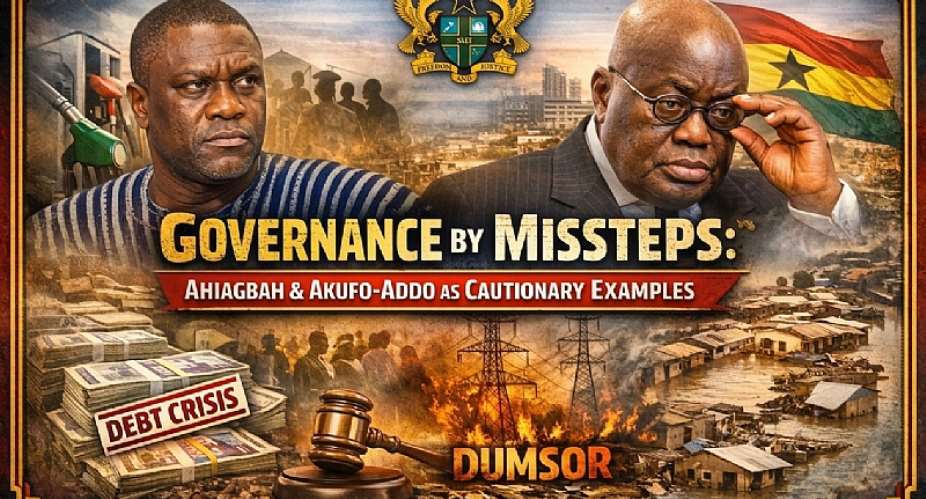
Prepared with solemn duty and civic responsibility, this article is submitted to the Ghanaian public as a reminder: leadership must be measured not by rhetoric or protocol, but by the lived realities of citizens. When political actors dismiss accountability, trivialize cultural respect, or fail to cushion economic hardship, the nation suffers.
Richard Ahiagbah’s Troubling Record
Church and Politics: On April 28, 2026, Ahiagbah insisted there should be no tension between politicians and the church. Yet his own party’s record of governance has often undermined the moral authority of institutions meant to safeguard the people.
Economic Hardship: He called for cushioning citizens against rising petroleum prices, but this plea rings hollow when juxtaposed with his defense of a government that has failed to deliver promised relief.
Criticism of NDC: His claim that Ghana is “worse off under the NDC government” ignores the NPP’s own failures, including economic mismanagement, corruption scandals, and financial instability.
Voter Registration Controversy: In May 2024, Ahiagbah admitted voting in 2020 despite his name not being on the register. He blamed an administrative error, but never apologized. This undermines public trust in electoral integrity.
Civil Rights: His denunciation of “tyrannical” silencing of journalists is ironic, given his party’s own record of harassment of dissenting voices.
Akufo‑Addo’s Legacy of Insensitivity
Protocol with Chiefs: Viral videos in 2024 showed him demanding chiefs stand before he greeted them. Traditional leaders condemned this as “culturally reprehensible,” yet no apology was offered.
Akosombo Dam Disaster Remarks: Visiting flood victims in Mepe in October 2023, he quipped that since they did not vote for him, he had no obligation to be there. Defenders claimed it was a joke, but to victims of disaster, it was a cruel dismissal.
Accountability Post‑Presidency: Though he directed appointees to remain available for accountability, his own conduct often reflected arrogance rather than humility.
The Broader Implications
Economic Stewardship: Citizens continue to face unfair DSTV fee hikes, cocoa farmer arrears, and rising petroleum costs. Leadership has failed to cushion these burdens.
Democratic Integrity: Electoral controversies, dismissive rhetoric, and cultural insensitivity erode trust in institutions.
Public Interest: Governance must prioritize citizens, not party image. Both Ahiagbah and Akufo‑Addo exemplify how political actors can become detached from the realities of ordinary Ghanaians.
Key Failures of the NPP Government
1. Economic Mismanagement
Debt Surge: Ghana’s public debt rose from 56% of GDP in 2016 to over 80% by 2023, raising sustainability concerns.
Currency Depreciation: The cedi fell from ₵4.2 per USD in 2016 to about ₵12 per USD by 2023, worsening inflation.
Inflation: Double-digit inflation increased the cost of living, hitting ordinary Ghanaians hardest.
Profligate Spending: The National Cathedral project ballooned from $100m to over $400m, diverting funds from essential services.
2. Corruption and Governance Failures
Contracts for Sale Scandal (2019): The Public Procurement Authority CEO was caught selling government contracts for personal gain.
Agyapa Royalties Deal: Criticized for lack of transparency and conflicts of interest.
COVID-19 Funds Misuse: Billions of cedis were unaccounted for, according to Auditor-General reports.
3. Energy Sector Failures
Persistent Dumsor: Despite promises, power outages continued, undermining productivity.
Generation Capacity: The NPP did little to expand electricity generation capacity, relying heavily on infrastructure inherited from the NDC.
Debt to IPPs: Mismanagement led to arrears owed to independent power producers, destabilizing the sector.
4. Financial Sector Crisis
Banking Collapse: The financial sector “haircut” wiped out savings, including pensioners’ funds, and led to widespread job losses.
5. Institutional Weakening
Audit Service Reports: Over GH₵12 billion in unaccounted funds across ministries and agencies.
Judiciary Interference: Reports of bribery and political influence eroded confidence in justice delivery.
Conclusion
Ghana deserves leaders who respect cultural traditions, uphold electoral integrity, and cushion citizens against economic hardship. Richard Ahiagbah’s evasions and Nana Akufo‑Addo’s insensitivity stand as stark reminders of what governance should never become. The NPP’s failures in economic management, corruption control, energy stability, financial sector oversight, and institutional integrity further underscore the need for vigilance and accountability.
Ceremonial Closing Statement
Prepared with solemn duty and civic responsibility, this article is submitted to the Ghanaian public as a reminder: justice delayed must not become justice denied, and governance without accountability is governance without legitimacy.
✍️ Retired Senior Citizen
For and on behalf of all Senior Citizens of the Republic of Ghana 🇬🇭
Teshie‑Nungua
[email protected]

 Massive reactions as woman allegedly snatches her daughter’s boyfriend
 Chinese factory gutted by fire in Prampram
 2026 May Day: I will let the economic growth filter down to your pockets – Maha...
 Police kill 2, arrest 4 in Upper East robbery gang bust
 China opens tariff-free trade to nearly all African countries
 UG, KNUST and UCC lecturers to withdraw services over unpaid promotion arrears
 "24-hour economy markets will transform the economy" — Hon Jerry Ameko
 Mahama begins Eastern Region tour with May Day address and key projects
 Free Zones boss alleges political sabotage in Akosombo sub-station fire
 Akosombo substation fire an opportunity to modernise power infrastructure — Maha...


