




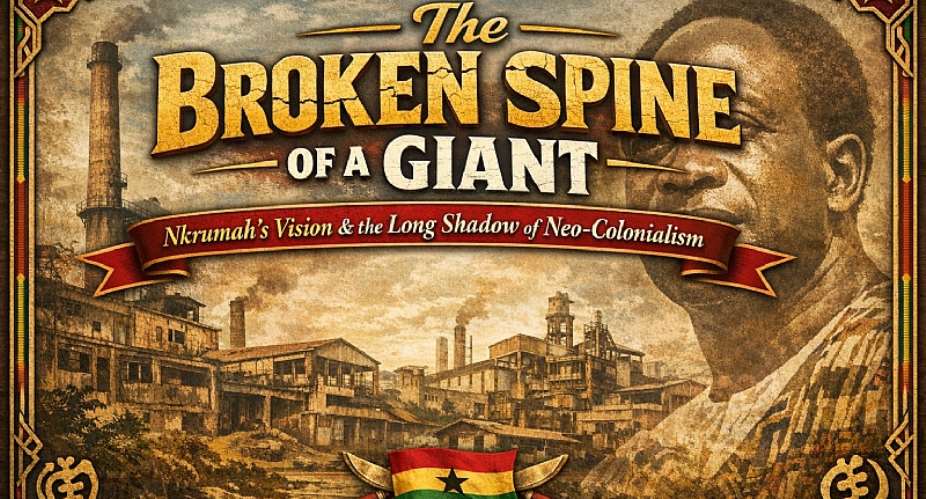
Dr. Kwame Nkrumah’s vision for Ghana was not merely political independence but economic liberation. He believed that without industrial self-reliance, freedom would remain incomplete. Through the Ghana Industrial Holding Corporation (GIHOC), Nkrumah sought to build an auto-centric economy that processed Ghana’s raw materials into finished goods, creating jobs, expertise, and national pride. Yet, this dream was violently interrupted by neo-colonial forces determined to keep Africa dependent.
Nkrumah’s Industrial Vision
Decolonize the Economy: Replace dependence on Western finished goods with Ghanaian-made products.
Unify the Nation: Establish industries across regions to ensure balanced development.
Empower the People: Provide skilled employment and technical expertise for Ghanaian workers.
GIHOC Companies Established by Nkrumah
Aboso Glass Factory
Nsawam Cannery
Bolgatanga Meat Products
Takoradi Boatyards
Kumasi Jute Factory
Wenchi Tomato Factory
Saltpond Ceramics
Asutsuare Sugar Factory
Tema Steelworks
Ghana Textile Printing (GTP)
Bonsa Tyre Factory
State Fishing Corporation
State Gold Mining CorporationState Housing Corporation
Ghana Airways
(Note: This list represents key examples; GIHOC had over 22 divisions across multiple sectors.)
The Hand of Neo-Colonialism
1966 Coup: Western intelligence supported the overthrow of Nkrumah, halting his industrial revolution.
Rebranding Factories: World-class industries were dismissed as “white elephants.”
Divestiture Era: IMF and World Bank policies pushed Ghana to sell or abandon factories.
Modern Struggles
Debt Trap: Reliance on external loans undermines sovereignty.
Import Dependency: Ghana imports goods once produced locally.
Policy Inconsistency: Frequent changes in government derail long-term industrial plans.
A Cry to Ghanaian Youth
Ghanaian youth must remain vigilant against the lure of foreign lands that promise greener pastures but often lead to exploitation. The narrative of prosperity abroad is frequently a mirage designed to drain Africa of its brightest minds and most valuable resources.
The Hidden Cost of Migration
Brain Drain: Skilled professionals leave, weakening Ghana’s capacity to industrialize and innovate.
Resource Looting: Foreign powers profit from Africa’s wealth while youth labor enriches economies abroad.
Cultural Erosion: The pride of building Ghana is lost when our youth are persuaded to abandon their heritage.
The Call to Action
Stay Rooted: Recognize that Ghana’s soil holds the wealth of cocoa, gold, oil, and human ingenuity.
Build Locally: Channel energy into reviving industries and creating new enterprises at home.
Guard Against Exploitation: Understand that promises of quick wealth abroad often mask systems designed to loot billions from Africa.
The story of GIHOC is not one of failure but of interruption. Ghanaian youth must understand that emancipation will not come from foreign aid but from self-reliance and unity. The rusting machines of our past remind us: “We once could, and we can again.” To honor Nkrumah’s legacy, we must finish the work of industrializing Ghana and reclaim our economic destiny. True emancipation lies not in foreign lands but in the determination to finish Nkrumah’s work here at home. Ghana’s future depends on her youth standing firm, vigilant, and united in the mission of self-reliance and national pride.
✍️ Retired Senior Citizen
For and on behalf of all Senior Citizens of the Republic of Ghana 🇬🇭
Teshie-Nungua
[email protected]

 Massive reactions as woman allegedly snatches her daughter’s boyfriend
 Chinese factory gutted by fire in Prampram
 2026 May Day: I will let the economic growth filter down to your pockets – Maha...
 Police kill 2, arrest 4 in Upper East robbery gang bust
 China opens tariff-free trade to nearly all African countries
 UG, KNUST and UCC lecturers to withdraw services over unpaid promotion arrears
 "24-hour economy markets will transform the economy" — Hon Jerry Ameko
 Mahama begins Eastern Region tour with May Day address and key projects
 Free Zones boss alleges political sabotage in Akosombo sub-station fire
 Akosombo substation fire an opportunity to modernise power infrastructure — Maha...


