




Introduction
Ghana took a historic step in April 2025 when President John Dramani Mahama launched the Ghana Medical Trust Fund, popularly known as Mahama Cares. The (Act, 114) 2025, establishes a statutory fund to finance specialized care for chronic diseases like cancer, stroke, and kidney failure. It is primarily funded by 20% of the National Health Insurance Fund (NHIF) allocation, government, and donor funds, with a goal to fill gaps in specialist care. The promise was powerful: “No Ghanaian should have to choose between their health and financial ruin.”
The Fund targets what the National Health Insurance Scheme (NHIS) cannot fully cover: specialist treatment for cancers, kidney failure, heart disease, stroke, and other non-communicable chronic diseases (NCDs). With the average cost per patient hovering around GH₵ 53,000, the stakes are high; without intervention, 75% of families fall into poverty within five years of a diagnosis.[1]
Mahama Cares is not just necessary; it is already in motion. By December 2025, disbursements had begun, and 33 critical cancer patients received support during the pilot phase. Equipment is being procured and health workers are being trained—both core legal mandates of the Fund.
As the rollout expands, three priorities can strengthen the Fund’s design to ensure it delivers on the President’s promise to every Ghanaian.
1. Ensure Age is Not a Barrier to Care
Health Minister Kwabena Mintah Akandoh announced that Mahama Cares will “prioritize specialist care for Ghanaians aged 18 to 45,” citing that this “most productive segment” now constitutes over 50% of NCD cases.
While that statistic is true, it is incomplete. If the 18–45 demographic represents 50% of cases, the remaining 50% are children and Ghanaians aged 46 and above.
Consider a 58-year-old seamstress in Kintampo diagnosed with breast cancer this January. She earns GH₵ 400 a month and is not on the LEAP program. Under current guidance, she waits. Under a fair system, she lives.
President Mahama himself stated that "everyone could be a beneficiary... anyone could be affected by non-communicable diseases." Furthermore, the Ghana Medical Trust Fund Act focuses on “chronic NCDs not covered by NHIS”—it sets no statutory age limit.
Global Precedent
Nations like the Philippines, Kenya, and India run similar catastrophic funds. None use age as a hard cut-off. Instead, they prioritize income. The Philippines’ Malasakit Centers assist any indigent patient, and Kenya’s Emergency, Chronic and Critical Illness Fund covers all SHIF members regardless of age.[2]
The Way Forward
Retain the 18–45 group as a “Tier 1 fast-track” to protect national productivity, but open a second tier to indigent Ghanaians of all ages. Policy should see patients, not birth certificates.
2. Use Poverty, Not Birthdays, to Set Eligibility
The Fund has an allocation of GH₵ 2.1–2.3 billion. At GH₵ 53,000 per patient, this covers roughly 40,000 people. Yet, Ghana has over 2 million citizens living with NCDs.
Rationing is inevitable, but the method matters. Age-based rationing is politically sensitive and medically arbitrary. Income-based rationing is equitable. A 25-year-old bank manager may have the means to pay; a 60-year-old subsistence farmer does not. The Fund should prioritize the farmer.
Ghana does not need a new bureaucracy to solve this. We already have means-testing through LEAP and the NHIS indigent exemption list.
The Recommendation
Adopt an “indigent-first” approach. If a patient is on the LEAP register, they should qualify automatically. For those above the poverty line, introduce a sliding co-pay: 80% support for ages 18–45, 50% for 46–65, and 30% for those 66+.
3. Publish the Rules to Build Public Trust
The Mahama Cares Taskforce was mandated to develop “clear eligibility and disbursement criteria to guarantee fairness.” Parliament passed the Ghana Medical Trust Fund Act in July 2025.
However, nine months after the launch, the specific eligibility rules remain inaccessible to the general public. We lack a clear definition of "indigent," a transparent application scoring system, and public data on which hospitals received equipment, from which suppliers, and at what cost.
While disbursements began in December 2025—which is legally sound—without public criteria and reporting, a "pilot" can begin to look like a "secret."
The Way Forward
To meet its mandate for transparency, the Ministry of Health should publish:
The full Eligibility Legislative Instrument (LI).
A live dashboard showing applications, approvals, and disbursements categorized by region, disease, and age group.
Procurement disclosures: Lists of equipment purchased, beneficiary facilities, and contract values.
Conclusion
Mahama Cares has the potential to be President Mahama’s defining health legacy. To succeed, the implementation must align with the President's original vision: a lifeline for everyone. By publishing the rules, prioritizing the poor, and removing age barriers, the government can ensure that Mahama Cares is not just a promise, but a reality that every Ghanaian can trust.
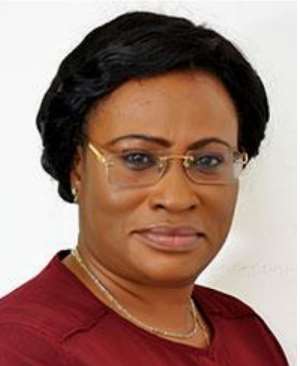
Author: Rebecca Y. Akatue ( Ph.D).
Email: [email protected]
References
1. Ghana News Agency. “Ghana Medical Trust Fund launched to protect lives, preserve dignity.” 29 April 2025. Data from three teaching hospitals shows average annual treatment costs for NCDs at approximately GH₵ 53,000.
2. Kenya News Agency. “Government streamlining Social Health Insurance Fund (SHIF).” 2024. The law established the Emergency, Chronic and Critical Illness Fund. SHIF requires mandatory registration for all Kenyans aged 18 and above with no upper age limit for benefits.


 “I have crocodile skin; insults don’t bother me” — President Mahama
 Police arrest 64 suspects, recover firearms in special operation at Achimota Mil...
 Madina MP receives medical attention after GIMPA collapse
 Bolgatanga: Man found dead by roadside in Sumbrungu as police investigate
 Ghana concludes cocoa freight negotiations for 2026/27 season
 Blakk Rasta accuses Gushegu NPP MP Alhassan Tampuli of funding Ghana Jollof atta...
 €225m Cocaine Shipment: Court to rule on bail application of six accused in 3.9-...
 BoG pilots cedi-based payment system for Ghana-China trade
 2026 BECE: Ten schools score zero percent in Adaklu as girls outperformed boys
 'Sceptics, naysayers, alarmists should be aware US ready to work with Ghana on r...


