




Operation Roaring Lion may have done what years of stalled diplomacy could not: badly damage Tehran’s enrichment infrastructure, reassert deterrence and remind the world why Israel still acts when others only talk.
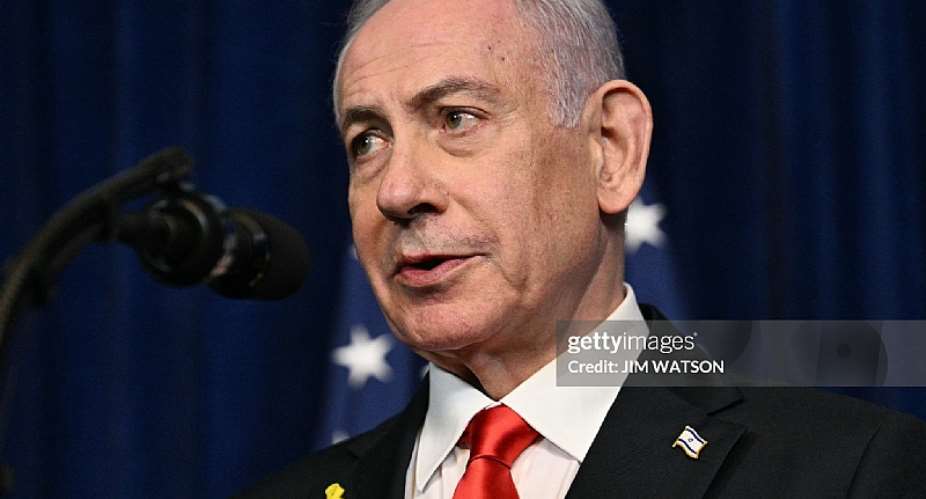
Benjamin Netanyahu’s claim was stark, defiant and impossible to ignore: Iran, he said, “does not have the ability to enrich uranium” and has “no possibility to produce missiles.” In wartime, such language is easy to dismiss as political theatre. That would be a mistake. Strip away the rhetoric, and what remains is a statement that may yet prove to be one of the defining strategic judgments of this conflict. If Israel has indeed severely disrupted Iran’s immediate enrichment capacity, then this is not merely another military exchange in a volatile region. It is a serious interruption of the most dangerous nuclear trajectory in the Middle East.
For years, the debate over Iran’s nuclear programme was conducted in the language of ambiguity, delay and procedural caution. Tehran enriched incrementally, denied aggressively, negotiated tactically and played for time. Western governments often became trapped in a cycle of concern without decisive consequence. Red lines were drawn, then blurred. Warnings were issued, then softened. Inspections were demanded, then diluted. Too often, diplomacy appeared less like a barrier to Iranian escalation than a process that failed to stop it.
Why “For Now” Is the Key Phrase
Netanyahu did not claim Iran’s nuclear ambitions had been permanently erased. He did not claim the Iranian nuclear threat had vanished forever. He made a narrower, and therefore more credible assertion: that Iran’s present ability to enrich uranium has been knocked offline, at least for now. That distinction matters.
In strategic terms, it matters enormously. A nuclear programme is not simply a political aspiration or a scientific ambition. It is an industrial ecosystem. It relies on centrifuge cascades, conversion facilities, power systems, feedstock handling, specialized engineering, production chains and the infrastructure required to keep the machine running. If those components are destroyed or severely degraded, enrichment is not merely slowed in the abstract; it can be interrupted at the operational level.
That is why “for now” should not be treated as a weakness in Netanyahu’s case. On the contrary, it is what makes his argument stronger. He is not declaring the permanent death of Iran’s nuclear dream. He is making a battlefield claim: that Israel may have shattered enough of the visible machinery to interrupt Iran’s current ability to move uranium further up the enrichment ladder. In the unforgiving logic of deterrence and proliferation, even a temporary interruption can be strategically significant. Sometimes history turns not on permanent victories, but on who controls the next six months.
Operation Roaring Lion Was Strategic Disruption
Too much commentary on the Middle East falls into lazy binaries: either everything changes or nothing does. Serious military action is rarely so simple. The real significance of Operation Roaring Lion is not that it produced a dramatic headline. It is that it appears to have targeted the industrial logic of Iran’s nuclear and missile enterprise. The official Israeli military campaign is publicly identified as Operation Roaring Lion, not “Lion’s Roar” and Israeli reporting has consistently used that name.
If the strikes have indeed severely damaged key nodes associated with Natanz, Fordow, Isfahan and related facilities, then Israel has done far more than send a warning shot. It has attacked the system itself. Nuclear programmes do not run on rhetoric; they run on continuity. They require electricity, calibration, engineering precision, uninterrupted maintenance, feedstock conversion, transportation and confidence that the infrastructure will survive long enough to produce strategic leverage.
Break that continuity, and you do not merely “set back” a programme in the abstract. You force it into disarray. You fracture timelines. You disrupt planning. You trigger fear and uncertainty within the regime’s own strategic bureaucracy. Suddenly, what was a steady climb towards nuclear-threshold status becomes a scramble for damage assessment, reconstitution, concealment and political messaging.
A Well-Earned Tribute to the IDF
There should be no hesitation in saying this plainly: the Israel Defense Forces deserve serious credit for what they appear to have accomplished.
Operation Roaring Lion is not a routine air raid. It is a broad, sustained and high-risk campaign against one of the region’s most heavily defended and strategically significant adversaries. Iran is not a militia. It is a large, ideologically driven state that has spent decades building air defences, dispersing strategic assets, hardening key facilities and expanding retaliatory missile capabilities.
And yet Israel struck with precision, tempo and extraordinary confidence.
This is where the IDF deserves not just polite acknowledgment, but genuine respect. Public reporting indicates the campaign has involved large-scale long-range air operations, repeated strike waves, sustained targeting of missile launchers and regime infrastructure and a level of operational coordination few militaries could easily replicate. The IDF has said hundreds of aircraft struck hundreds of targets in the opening phase, and later reported thousands of bombs dropped and hundreds of missile launchers hit in the course of the operation. Those figures come from Israeli military sources and should be treated as wartime claims, but if even broadly accurate, they point to a campaign of considerable scale and sophistication.
That is not necessarily propaganda. It may well be military excellence. Whatever one thinks of Netanyahu personally, the professionalism and nerve displayed by the men and women of the IDF in this campaign are difficult to dismiss.
Why the World’s Criticism Rings Hollow
One of the more exhausting habits of the international commentariat is to condemn Israel for acting while quietly benefiting from the consequences of its action. That hypocrisy is on display again.
Many of the same governments and analysts now warning darkly about escalation spent years tolerating the very conditions that made escalation increasingly likely. They spoke of restraint while Iran accumulated leverage. They urged patience while uranium stockpiles and enrichment levels rose. They insisted on process while the substance of non-proliferation eroded in plain sight. They invested in negotiations long after negotiations had ceased to function as a meaningful constraint.
This was not diplomacy in any serious strategic sense. Too often, it looked like drift disguised as statecraft.
At some point, delay stops being prudence and becomes surrender by instalments. Israel appears to have recognized that point before others were willing to admit it existed. That does not mean every consequence of this operation will be clean or manageable. It does mean Israel confronted a reality others preferred to postpone.
The Hard Truth
Still, sober analysis requires more than applause. A damaged programme is not necessarily a dead programme.
Iran may have temporarily lost the ability to enrich uranium at industrial scale, if Netanyahu’s claim proves accurate. But immediate incapacity is not the same as permanent strategic defeat. Nuclear infrastructure can be destroyed. Scientific knowledge cannot. Centrifuge halls can be reduced to rubble. Engineering expertise survives. Procurement networks can be disrupted. Institutional memory remains. A state that has spent years preparing for sabotage, sanctions and covert attack does not simply lose the will or capacity to rebuild because one campaign lands hard.
This is why triumphalist language must be resisted. Israel may have severely damaged the visible machinery of enrichment. But the invisible assets of the programme, its people, its technical learning, its clandestine habits, its procurement culture and its regime-level determination, are far harder to neutralize.
The Strategic Verdict
So, was Netanyahu right? In the narrow and immediate sense, he may yet prove to be. Iran’s near-term ability to enrich uranium at industrial scale may have been severely disrupted. Its ballistic-missile infrastructure may also have suffered serious degradation. Netanyahu publicly asserted both points, though he did not present evidence at the time of his press conference and full independent verification remains elusive. That is the key distinction serious observers should keep in mind.
But let us be equally blunt: “for now” is doing a great deal of strategic work.
Israel may not have ended Iran’s nuclear ambitions forever. No military campaign, however brilliant, could guarantee that. What it may have done is something both more limited and more profound: it may have broken momentum, restored deterrence and forced Tehran off the escalator of nuclear brinkmanship. That is no trivial achievement.
Because the real story is not that Israel has solved the Iran problem for all time. The real story is that Israel may have done, with remarkable skill and undeniable resolve, what much of the world failed to do for years: buy time, impose consequence and remind a dangerous regime that there are still limits. In this region, that may prove to be not merely a military success, but a strategic turning point.
The writer is a journalist, journalism lecturer, and a member of the Ghana Journalists Association, the Society of Professional Journalists, Investigative Reporters and Editors and the African Journalism Education Network. Email: [email protected]


 'Some NPP members did not vote in 2024 election because I left NPP' – Alan Kyere...
 How €225 million cocaine from Ghana traced to fugitive Dutch drug kingpin based ...
 'Galamsey remains an existential threat' – Gyampo demands more action
 'I’m like Akpeteshie, I don’t need adverts to win' – Hawa Koomson storms home tu...
 'Excessive bail conditions must be reviewed' – GBA President
 Ketu South: Four-year water crisis deepens hardship in Agbozume
 Show evidence of higher operating costs to justify fare hike – NPA CEO to transp...
 Four Ghanaians arraigned over alleged €225 million cocaine shipment to France
 Agbogbloshie: Police kill suspected robber, recover AK-47, 186 rounds of ammunit...
 DVLA opens 29 new offices in 18 months; 62 offices nationwide - CEO


