




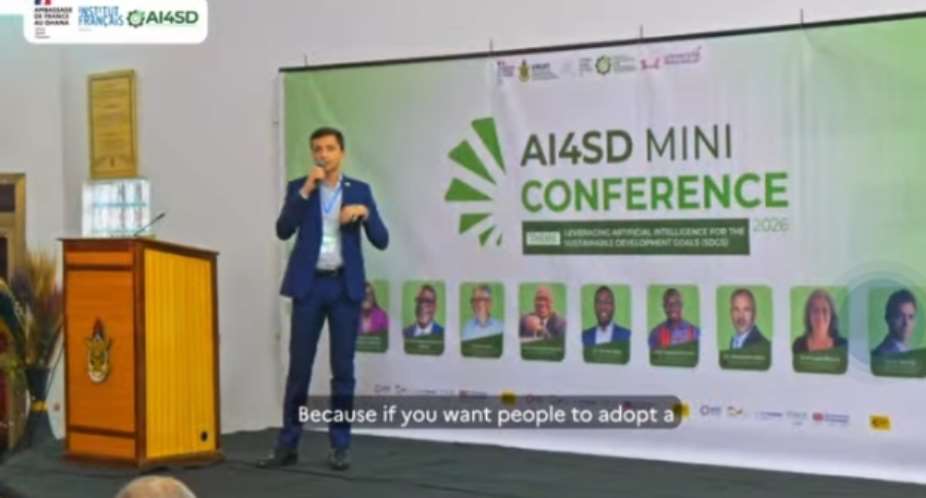
The French Embassy in Ghana in collaboration with the Kwame Nkrumah University of Science and Technology (KNUST) successfully hosted the Artificial Intelligence for Sustainable Development (AI4SD) Mini-Conference, bringing together researchers, innovators, policymakers, and students to explore how artificial intelligence can accelerate sustainable development in Ghana and beyond.
Held from 17–19 February 2026 at the IDL Conference Centre at KNUST, the three-day event focused on the theme “Leveraging Artificial Intelligence for the Sustainable Development Goals (SDGs).” The conference formed part of ongoing efforts to strengthen international collaboration in responsible AI research and innovation.
Advancing AI for Sustainable Development
The AI4SD initiative aims to harness artificial intelligence to address real-world challenges across sectors such as agriculture, health, education, energy, mining, and accessibility for persons with disabilities. The programme is funded by the French Embassy in Ghana and implemented through the Responsible AI Lab at KNUST, reflecting a growing partnership between France and Ghana in technological innovation and research.
Through presentations, panel discussions, and networking sessions, the mini-conference provided a platform for experts and young innovators to share research, exchange ideas, and showcase AI-driven solutions aligned with the United Nations Sustainable Development Goals (SDGs).
A Platform for Collaboration and Innovation
The event attracted participants from academia, government, industry, and international organizations. Researchers and speakers discussed emerging trends in AI, ethical and responsible AI development, and opportunities for innovation in Africa.
The conference also encouraged interdisciplinary collaboration by connecting scientists, entrepreneurs, and students working on AI-based solutions to societal challenges. These engagements are expected to stimulate new partnerships, research opportunities, and technology-driven startups in Ghana’s growing digital ecosystem.
Strengthening Ghana–France Academic Partnership
The AI4SD programme represents a broader commitment by the French government to support technology-driven development in Africa. The collaboration between KNUST and the French Embassy demonstrates the value of international partnerships in advancing research capacity, knowledge exchange, and innovation ecosystems in higher education institutions.
By convening leading thinkers and innovators in artificial intelligence, the AI4SD Mini-Conference reinforced KNUST’s position as a hub for AI research and sustainable development initiatives in West Africa.
Looking Ahead
As artificial intelligence continues to transform industries and societies worldwide, initiatives like AI4SD play a critical role in ensuring that emerging technologies contribute to inclusive growth and sustainable solutions. The conference concluded with a renewed commitment to strengthen collaboration, promote responsible AI, and empower young innovators to build solutions that address pressing development challenges.
Mustapha Bature Sallama.
Medical/ Science Communicator,
Private Investigator, Criminal investigation and Intelligence Analysis.
International Conflict Management and Peace Building.USIP
[email protected]
+233-555-275-880


 Illegal chainsaw operators damage GRIDCo transmission line, disrupt power supply...
 13 remanded for posing as NAIMOS officers to extort money from miners
 Agbodza accuses contractors of deliberately abandoning Year of Roads projects to...
 ICU-Ghana petitions Mahama to withdraw NPA Bill over concerns about BOST's futur...
 Suame Magazine shop closures: Ghana must uphold the law, not encourage hostility...
 COCOBOD recalls Natural Asontem fertiliser over expiry date, labelling concerns
 Ghana records 94 % reduction in child labour cases in 2024 but... — Report
 Ocloo urges communities to contribute GH¢80 to replace faulty streetlight photoc...
 You have no money to recruit teachers and nurses but you have money to buy presi...
 I took only 59 birds to protest NDC bias in Nkoko Nkitinkiti distribution but i ...


