




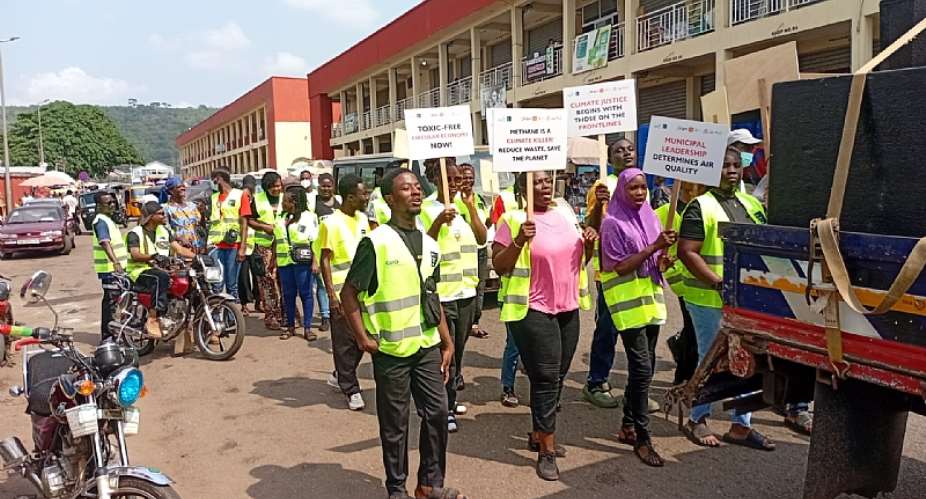
About fifty young people in Ho, the capital of the Volta Region in Ghana, have undertaken a clean-up exercise at the Ho Bus Station followed by a walk through the principal streets of the city to advocate for environmental protection and responsible waste disposal.
The exercise, organised by the Green Africa Youth Organisation (GAYO) in collaboration with the Ho municipal assembly and local youth groups, aimed to raise public awareness about the need to keep the environment clean, stop indiscriminate littering, and discourage the cutting down of trees within the municipality.
The initiative also aimed at sustaining Ho’s reputation as Ghana’s “Oxygen City” due to its relatively high tree cover and cleaner air compared to many urban centres.
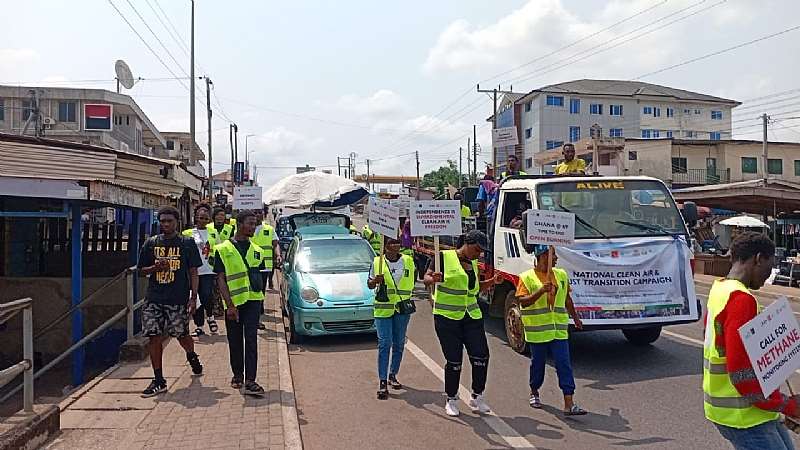
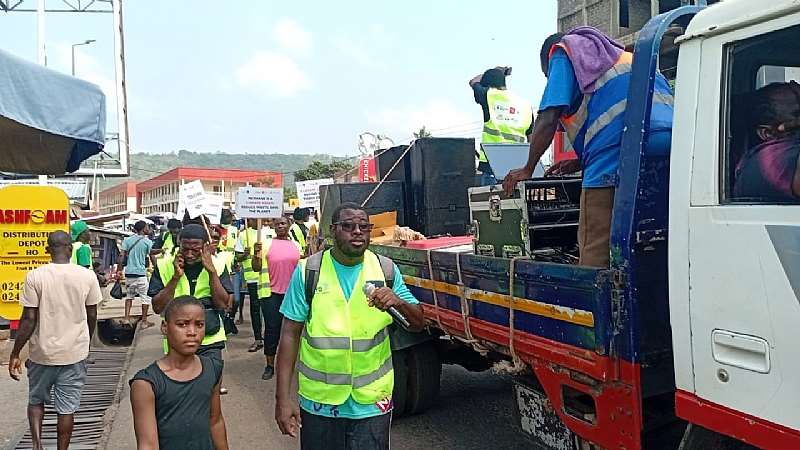
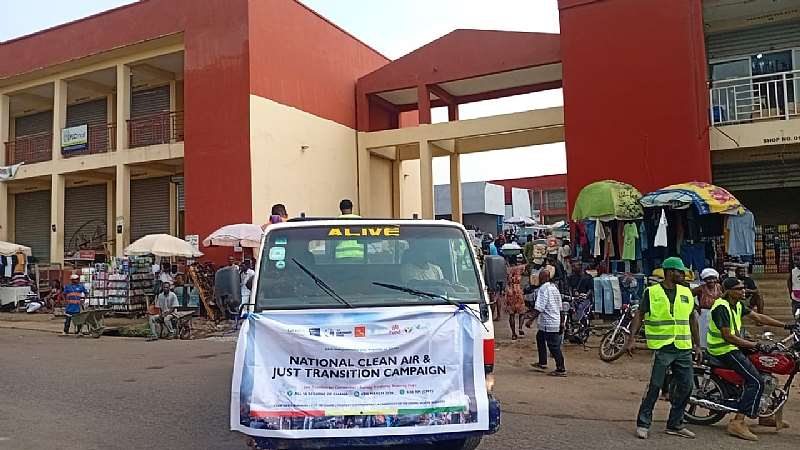
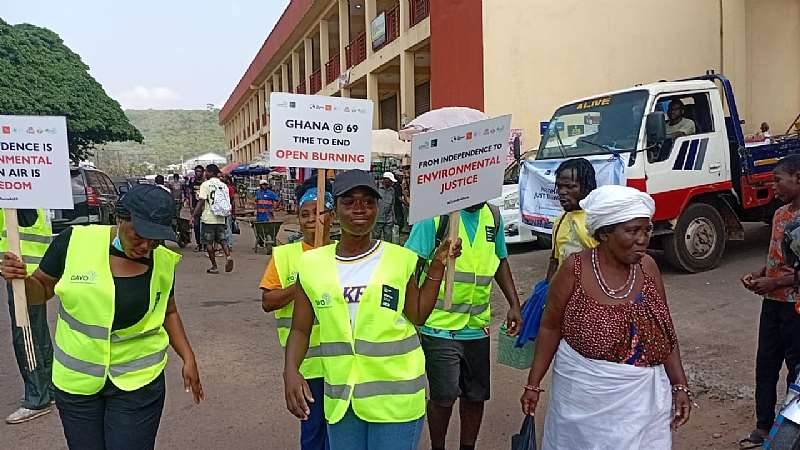
The young volunteers, drawn largely from youth groups and tertiary institutions, cleaned sections of the busy transport station before embarking on a float through major streets of Ho to engage residents, traders and commuters on the importance of keeping the environment clean.
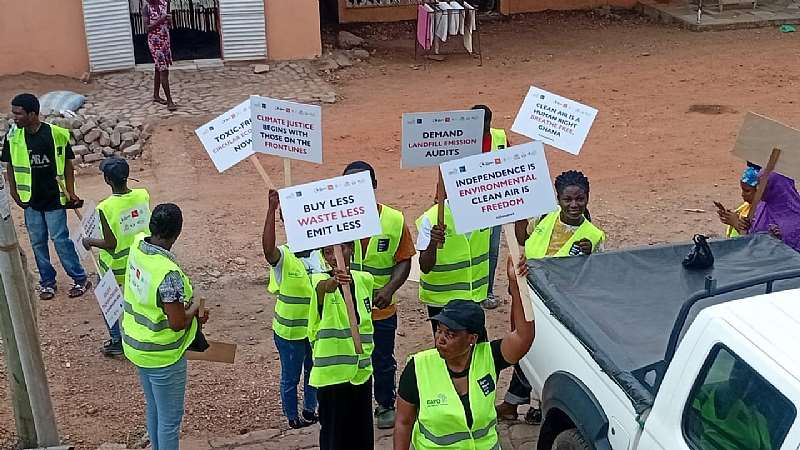
Participants carried placards with messages encouraging the public to plant more trees, avoid littering and support climate action.
The campaign formed part of the National Clean Air and Just Transition Campaign, which is being implemented with support from the Earthshot Prize, Clean Air Fund, Global Methane Hub, National Youth Authority and the UMI Fund.
Executive Director of the Youth Alliance for Sustainability, Joshua Tetteh Ayayi, said the mobilisation of the young people demonstrated the growing commitment of the youth to climate action and environmental protection.
He explained that beyond advocacy, the organisation intends to promote practical actions that will directly improve sanitation and environmental sustainability in communities.
“Talking about Ho, I think we need to take the advocacy to a different level. We need to stop doing the normal things. We need to be able to tell climate stories and move from advocacy to action,” he said.
Mr Ayayi said the clean-up exercise was intended to demonstrate how simple community actions could inspire wider public participation.
He noted that if young people begin regular activities such as desilting gutters or cleaning parts of the city, residents and shop owners would naturally join in the effort.
“For example, if we come and start desilting gutters in front of people’s shops, the shop owners will either send their children to help or some of their workers to help. And even if they do not join immediately, it becomes difficult for them to dump refuse in the gutter again,” he explained.
Mr Ayayi expressed concern that the continued cutting down of trees in Ho could undermine the city’s reputation as the “Oxygen City of Ghana.”
He warned that if the trend continues without deliberate action, the city could lose its unique environmental status within the next decade.
“We do not want to lose the status of Ho as the Oxygen City of Ghana. The trees are doing the cleansing for us, but for some time now we have been cutting down trees in the city. If we do not take care, the trees will be cut to a level where they cannot filter the air for us,” he said.
“If things continue as usual, from our standpoint, it is going to happen in the next five to ten years that Ho will lose the status as the Oxygen City.”
He, however, stressed that the situation could be reversed if residents, young people and authorities work together to protect the environment and plant more trees.
Mr Ayayi also emphasised the importance of individual responsibility in maintaining environmental cleanliness.
According to him, small personal actions such as correcting people who litter or properly disposing of waste can create positive ripple effects in society.
“Small actions create ripple effects that we do not know,” he said. “If you see someone dropping something on the ground, politely tell the person to pick it up. When we begin things like that on a small scale, it will have a big impact.”
He also explained that the campaign is part of a broader national and global effort to promote a “Just Transition” to cleaner and more sustainable energy systems.
Mr Ayayi said the concept encourages countries like Ghana to gradually shift from fossil fuels to renewable energy while ensuring that the transition does not worsen economic inequalities.
He noted that Ghana, which recently began producing crude oil, should also benefit fairly from global climate policies.
“At the international level, those who have used fossil fuels to amass wealth should not simply move to renewable energy and leave developing countries behind,” he said.
“Just Transition means Ghana should also benefit from the opportunities in the new energy economy.”
President of the GAYO Eco Clubs at the University of Health and Allied Sciences (UHAS), Pepertual Afefa Keh, who coordinated the campaign locally, said the Ho Bus Station was selected because of the amount of waste generated there.
She explained that the clean-up exercise was combined with a float through the city in order to promote behavioural change among residents.
“For this year we focused on cleaning up Ho, especially the station, because we realised there is a lot of dirt around that area,” she said.
“So in collaboration with the assembly, we organised a mini clean-up and also a float for advocacy because we want behavioural change.”
Miss Keh said the campaign also seeks to strengthen collaboration between youth groups and the municipal assembly to sustain environmental education and community action.
She added that environmental sustainability requires the active participation of every citizen rather than leaving sanitation solely to authorities.
“Sometimes people say others are being paid to clean the environment, but the responsibility belongs to everyone,” she stated.
“As a young person, you should take responsibility for your environment. When everyone keeps their small environment clean, we will all enjoy the environment we want.”
Miss Keh said the organisers were encouraged by the level of youth participation, noting that the fifty volunteers were mobilised within just two days.
She revealed that more young people had expressed interest in participating, but the organisers could only cater for fifty participants for the exercise.
Joshua Tetteh Ayayi revealed that, plans are underway to establish dedicated youth groups that will regularly adopt environmental hotspots within Ho and other districts for periodic clean-up activities and public education campaigns.
Organisers believe such initiatives will gradually inspire communities across the region to take greater responsibility for protecting the environment and preserving Ho’s reputation as Ghana’s Oxygen City.

 Parliament to reconvene on May 21 following Easter break
 Passengers isolating on cruise after Cape Verde ban over suspected virus deaths
 Stop blaming Akosombo inferno for current dumsor — Okoe Boye tells Energy Minist...
 President Mahama to host global leaders for high-level reparations conference
 Refrain from cheating — United Party advises 2026 BECE candidates
 Support us to serve you better — Fire Service urges public
 BECE 2026: Minority urges candidates to stay focused
 Prisons Service warns public over fake social media accounts soliciting money in...
 Fighting racism 'must be at heart of presidential debate', French mayor tells RF...
 From this year, persons indicted in the Auditor General’s reports will be prosec...


