




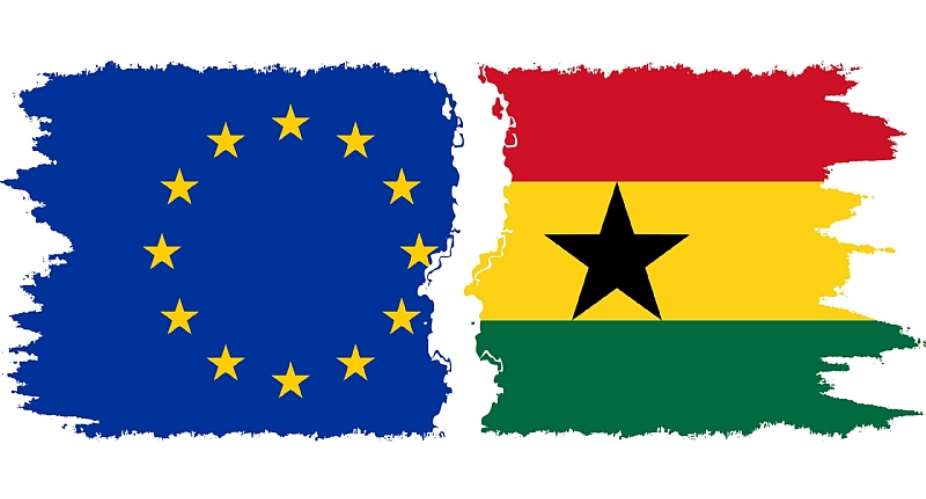
In recent years, debates across Europe especially in France have intensified around migration, development, and Africa–Europe relations. A recurring theme is the idea that Africans should be supported to thrive in their own countries rather than feeling compelled to migrate abroad in search of opportunity.
One country increasingly cited in these discussions is Ghana often described as stable, democratic, and forward-looking. Could “The Ghana Way” offer lessons for Europe?
Ghana: Stability in a Complex Region
Located in West Africa, Ghana has built a reputation as one of Africa’s most politically stable nations. Since returning to multi-party democracy in 1992, Ghana has experienced peaceful transfers of power between rival political parties a significant achievement in a region that has faced coups and instability.
Key strengths:
Democratic governance
Active civil society
Growing entrepreneurial sector
Relative press freedom
Regional diplomacy and peacekeeping
This stability makes Ghana attractive not only to investors but also to its own diaspora.
France and Africa: A Complicated History
France maintains deep historical, economic, and political ties with many African nations, especially former colonies in West and Central Africa.
However, tensions have grown in recent years due to:
Perceptions of continued political influence
Military involvement in the Sahel
Economic dependency debates
Migration pressures into Europe
As migration becomes a central political issue in France, policymakers increasingly emphasize “development in place” the idea that supporting economic growth in African nations reduces migration flows.
The “Ghana Way” Explained
While not an official doctrine, “The Ghana Way” can be understood as a development path centered on:
Political Stability First
Ghana’s democratic continuity creates confidence for both citizens and investors.
Diaspora Engagement
Programs like the “Year of Return” encouraged African descendants abroad to invest, visit, and reconnect with Ghana turning migration into circular opportunity rather than permanent departure.
Economic Diversification
Though historically dependent on cocoa and gold, Ghana has expanded into:
Oil and gas
Fintech and mobile banking
Creative industries
Agribusiness
Regional Leadership
Ghana positions itself as a diplomatic bridge in West Africa, hosting continental institutions and mediating conflicts.
Why Europe Is Interested
European policymakers increasingly argue that:
If African countries can create stable governance and economic opportunity, migration becomes a choice not a necessity.
Supporting models like Ghana could mean:
Investment partnerships rather than aid dependency
Youth entrepreneurship programs
Educational exchange programs
Infrastructure financing
Trade reform under fairer terms
Challenges Ghana Still Faces
To be realistic, Ghana is not without problems:
Youth unemployment
Public debt concerns
Currency instability
Infrastructure gaps
Brain drain
Yet despite these, Ghana remains comparatively resilient.
A Partnership, Not a Prescription
The idea that Africans should remain in their home countries must avoid becoming paternalistic. Migration has always been part of global history including European migration to Africa and the Americas.
The future of Africa–Europe relations may not lie in restricting movement, but in:
Building mutual economic strength
Respecting sovereignty
Encouraging regional integration
Supporting youth-driven innovation
Conclusion
If Europe, particularly France, seeks sustainable solutions to migration pressures, the answer may not lie in border enforcement alone. The “Ghana Way” suggests that strong institutions, diaspora engagement, and economic reform can build nations where citizens choose to stay and thrive.
The deeper lesson may be this:
Development works best when driven locally and supported internationally through equal partnership, not control.
Mustapha Bature Sallama.
Medical/ Science Communicator,
Private Investigator, Criminal investigation and Intelligence Analysis.
International Conflict Management and Peace Building.USIP
[email protected]
+233-555-275-880

 Eight teachers convicted for facilitating cheating in 2025 BECE — Education Mini...
 'Low' risk to public of hantavirus after cruise ship deaths, WHO says
 Ghana’s Moment at the African Union: Beyond Symbolism, Toward Substance
 Approach the exams with confidence — Vice President urges 2026 BECE candidates
 May 4: Cedi maintains value, sells at GHS12.15 on forex market, GHS11.20 on BoG ...
 There is an attempt to understate BoG’s 2025 loss — Oppong Nkrumah
 Ghana to host 3-day reparations conference June 17 to 19 after UN resolution
 Don’t engage in exam malpractice — Education Minister urges 2026 BECE candidates
 NIA resumes Ghana Card registration for children in Volta, Oti regions on May 5
 Over 620,000 candidates from 20,395 schools begins 2026 BECE nationwide


