




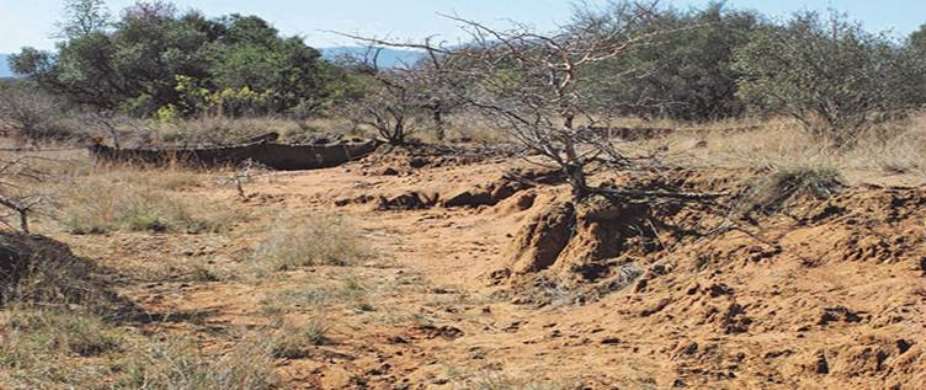
South Africa’s celebrated transition from apartheid to democracy is often portrayed as a political miracle, achieved without the overt infrastructural sabotage seen in other decolonisation efforts. However, this triumphant narrative hides a slower, less obvious form of destruction unfolding in rural Black South Africa. Similar to the Portuguese scorched-earth withdrawal from Mozambique in 1974-75, when cement was poured into pipes to cripple the incoming government, South Africa is experiencing a contemporary form of sabotage. This time, however, the focus is not on plumbing or power stations but on agricultural land itself. Through chemical saturation, ecological decay and market control, rural land is being quietly poisoned, creating dependency without formal dispossession.
The mindset is not new after all. Colonial and apartheid regimes viewed land as a strategic asset rather than a neutral resource. Dispossession, overcrowding and state-sanctioned cattle culling were deliberately used to dismantle African agrarian independence and to create a pool of cheap Black labour. These policies were extractive and also disciplinary, ensuring that African households could not survive outside the colonial economy. What is happening today is a damaging continuation of this pattern rather than its conclusion.
Across restituted farms and ancestral plots long held by Black communities, land that once reliably produced food and seed stock has become increasingly unproductive. The reasons are not mysterious. High-input agricultural models promoted by large agribusinesses prioritise short-term yields over long-term soil health. Decades of intensive pesticide and fertiliser use strip soils of microbial life and organic matter, creating “dead land.” When such farms are transferred through restitution, communities inherit soil that is already chemically exhausted and dependent on continuous external inputs.
Concrete evidence shows that this is not just an abstract environmental issue but a real crisis. In 2007, a government task team investigated widespread pesticide poisoning in the Groblersdal area, Limpopo. A local doctor, Dr Johan Minnaar, recorded disturbing health patterns linked to seasonal pesticide spraying . Teenage boys developed temporary breasts, young girls entered puberty as early as five, and there were significant rises in cancers, miscarriages and neurological disorders. Blood tests also confirmed exposure to organophosphates and carbamates, common agricultural pesticides known to interfere with endocrine systems. These findings demonstrated that land poisoning was inseparable from people’s poisoning.
This public health crisis is deeply connected to immune system impairment. The chemicals found in Groblersdal, such as organophosphates, interfere with hormonal signalling, which is essential for proper immune function, causing both immunosuppression (increased susceptibility to infections) and immune dysregulation (linked to autoimmune diseases and inflammatory conditions). The health effects observed, including early puberty, reproductive issues and cancers, are common signs of such systemic disturbance.
Scientific research confirms that prolonged pesticide exposure is strongly linked to non-communicable diseases, including cancer, neurological disorders and endocrine disruptions. A 2025 study specifically examining women exposed to pesticides with breast cancer found a weakened immune response, with notable reductions in key immune-signalling proteins . This deterioration of the body’s natural defences and tumour surveillance ability is a direct result of the ‘poisoning’ described.
In rural South Africa, already burdened by tuberculosis, HIV, and environmentally driven respiratory illnesses, this immunological weakening worsens structural poverty. Chemically degraded land thus not only produces unproductive soil and endocrine harm but also leads to biologically vulnerable populations, trapping communities in cycles of illness, dependency, and diminished capacity for self-sustaining livelihoods. Studies by the WHO and independent toxicologists also link sustained low-level pesticide exposure to weakened immunity and increased disease risk, even in the absence of acute poisoning.
Subsequent research indicates that Groblersdal was not an isolated incident. A 2023 scientific study in neighbouring Eswatini, where agricultural practices are similar to those in South Africa, found dangerous levels of pesticides like atrazine and ametryn in irrigation water and soil . The study concluded that daily intake of contaminated water and produce poses serious health risks for all age groups, with hazard indices surpassing accepted safety limits.
Within South Africa itself, the misuse of chemicals has sadly become commonplace. An estimated 22 per cent of commercial farmers have admitted, over a single year, to illegally using agricultural poisons to kill predators . This admission alone highlights the extent to which toxic substances are circulating through rural ecosystems with little oversight. In late 2024, 23 children died, and hundreds were sickened in Soweto from ‘street pesticides’ like terbufos and aldicarb, chemicals diverted from agricultural use . This crisis led to a national emergency and highlights the deadly consequences of regulatory failure. South Africa is Africa’s largest consumer of agrotoxins, with approximately 192 Highly Hazardous Pesticides (HHPs) registered for use, many of which are banned in the European Union .
The ecological harm is worsened by biological dependence. The shift from traditional seed saving to patented and genetically modified seeds functions as a form of agricultural “cement.” Many of these seeds are sterile in later generations or are legally protected, making their reuse illegal. For rural farmers and households, this breaks intergenerational cycles of seed sovereignty and compels repeated purchases from corporate suppliers. Once soil health diminishes, farmers become trapped in a closed system: chemical inputs to offset degraded land and proprietary seeds to maintain yields. Living becomes economically and ecologically impossible.
This material process is protected by a strong ideological shield. Organised agricultural interests often argue that land reform is pointless without “proper business plans” and commercial scale. Recent remarks by AgriSA’s leadership, including its chief executive, Johann Kotzé, illustrate this perspective . While presented as practical, these arguments subtly redefine productivity as export-focused profit, dismissing subsistence and local-market farming as economically insignificant. The historical truth, that white commercial agriculture itself was established through extensive state support, subsidies and racial exclusion, is conveniently ignored in favour of racially-inspired half-truths.
Political reinforcement originates from parties like the Democratic Alliance and white conservative groups, including Afriforum and Solidariteit. These actors strongly oppose transformative land reform, depicting constitutional changes as economic sabotage and making alarmist comparisons with Zimbabwe. Their rhetoric increasingly aligns with global right-wing populism, employing MAGA-style narratives of white victimhood. International figures such as Elon Musk and Donald Trump, through claims of “white genocide” or racist land laws, have further distorted the debate, shifting focus away from ecological degradation and structural inequality.
The most tragic consequences are visible on the land that has been restituted. Communities often receive farms that have been stripped of infrastructure and nutrients, reflecting colonial denial-of-assets strategies. Irrigation systems, pumps and fencing are removed before handover, while the soil itself has been chemically mined. Faced with unproductive land and increasing health burdens, communities are pushed into lease-back arrangements, renting their own land to commercial operators. Ownership exists on paper, but profits and control remain firmly in the hands of corporate elites.
This creates a vicious cycle of dependency. Contaminated soil and water hinder subsistence farming, damage local food systems, and lead to long-term health costs. Communities become reliant on commercial food chains and external aid, echoing the colonial aim of maintaining a captive labour and consumer base. In this context, debates about expropriation without compensation often overlook the main issue. For many rural Black South Africans, the immediate threat is not land confiscation but land degradation, the silent destruction of their land through unseen chemical violence.
The corporate poisoning of agricultural land is, therefore, a modern scorched-earth strategy. Just as the cement poured into Mozambique’s pipes blocks progress, it also prevents that formal transfer leads to real independence. Breaking this cycle requires more than just title deeds or market integration. It calls for soil restoration, safeguarding seed sovereignty, strict regulation of agro-chemicals, and a re-imagining of land as a social and ecological base rather than a mere commodity. Until then, the pipes of South Africa’s rural economy will remain blocked, not by cement, but by poison.
Siya yi banga le economy!


 Ghana’s Corporate Illusion: Why We Celebrate Professional Titles More Than Natio...
 Sam George, Armah-Kofi Buah, Phyllis Naa Koryoo and OPK among 1,568 lawyers call...
 Visa scandal: 'Ampofo Ankrah’s suspension not enough; Kofi Adams must also step ...
 Ghana’s BRICS bid part of strategy to diversify international partnerships — For...
 'Let integrity, discipline guide your conduct' — Samson Lardi tells new lawyers
 Labour Minister optimistic teachers will suspend strike by close of day
 Dr Ato Forson urges MMDCEs to eliminate waste in public spending
 KMA Boss refutes bribery claims amid tears at Abrepo Junction demolition
 GRA summons Jamila Home management over alleged assault of revenue officer
 To suggest FBI acted solely to execute Cyberhunt operations in Ghana will hurt f...


