




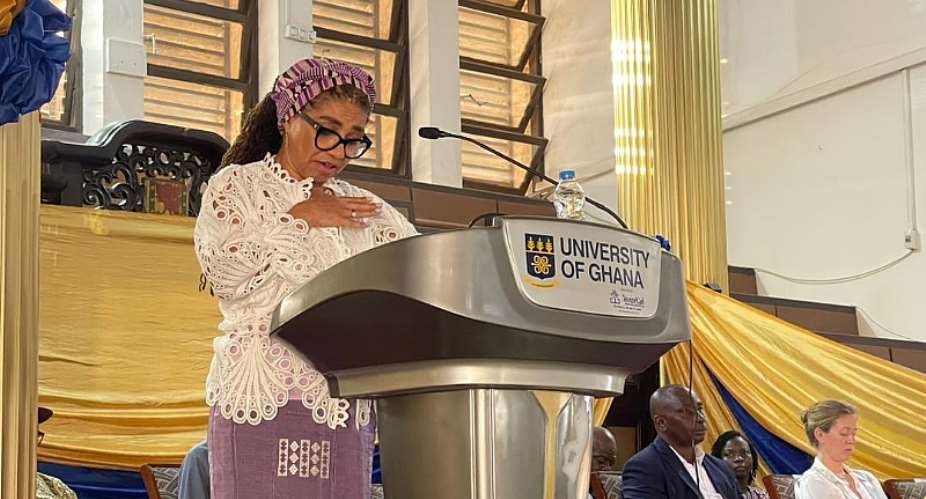
Professor Akosua Adomako Ampofo, Sociologist and Professor Emerita at the University of Ghana, used the 5th Anton Wilhelm Amo Lecture to challenge Ghanaian universities to rethink how teaching and learning are approached in a rapidly changing world.
Speaking on the theme “Where are the therapeutic intellectuals? Popular culture and autobiographical narrative for justice and healing,” Professor Ampofo emphasized that the lecture goes beyond celebrating the achievements of Anton Wilhelm Amo. According to her, it is also about reclaiming African intellectual identity and reminding society of Africa’s long-standing scholarly traditions.
By naming the lecture after Amo, she explained, organizers are deliberately countering narratives that portray Africans as historically lacking intellectual depth. Amo, a native of Axim, earned two doctoral degrees in Europe and became a respected philosopher, a legacy Professor Ampofo said should inspire confidence in African intellectual capacity.
Although Amo was educated in Europe, Professor Ampofo noted that his strong opposition to slavery, retention of his African identity, and eventual return to Ghana suggest deep cultural roots, possibly shaped by Akan values. For her, this connection reinforces the importance of grounding education in African experiences and realities.
Drawing lessons from Amo’s life, Professor Ampofo turned her attention to contemporary education. She argued that universities must adapt their teaching methods to reflect the changing nature of students and society.
“The university has changed, our students have changed, and learning must be meaningful to everyday life,” she stated.
She observed that disciplines such as sociology and philosophy are often criticized for lacking practical relevance, unlike science-based fields. To address this perception, she advocated for creative and alternative teaching methods that make learning more engaging and relatable.
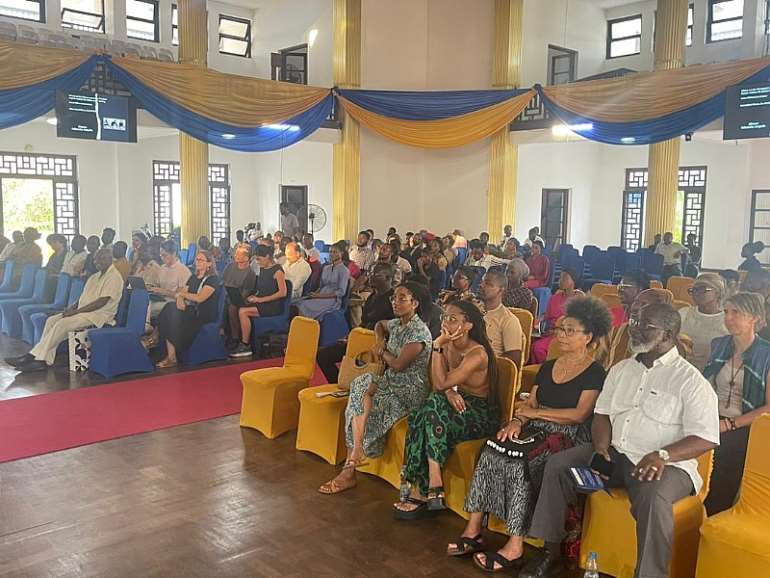
Professor Ampofo proposed the use of music, film, hip-life, theatre, satire, cartoons, and other cultural and visual tools as part of teaching strategies. These, she explained, allow students to connect emotionally with ideas and better understand complex concepts.
“We are a different generation today, and we need different ways of teaching so students are not bored in the classroom and can see how what they learn can be used,” she said.
While supporting innovation, she cautioned against imposing such methods as a national policy. Instead, she encouraged educators to choose approaches that best suit their teaching styles and help them connect effectively with students.
She added that creative tools are especially useful at younger educational levels, where learners may struggle with long texts but respond well to music and images.
Professor Ampofo described these approaches as “intellectual therapies,” noting that they promote deeper engagement, personal reflection, and transformative learning experiences.
She concluded with a call for flexibility, creativity, and cultural relevance in education, urging educators to draw inspiration from Africa’s intellectual heritage to build a more meaningful and responsive learning environment.

 Obuasi SHTS sexual abuse allegations deeply disturbing – Beatrice Annan
 'Show us the boarding passes' – MP questions evidence for South Africa evacuatio...
 Martin Kpebu explains why Afi Agbenyo should resign over EC appointment
 South Africa evacuation: NPP desperate to see government commit scandal – Appiah...
 Mahama announces GH¢200m for reclamation of lands destroyed by galamsey
 Ghana working to stop exporting raw mineral ores by 2030 – Mahama
 Invest in cocoa, shea processing to create jobs for Ghanaian youth – Veep to Chi...
 'Hypocrisy is the problem of NDC government’ – Elvis Darko on EC appointment
 GHS to vaccinate eligible girls against HPV in nationwide school campaign
 NAIMOS destroys 92 chanfang machines, arrests three suspected illegal miners on ...


