




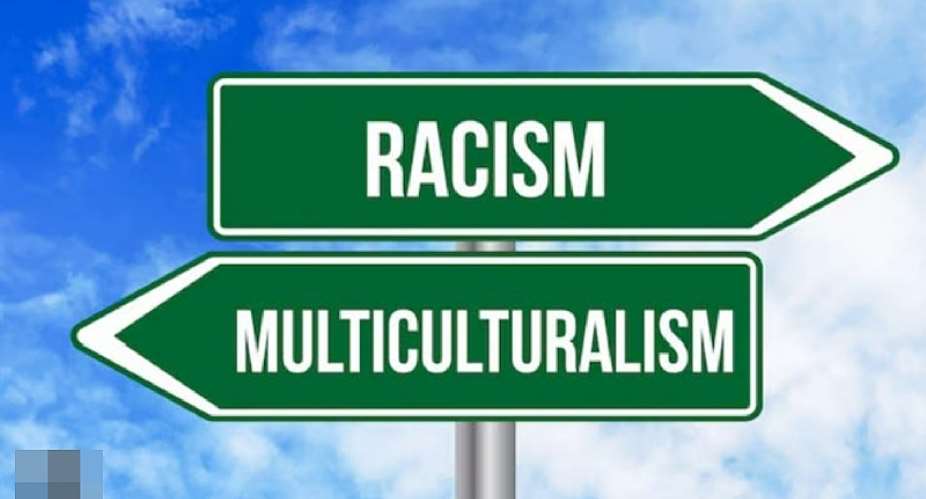
There is a straight line that connects Osama bin Laden’s destruction of multiculturalism with his 9/11 attacks 24 years ago to today’s mainstreaming of racism, particularly in the form of Islamophobia and anti-Semitism.
It’s not that racism was non-existent in democratic countries before 9/11. It was. As far back as the 1970s, I encountered difficulty as a foreigner renting an apartment in the Netherlands, even though I spoke Dutch. Of course, landlords didn’t openly acknowledge their xenophobia.
Then, racism in the Netherlands and elsewhere in Europe was socially taboo and wrapped in euphemisms. Those who openly expressed racist attitudes were socially ostracised. It was how society policed itself without imposing draconian legal consequences.
All of that went out the window with 9/11 and US President George W. Bush’s War on Terror. Muslims and Islam became suspects by definition.
The attacks on New York and Washington returned identity politics to the fore.
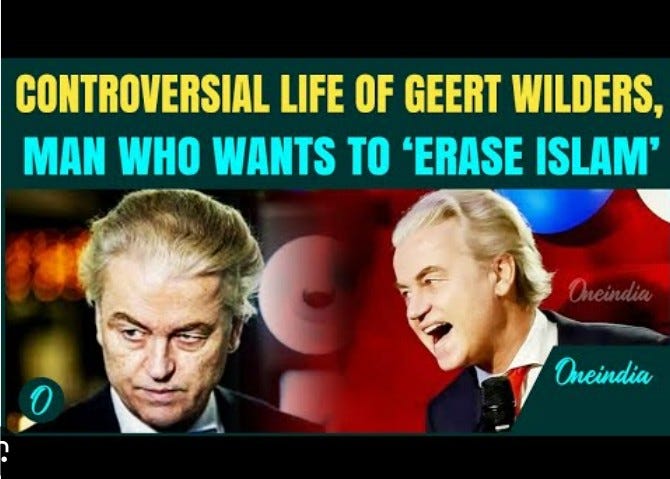
In doing so, they reshaped global politics and public attitudes towards refugees fleeing political and economic collapse, who were seen as the ‘other’ rather than as victims of self-centred Western economic and development aid policies that backfired in countries governed and mismanaged by often Western-backed corrupt politicians and political and economic structures.
Those were the days of the rise of Geert Wilders, an Islamophobe and xenophobe whose political party, Party for Freedom, currently shares with the liberal Democrats 66 party first place as the largest in the Netherlands.
At the time, the Netherlands contrasted starkly with countries like the United States, where hate speech was protected as freedom of expression under the US Constitution’s First Amendment, and Turkey, which, into the 21st century, emphasised its European rather than its Middle Eastern and Muslim identity, but more recently, like much of the West, has turned anti-migrant.
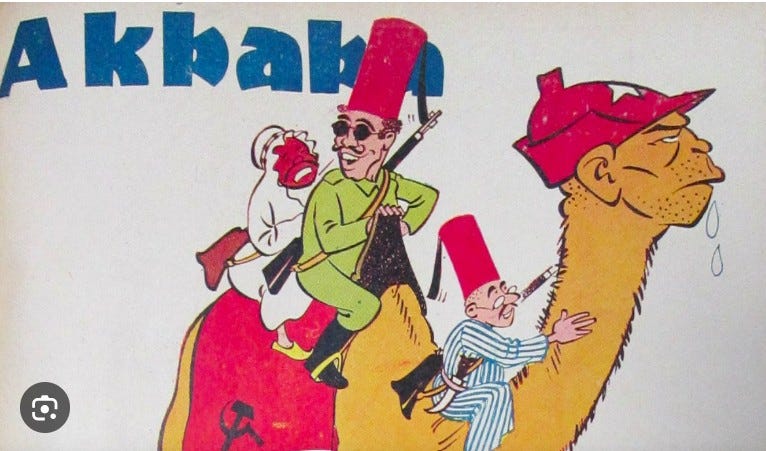
A 1950s satirical Turkish cartoon
Widespread anti-Arab sentiment rooted in Turkey’s Ottoman history was socially acceptable long before 9/11. Phrases expressed in the media and social circles, such as “the Arabs stabbed us in the back,” a reference to the anti-Ottoman Arab revolt in the 1910s, and secular denunciations of then Prime Minister Recep Tayyib Erdogan’s Justice and Development Party (AKP) as “Muslim” rather than Islamist, were de rigeur.
What started with 9/11, has become government policy in multiple Western democracies with France, backed by the United Arab Emirates and Saudi Arabia, seeking to define what constitutes moderate Islam and regulating how Muslims should dress.
US President Donald Trump this week took such policies a step further after an Afghan national shot two West Virginia National Guards people in Washington, killing one.
Mr. Trump cast all Afghan migrants as suspects, ordered the review of green cards issued to nationals of 19 countries, half of them Muslim-majority nations, and halted the issuing of visas for citizens of all third world countries.
Meanwhile, Mr. Trump’s Make America Great Again (MAGA) support base struggles to come to grips with rising anti-Semitism in its ranks, fuelled by Israel’s conduct of the Gaza war and perceptions of Israel’s oversized influence in American policy making and a divergence of US and Israeli interests.
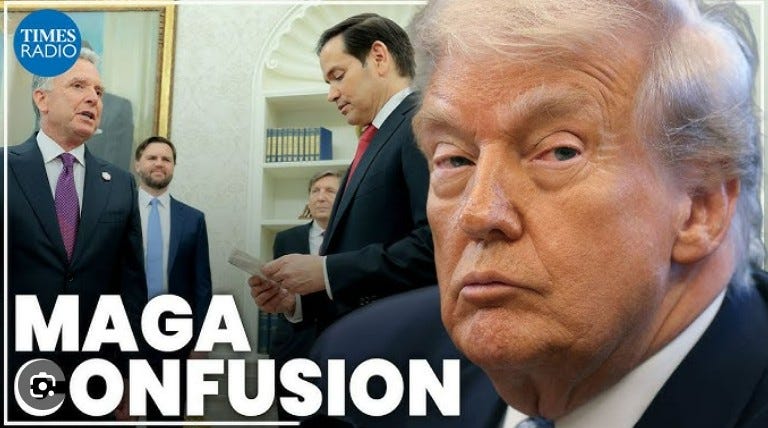
The struggle comes as Mr. Trump’s Evangelical and Make America Great Again base threatens to fracture. Many of the 38 per cent of voters who opted for the president in the 2024 election but do identify as MAGA question his economic and health care policies and suggest they may not vote Republican in upcoming mid-term elections a year from now.
“MAGA has been co-opted by neocons that are more concerned with protecting Israel, Ukraine, Indian and Chinese H-1B visa workers, and foreign students than American workers, American taxpayers, and American students,” said Republican activist William Branson Donahue.
In addition, prominent podcasters with millions of listeners who were influential in returning Mr. Trump to the Oval Office for a second term have recently criticised the president, among others, for the seemingly arbitrary arrest and deportations of alleged illegal migrants, attempts to limit free speech, and his handling of the Jeffrey Epstein affair.
Adding fuel to the fire, Evangelical support for Israel has decreased as podcasters like Tucker Carlson turn critical of Israel and US policy towards the Jewish-majority state and become more empathetic to the plight of the Palestinians. The criticism is at times laced with anti-Semitism.
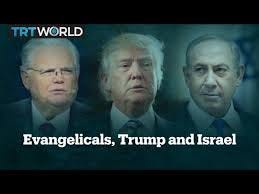
An opinion poll conducted in September showed that only 29 per cent of evangelicals under 35 believe that Jews are God’s chosen people, a core belief of Christian Zionist theology. The survey suggested that support for Israel “is not universally deep nor comprehensive across the Evangelical spectrum.”
Similarly, journalists Ben Lorber and Jess Schwalb noted that increasingly Christian nationalists were dropping the Judeo notion in their projection of Western civilisation as being rooted in ‘Christian-Judeo’ values.
A recent conservative pow wow, organised by the National Task Force to Combat Antisemitism, highlighted the reservations of many participants to call out anti-Semitism in Make America Great Again’s ranks, the downplaying of the phenomenon, including by far-right Jews, and how pervasive it is among those who profess the need to fight anti-Jewish sentiment.
The Task Force includes the authors of the far-right Heritage Foundation’s Project Esther, the Trump administration’s blueprint for attacking the left for its support of the Palestinians.
The gathering of some 50 Christian Zionists, anti-LGBT ideologues, and Jewish MAGA influencers took place a month after the group divorced the Heritage Foundation after its president, Kevin Roberts, defended influential far-right podcaster Tucker Carlson’s platforming of 27-year-old neo-Nazi white supremacist and Christian nationalist Nick Fuentes.
Denouncing his critics, Mr. Roberts railed against the “globalist class,” a frequent anti-Semitic trope.
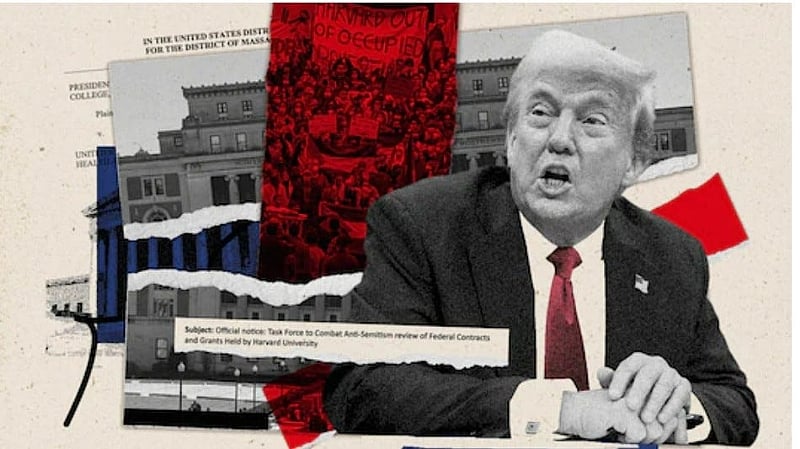
A Guardian investigation of leaked Heritage documents related to the foundation’s effort to create a talent pool for the Trump administration revealed that applicants, including some who were hired to serve in government, cited the influence of Nazi political theorists and other far-right thinkers on their political views.
Mr. Carlson’s increasingly anti-Israel stance, coupled with Mr. Roberts’ defence of the podcaster, the mainstreaming of other anti-Semites such as Candace Owens, and mounting criticism of Israel and greater empathy for Palestinians among prominent MAGA figures, including politicians like Marjorie Taylor Greene and Thomas Massie, as well as American Evangelicals, is forcing conservatives to confront their demons.
“Tucker Carlson is the most dangerous anti-Semite in America,” conceded Florida Republican Congressman Randy Fine, who until recently reserved his venom for left-wing critics of Israel.
Dr. James M. Dorsey is an Adjunct Senior Fellow at Nanyang Technological University’s S. Rajaratnam School of International Studies, Contributing Editor to WhoWhatWhy, and the author of the syndicated column and podcast, The Turbulent World with James M. Dorsey.

 ECG announces 7-hour power outages in parts of Ashanti Region on Tuesday
 World Cup visa scandal deepens discontent among NDC grassroots – Prof Smart Sarp...
 'It is frivolous' – State declines to respond to motion challenging its oppositi...
 Bawumia recalls how late former Savelugu MP prayed for him from hospital bed in ...
 TOR records GH¢1.24bn profit before tax in 2025 — MD
 TOR plans expansion to 100,000 barrels of crude oil per day — MD
 'We still have feelings' — Wontumi proposes conjugal visit facilities for marrie...
 'Young men must work and eat' – Prophet Badu Kobi backs Sammy Gyamfi on galamsey
 'My greatest fear was going to prison, but now I’m here' — Wontumi reflects on l...
 Foreign Affairs Ministry seeks names of evacuees allegedly shortchanged in GH¢5,...


