




Abstract
This article examines the persistent crisis of child fatalities linked to illegal small-scale mining (galamsey) in Ghana, highlighted by the tragic loss of six lives in a pit collapse in Atwima Mponua, Ashanti Region, on October 2, 2025. Marking the 35th anniversary of the African Charter on the Rights and Welfare of the Child (ACRWC), adopted on July 11, 1990, the article critiques Ghana’s inadequate response to child exploitation in hazardous mining environments, driven by greed and political complicity. The analysis incorporates the national commemoration event on October 2, 2025, where the MILLS Institute joined the Christian Council of Ghana at the Crystal Palm Hotel in Tesano, under the auspices of the Ministry of Gender, Children and Social Protection (MoGCSP), themed “Planning and Budgeting for Children’s Rights: Progress Since 2010.” Despite interventions by UNICEF, World Vision, and Plan International—through child labor monitoring, community rehabilitation, and rights-based education—the systemic lack of robust commitment undermines progress. The article advocates for stringent enforcement, alternative livelihoods, and youth empowerment to align with ACRWC mandates, particularly Articles 4 (survival and development) and 14 (protection from hazardous environments). By fostering knowledge and agency among children, Ghana can shift from passive rhetoric to active protection, ensuring communities become stakeholders in sustainable solutions.
Introduction
On October 2, 2025, a media reportage of a pit collapse in Atwima Mponua, Ashanti Region, claiming six lives, some missing, and incapacitating others - definitely affecting children indirectly, has added to the toll of galamsey-related fatalities in Ghana – many children have died.
This incident, coinciding with the 35th anniversary of the ACRWC, underscores the failure to uphold child rights amid illegal mining’s politically complicit proliferation.
The ACRWC, effective since 1999, mandates protection from hazardous conditions and exploitation (Articles 4 and 14), yet galamsey persists, fueled by economic desperation and political collusion.
Children face hazardous labor, environmental degradation, and systemic neglect, with over 200 deaths recorded since 2020, per the Ghana Environmental Protection Agency (EPA, 2024).
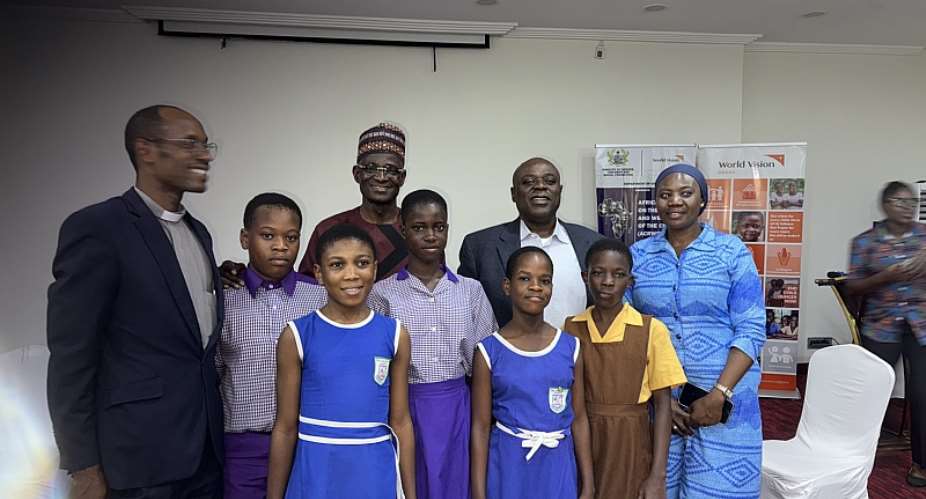
October 2, 2025, saw a key national event: the MILLS Institute joined the Christian Council of Ghana, and other Organisations at the Crystal Palm Hotel in Tesano, Accra. under the auspices of the Ministry of Gender, Children and Social Protection (MoGCSP). The gathering commemorated the Day of the African Child (DAC) 2025, themed “Planning and Budgeting for Children’s Rights: Progress Since 2010,” a motif echoing the 2010 DAC while assessing advancements in child-sensitive fiscal policies.
This article analyzes the crisis, evaluates the contributions of UNICEF, World Vision, and Plan International, critiques governmental inaction, and proposes policy reforms and youth-centered strategies to enforce accountability and foster resilience, drawing on the DAC event's call for prioritized budgeting.
The Galamsey Crisis and Child Exploitation
Illegal mining operations in Ghana have escalated, with devastating impacts on children. The Atwima Mponua deaths reflects a pattern: abandoned pits, unregulated activities, and hazardous conditions claim lives – including young ones.
Children as young as five engage in mining tasks, exposed to toxic substances like mercury, which cause long-term health issues, including cognitive impairments and congenital defects. T
he Pediatric Society of Ghana (PSG), argues that, “… by virtue of their size, immature immune system, and rapid growth and development, children remain vulnerable to the effects of environmental degradation” (Pediatric Society of Ghana, 2023).
The Environmental Protection Agency (EPA), reports that galamsey has degraded 60% of Ghana’s water bodies, exacerbating community vulnerability.
Economic incentives drive this cycle, with profiteers and politically connected actors evading accountability.
The ACRWC’s prohibition on child labor (Article 15) is undermined by weak enforcement, as evidenced by a 2023 Institute of Statistical Social and Economic Research (ISSER) study, linking 65% of galamsey operations to partisan networks.
The DAC 2025 theme highlights persistent underinvestment in children, as African states allocate more to taking care of the comfort of the political elite and cronies, than social protection, directly impacting resources for mitigating mining hazards.
Contributions of International Organizations
UNICEF, World Vision, and Plan International have implemented programs to mitigate galamsey’s impact on children, in alignment with ACRWC principles and the DAC's budgeting focus.
- UNICEF Ghana: Through the Accelerated Action Plan Against Child Labour (2023-2027), UNICEF collaborates with the ILO to strengthen the Ghana Child Labour Monitoring System, identifying and referring at-risk children in mining communities. Its Complementary Basic Education program has reintegrated thousands of out-of-school children, reducing exposure to mining hazards.
- World Vision Ghana: Under its Fiscal Year 2021 – Fiscal Year 2025 strategy, World Vision targets 3.3 million vulnerable children, offering vocational training and livelihood alternatives to deter families from galamsey. Community advocacy strengthens child protection frameworks, with initiatives like youth skills partnerships with the Ministry for Youth Development.
- Plan International Ghana: Operating in 637 communities, Plan International prioritizes girls’ rights, combating child marriage and school dropout through sponsorship and education programs. Their violence-free zones train stakeholders to address trafficking and exploitation in mining areas.
These efforts provide critical support, but their impact is limited by governmental inefficiencies, as noted in DAC reflections on resource allocation gaps.
Governmental Shortcomings and the Need for Commitment
Despite legislative frameworks like the Minerals and Mining Act (2006) and the Children’s Act (1998), enforcement remains weak.
Political patronage shields galamsey operators, with task forces disbanded and prosecutions stalled.
The Ghana Water Company Limited (2025) notes severe water scarcity due to polluted rivers, while smuggling costs billions annually.
Also, the Ghana Water Resources Commission (WRC), highlights a significant decline in per capita water availability, dropping from 1,900 to 1,500 cubic meters between 2016 and 2025. If this is not alarming, then what is?
The MoGCSP's role in the October 2 DAC event at Crystal Palm Hotel, signals intent but underscores the gap between commemoration and action – urgently needing adequate government budgetary allocation.
The government’s pledges fall short of ACRWC obligations and to address this, Ghana must enact a mining moratorium in high-risk areas, enforce Minamata Convention protocols to curb mercury use, and fund alternative livelihoods to reduce economic reliance on galamsey.
Empowering Youth Through Knowledge
The principle “The more they know; the more they feel a part of the solution” underscores the role of education in combating galamsey’s risks, amplified by the DAC 2025 theme's emphasis on child-sensitive planning.
Indeed, the MoGCSP must be highly commended for making it possible for some selected school children to actively participate in the October 2 commemorative event.
Curriculum integration of ACRWC principles, supported by UNICEF’s monitoring tools, can equip children to identify and report hazards.
Community forums involving traditional leaders, NGOs, and youth—like those modeled at the Tesano event—can foster collective accountability, ensuring local stakeholders drive enforcement.
A 2025 study in Obuasi showed a 40% increase in hazard reporting after educational interventions, demonstrating the efficacy of youth empowerment.
By embedding child rights in policy and practice, Ghana can transform passive victims into active guardians, prioritizing budgets for such initiatives as urged in the anniversary commemorations.
Conclusion
The Atwima Mponua tragedy reflects a systemic failure to protect Ghana’s children from galamsey’s perils, betraying the ACRWC’s 35-year legacy.
The October 2, DAC event at Crystal Palm Hotel, bringing together the MILLS Institute, Christian Council of Ghana, other Organisations, other Ministries, Departments, Agencies and MoGCSP under the theme “Planning and Budgeting for Children’s Rights: Progress Since 2010,” offers a timely call to action amid anniversary reflections.
UNICEF, World Vision, and Plan International provide robust frameworks—monitoring, rehabilitation, and education—but cannot compensate for governmental inertia.
Ghana must move beyond lip service, enforcing stringent regulations, fostering sustainable livelihoods, and empowering youth as stakeholders in their safety.
Only through resolute commitment can the nation honor its children, ensuring their futures are not buried in the pits of greed but elevated as architects of a resilient Ghana.
The children of today are certainly the future. If our future was not destroyed when our generation were children, let us not wickedly destroy the future of today’s children with the ravenous excessive greed that is raping and destroying the spirt of Mother Ghana.
Let us hope that today’s meeting the President has scheduled with the nation via an engagement at the Seat of Government with the Church, other Faith Based Organisations, and some Groups, SHALL birth a strong decision to STOP the galamsey ECOCIDE IMMEDIATELY!
Enough is Enough!!!!!
Samuel Koku Anyidoho
(Founder & CEO, MILLS Institute For Public Policy Advocacy & Transformational Leadership Development)
Email:[email protected]
Friday, October 3, 2025.

 Ms. Emelia Affi Agbenyo must honourably resign as new EC Deputy Chairperson to p...
 Why have US-Ukraine relations soured ahead of the midterms?
 Govt to meet Free Zones Authority, Trade Ministry over Customs Act concerns
 Kojo Bamba was never my driver or bodyguard — Nana B
 Ekow Assafuah petitions OSP to probe alleged World Cup visa facilitation irregul...
 Africa attracting wrong waste management solutions – GAIA report
 Summon Kofi Adams, GTA boss over 2026 World Cup visa scandal — NPP tells Parliam...
 Obuasi SHS headmaster accused of sexual abuse is NDC constituency secretary – Ma...
 Family demands answers over death of 14-year-old student at Abomosu STEM SHS
 Osahen Afenyo-Markin reflects on loneliness of public service, says survival is ...


