




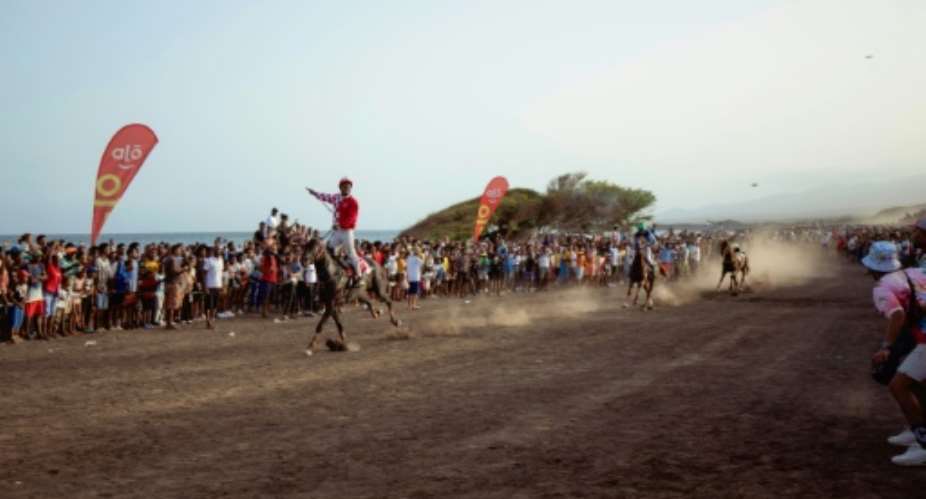
Thousands of people attended horse racing events to mark the end of traditional celebrations on Cape Verdean island Santo Antao which annually lets its hair down for the Feast of Saint John the Baptist.
The festivities not only commemorate the saint's feast day but also mark the summer solstice, which is widely celebrated in several Portuguese-speaking countries.
At the foot of the mountains of the west African island, on a track running along the Atlantic Ocean shore, 18 jockeys competed in the "Sonjon" horse race, won by Phizer and his mount Keke.
The horses competed for three hours to a noisy backdrop of drums and cheering crowds basking in an equestrian spectacle.
Stivan Brito, a 29-year-old soldier, told AFP he enjoyed the "festive atmosphere" and emphasised "the importance of perpetuating old traditions" on the volcanic island.
The festivities, which blend sacred and secular traditions and date back to the 17th century, attract thousands of Cape Verdeans every June to the city of Porto Novo.
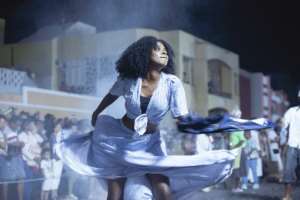 A woman dances in the "Sonjon revoltiod" (Saint-John in revolt) in the town of Porto Novo. By QUEILA FERNANDES (AFP)
For three days, pilgrims pay homage to Saint John the Baptist, called "Sonjon" in the local Creole language, holding a procession and a range of celebrations.
Elenise Santos, a 33-year-old teacher, explained she has attended the festival since she was a child.
"When I was little, I had serious health problems, so my mother vowed always to take me to the procession if I recovered," she said, adding that she was proud to keep alive the "culture" and "tradition" of her island.
The highlight of several days of festivities, the "Sonjon revoltiod" (Saint John in Revolt) parade, featured several dance groups on Saturday evening.
Each neighbourhood displayed traditional costumes and deployed an array of local cultural tools including oil lamps and cooking and farming utensils.
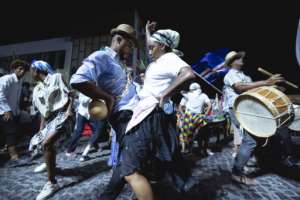 Local participants stressed the importance of keeping old local traditions alive. By QUEILA FERNANDES (AFP)
"We can't let our culture die," explained Antonio Manuel Pedro, a veteran member of one dance group.
"I'm proud to be part of this festival."
Participants swaying to the frenetic rhythm of the "Kola Sonjon" dance, symbolising fertility, wore necklaces of corn and peanuts, representing abundance.
Located in the far northwest of the Cape Verde archipelago, off the coast of west Africa, Santo Antao was colonised by the Portuguese in the 16th century.
World heritage body UNESCO designated the Saint John the Baptist festivities part of Cape Verde's intangible national cultural heritage in 2013.

 Nana Kwadwo Safo Akofena I installed as new leader of Kristo Asafo Mission
 Kristo Asafo Mission rejects claims of shooting Adwoa Safo, calls for independen...
 Six arrested over Kwabenya shooting incident involving Adwoa Safo
 Details emerges as Kristo Asafo Lawyer gives mission’s account of Adwoa Safo sho...
 "Ghana will lift the 2026 World Cup trophy, it will shock the world" – Prophet P...
 NADMO issues final evacuation order for occupants of dilapidated buildings in Ce...
 Two dead, two rescued alive after building collapse at Gyegyeano in Cape Coast
 Ghana vrs England: "I saw both countries sharing 3 goals with Ghana leading" — P...
 Gov’t suspends SHS graduation ceremonies over rising extravagant celebrations
 Two pilgrims arrested over alleged assault on PAOG communications team member


