




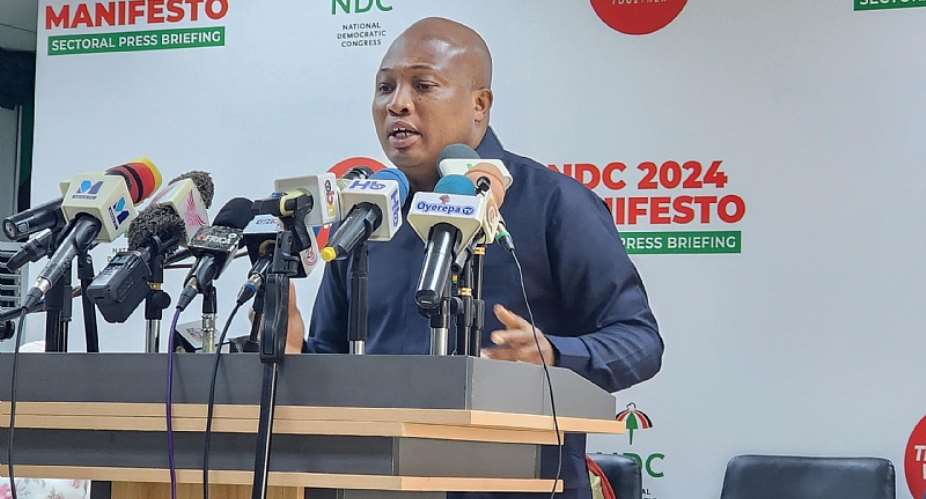
The National Democratic Congress (NDC) has made two significant pledges ahead of the December elections, aiming to reform governance and enhance democratic practices in Ghana.
Hon. Samuel Okudzeto Ablakwa, the Member of Parliament for the North Tongu constituency, announced that if elected, the next NDC government will implement a new system for the election of Metropolitan, Municipal, and District Chief Executives (MMDCEs) rather than maintaining the current practice of appointments.
This proposed change is part of the NDC's broader push for decentralization and democratization of local governance, allowing citizens to have a greater say in choosing their local leaders.
"We believe in empowering local communities and enhancing democratic participation at all levels," Ablakwa stated at a press conference, emphasizing the party's commitment to greater public involvement in governance.
In addition to this, the NDC has also pledged to reduce the number of presidential staffers. This move is intended to promote efficiency and accountability in government, addressing widespread concerns about the size and cost of the current administration.
Hon. Ablakwa pointed out that the reduction of presidential staffers is a response to public outcry over the perceived bloated nature of the current government’s staffing, with many advocating for a more streamlined approach to governance.
Hon. Samuel Okudzeto Ablakwa made this assertion at a press conference dubbed "NDC 2024 Manifesto Sectoral Press Briefing today at the NDC headquarters in Accra.
The NDC's plans go beyond these immediate reforms. The party has outlined a comprehensive constitutional reform package aimed at transforming Ghana's governance structure.
Among the key reforms is a commitment to strengthen Parliament by removing the requirement that the majority of ministers must come from Parliament, which is seen as a measure to ensure greater separation of powers and independence of the legislative body.
The party also intends to abolish Article 71 of the Constitution, which grants special emoluments to a select group of officeholders. This move aims to address concerns about unequal remuneration and perceived privilege within the public sector. Instead, the NDC proposes merging the Presidential Emoluments Committee with the Fair Wages and Salaries Commission to create a more equitable and transparent framework for public sector wages.
The NDC plans to reduce the size of the government by limiting the number of ministers to 60. This will involve streamlining and realigning government ministries to make the executive more efficient and less costly. The party believes these changes will make the government more responsive to the needs of the people, reduce waste, and improve service delivery across all sectors.
As the December elections approach, the NDC’s reform agenda has sparked discussions about the future of governance in Ghana. The party’s promises are seen as bold steps towards a more accountable and democratic government, reflecting a clear response to citizens' demands for change.
 Three arrested in Bolgatanga over alleged attempted baby sale for GH¢20,000, hum...
 Ghanaian shot dead in South Africa as tensions over anti-immigration protests pe...
 Accra Flood Disaster: Hajia Charity challenges Bawumia, demand accountability fr...
 "I'll smoke them out!" – Kojo Bamba alleges powerful NPP figures plotting agains...
 Two arrested after climbing Empire State Building antenna for marriage proposal
 Fire breaks out in central Kyiv after explosion during air raid alert
 US-Iran Doha talks end without breakthrough, focus on Strait of Hormuz
 Venezuela death toll rises to 2,295, seven days of national mourning declared
 Maritime insecurity costs West Africa over $500 million annually — Vice Admiral ...
 Sahel insecurities threaten trade, investment and free movement in West Africa —...
