




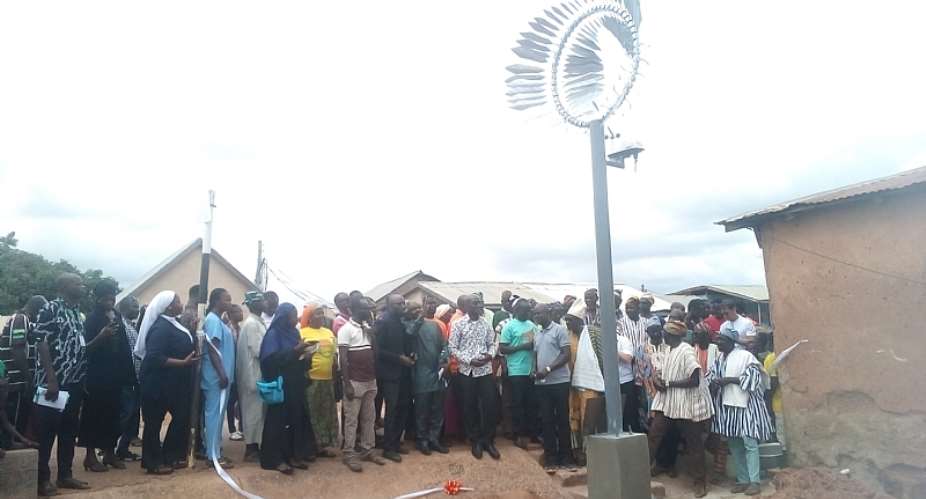
A climate change adaptation project aimed at enhancing local resilience to flooding and improving community safety and health has been launched in Nalung, a flood-prone community in the Tamale Metropolis of the Northern Region.
The project, titled "Community Flood Risk and Adaptation in Tamale," is part of the larger "Enabling Flood Adaptation" initiative led by Imperial College London and funded by the British Government. It is a component of the broader "Pathways to Equitable Healthy Cities" project, supported by the Wellcome Trust, UK, which focuses on building resilience to climate-induced flooding and providing residents with flood forecasts and alerts.
The project was officially inaugurated during a durbar that celebrated a collaborative approach to developing methodologies for city-level flood resilience and reducing health inequalities in sub-Saharan Africa.
The research, conducted in collaboration with experts such as Ben Howard, Cynthia Azochiman Awuni, Abeer Arif, Frans Berkhout, Wouter Buytaert, and Samuel Agyei-Mensah, was carried out in partnership with the National Disaster Management Organisation (NADMO), the University of Ghana, Tamale Technical University (TaTU), and the University for Development Studies (UDS). The initiative aims to develop strategies that communities can implement to mitigate the impacts of severe flooding, especially in vulnerable regions identified as urgently needing climate adaptation measures.
As part of the project, a tree-planting exercise was organized in the beneficiary communities to encourage afforestation as a means of mitigating climate change. The team also provided NADMO with wheelbarrows, Wellington boots, cups, and other essential working gear to support their activities.
The project targets several communities, including Kalariga, Sawaba, Jakarayili, Nalung, Koblimago, and the Tamale Metro area, with the goal of ensuring equitable access to potable drinking water.
During the inaugural ceremony, local chiefs and community members expressed their gratitude to the researchers for their efforts in addressing flood-related issues and improving access to clean drinking water.
Mr. Abdellah Mohammed, the Tamale Metro Annex Zonal Coordinator of NADMO, highlighted the organization's ongoing efforts to raise awareness about community indiscipline contributing to flooding and the need to establish proper drainage systems to prevent crises.
Dr. Ben Howard, a researcher in the Department of Civil and Environmental Engineering at Imperial College London, noted that the project's focus on flooding was determined during a two-day stakeholder meeting where participants identified it as the most pressing challenge facing the communities.
He also praised the researchers for installing instruments to monitor weather conditions in the affected areas.
Madam Cynthia Azochiman Awuni, a team member and PhD student from TaTU, explained that the research revealed how flooding in these areas has negatively impacted economic activities, lives, properties, and the overall health and well-being of residents. She noted that the growing population and urbanization in the metropolis have exacerbated the frequency and intensity of flooding, leading to the construction of buildings on waterways and further contributing to the problem.
Madam Awuni also highlighted that the weather station installed as part of the project is connected to the internet, accessible via floodadaptation.tamale.com, and requires minimal management. She shared that the team has secured additional funding from Imperial College and the UK Government to establish more weather stations in the communities covered by the project.
She appealed to the communities to ensure the proper use and maintenance of these resources to maximize their benefits.

 From the Acropolis, Rubio calls on Europe to emerge from ‘slumber’
 Mahama proposes financing scheme to help Ghanaians complete unfinished houses
 'Free SHS not in crisis; it was suffering under you and we reviewed it' – Haruna...
 Mahama orders sanctions for officials who fail to enforce building safety rules
 2026 World Cup: Minority alleges how GTA charged $7,000–$14,000 for visa process...
 Mahama announces GHS1bn for revolving National Housing Fund
 PAC orders CWSA to recover GH¢2.5m public debt within 30 days
 Former NPP chairman Samuel Odoi-Sykes dies
 Stop taping, gluing damaged cedi notes for re-issuance – BoG tells Ghanaians
 NPP keeps pressing the self-destruction button by doing things anyhow – Akwatia ...


