




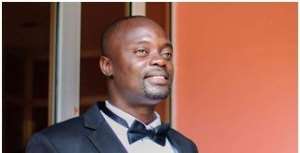
ON 10 November 2022, a journalist called Erastus Asare Donkor, will be exactly 46 years old.
He is extremely lucky to have reached that age. For his life has been seriously threatened more than once.
As a television journalist for one of the most powerful electronic news platforms in Ghana, Multi-media, owners of JOY NEWS, he has specialised in producing on-the-spot TV reports on the worst scandal facing Ghana today – illegal mining of gold. Or galamsey.
One day, while Erastus and his team were accompanying an official galamsey monitoring team, le3d by a senior police officer, to a site where galamsey was taking place, a military man they encountered at the site didn’t like to see them there. He spoke into a phone.
Within 30 minutes, a group of well-armed military men, numbering about 30, had appeared at the site. They were accompanies by some civilian “macho” men.
The group alighted from their vehicles and surrounded the site. They stopped the TV crew from filming, took possession of their equipment, and ordered them to delete everything they had photographed. They also seized their phones and deleted what was on them – including the numbers of their personal contacts. The windscreen of their vehicle was smashed. As were the vehicle’s driving mirrors.
In other words, this was a full-scale military assault on a team that included Government officials on duty.
That was not all. One of the military men, on hearing the complaints of Erastus, told him, QUOTE: I have told you to stop filming. But you don’t want to stop. Now, if my gun were to go off, you would die. And you would die for nothing. No-one would celebrate you!” UNQUOTE
Now, the military are trained not to make threats they cannot, or do not want, to carry out. So, the cold words of the military man were almost a death sentence on Erastus.
But in the mean time, the team that Erastus came with, were also making telephone calls. And after about five hours of being under the orders of the invading force, they were allowed to leave. But this was not before the invading force had threatened to strip them naked to be searched for smart cards they suspected might have been hidden on their person! What? This in Ghana?
At this point, the leader of the monitoring team from the Ministry of the Environment, a senior police officer, said, “You can kill us, if you like, but you’re not going to strip anyone naked.”
They were eventually allowed to leave, and later on, when they had reported the incident to the Ministry of the Environment, military intelligence officials came to take a statement from some of them, including Erastus. “But I haven’t heard anything from them since. Nor have I heard that anyone had been punished for subjecting us to such an ordeal,” Erasmus states.
The most important questions raised by the encounter is this: Are there two governments in Ghana, each challenging the authority of the other? If not, how can a monitoring team sent to a galamsey site by the Ministry of the Environment, Science and Technology, be forcibly evicted (with menaces) from a galamsey site by a detachment of troops ostensibly under the control of the Ghana Armed Forces?
A second question raised is this: Is there a Parliamentin Ghana at all? Erastus Asare Donkor has broadcast a full video of the encounter on JOY NEWS, and the footage is also freely available on Youtube. Yet not a single Parliamentary question has been asked on the issue by our MPs (as far as I know.)
If Erastus Asare Donkor were your typical Ghanaian journalist, he would have long ago shut up shop and forgotten about how galamsey is destroying Ghana’s water-bodies and food farms. But he has helped Multi-Media to compile a number of videos, under the title DESTRUCTION FOR GOLD, on both JoyNews and Adom TV and others, which are currently being screened. The publicity on screening times is erratic, but if you persist, you will find the videos.
Any Ghanaian who watches these videos and does not cry is not worthy of the land of his birth. Can you imagine cocoa trees – repeat, cocoa trees – with deep holes dug around them, ready to be felled so that the ground can be excavated for galamsey?
Can you imagine rivers deliberately diverted from their natural causeways, so that the riverbeds can be mined with excavators and bulldozers?
Can you imagine hundreds of changfan machines lined up on a river, carrying out galamsey in 2022?
It is all there on your telephone or TV screen. Please watch the films and don’t just sit around moping. You have an MP; you may know a Minister. They are all in their jobs representing YOU. Let them know they have betrayed YOJU”
Meanwhile, please join me in congratulating Erastus Asare Donkor and his teams, as well as the teams from other TV stations, who have been showing us, filifili, the pocked marks on our landscape; the craters filled with stinking water; the jars with coloured water in them, comparing what our rivers have become with what the water ought to be like; the holes dig around people’s houses; the warnings about cancerous diseases and genetic malformations that affect humans and other creatures when they involuntarily imbibe absorb mercury, cyanide and other poisonous chemicals, that are ruthlessly emptied into our rivers and our food farms by galamsey operations – PLEASE LET US THANK THEM ALL.
Truly, these journalists are risking their lives to save ours.

 Sandema: Funeral clash leaves four injured, army recruit loses hand
 Upper East: Residents raise concerns over Mahama’s 24-hour market policy
 Ex-Buffer Stock CEO and wife were not denied legal counsel on rearrest — EOCO
 PDS case: Lawyers detained were invited as suspects a day earlier -- EOCO
 Government explores autonomous rapid transit system to modernise intra-city tran...
 AU mourns demise of former Botswana President Festus Mogae
 Economic recovery came at a cost to BoG — Sammy Gyamfi on 2025 losses
 NPP's criticism of BoG 2025 losses disingenuous, hollow — Sammy Gyamfi
 Ghana Armed Forces to conduct counter-insurgency exercise in Bono, Upper East re...
 Site for Adaklu District 24-hour economy market handed over to contractor



Comments
This is the one who deserves the accolade "investigative and award-winning journalist " and not these "kokompe" blokes calling themselves journalists who are bankrolled by corrupt politicians and also get wide media coverage .