




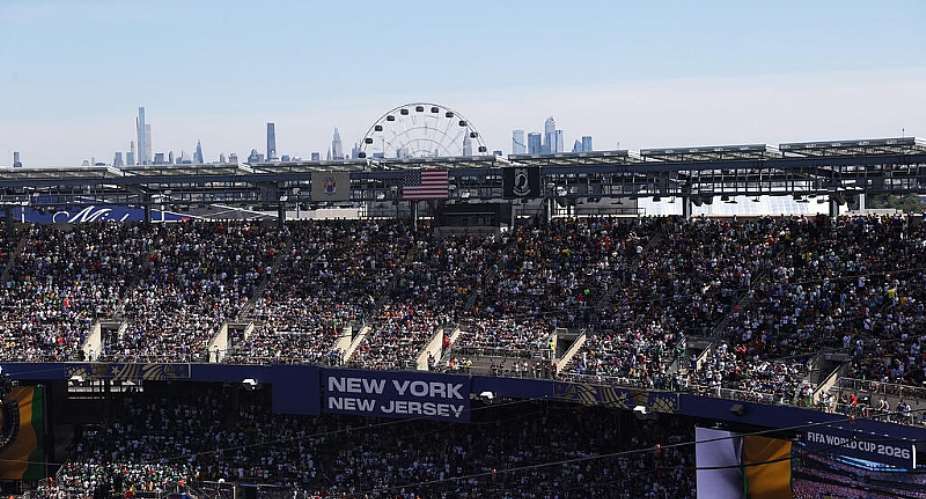
Spain and Argentina have reached Sunday's World Cup final by very different paths, yet both arrive hoping their gameplay will be the one to win them the world's biggest football championship. Spain's La Roja have looked like the tournament's most complete team, conceding just one goal in 7 matches. Argentina's La Albiceleste, meanwhile, have perfected the art of the comeback, twice rallying from behind to keep their bid for back-to-back world titles alive.
The World Cup 2026 final will also reunite two coaches whose paths crossed long before they met on the world's biggest stage. Argentina boss Lionel Scaloni completed his training under Spain's manager Luis de la Fuente.
"They know each other extremely well," says French football journalist Xavier Barret. "Many Argentine internationals have played in La Liga, while many Spanish players have worked under Argentine coaches or alongside Argentine teammates."
Yet despite the shared footballing roots, the identities at play could hardly be more different.
Collective precision
Spain's route to New York has been built on suffocating opponents rather than overwhelming them. They monopolise possession, dictate the tempo and rarely lose their structure.
"They don't dominate relentlessly for 90 minutes, though," Barret says. "They control games in phases. They move the ball patiently, they don't press constantly because that's impossible to sustain, but they make opponents chase the game."
French sports journalist Karim Baldé believes Spain's greatest strength lies in collective, rather than individual, brilliance and in their ability to steadily raise their level of play throughout the tournament.
Watch more Spain dominate France and advance to World Cup final
"They started the tournament quietly, after drawing with Cape Verde, and it wasn't sure they would even reach the final," he said. "But they have improved with every match. Their defensive block is incredibly well-organised. The team hardly moves out of shape."
Spain are also one of the few elite sides not dependent on a single star.
"They can leave players like Mikel Merino on the bench," Baldé says. "That tells you about the depth Luis de la Fuente has: He has different tactical options depending on the opponent."
The team's cohesion is a reflection of a programme dating back to the mid-1990s when Spain overhauled youth coaching nationwide, introducing regional scouting and a unified possession-based philosophy inspired by FC Barcelona, Barret explains.
The 'M' factor
If La Roja represents structure, La Albiceleste embodies resilience.
Scaloni's side needed another dramatic comeback against England in the semi-finals (2-1) after trailing for much of the match, continuing a pattern that has defined their title defence.
"You always think they're about to lose, and somehow they win,” Baldé says.
Behind Lionel Messi, he says, lies a squad willing to sacrifice everything.
"They're soldiers in Messi's service. Players like [Leandro] Paredes and [Alexis] Mac Allister bring intensity and aggression when it's needed. The whole team is elevated by having him."
"I didn't think he'd still be playing at this level," Barret admits. "He doesn't run much anymore, but he stays mentally sharp. He always sees the right pass at exactly the right moment."
But Barret sees something deeper at play. "When Argentina are backed into a corner, they find something extra," he adds.
"They play as if their lives depend on it. That's very South American. They have enormous pride."
Watch more Argentina come from behind to beat England 2-1
That mentality has repeatedly compensated for tactical imperfections. Argentina's defence has occasionally looked vulnerable, but they have shown remarkable composure under pressure. Against England, they finished with an extraordinary 88 percent possession during the closing stages after spending much of the game trying to find a path to victory, illustrating their ability to adapt when circumstances demand it.
Barret expects both teams to neutralise many of each other's strengths in the final.
"They could cancel each other out," he says. "Spain will try to control the ball. Argentina are perfectly comfortable defending deep and waiting for their moment."
Time to shine for Yamal
For Baldé, one player could tip the balance.
"We've all been waiting for Lamine Yamal to produce his defining performance," he says. "If he reaches his best level in the final, that could change everything."
The semi-finals offered contrasting lessons in game management.
While Spain comfortably controlled France, Argentina capitalised on England manager Thomas Tuchel's increasingly defensive substitutions.
"Scaloni is always willing to take risks," Barret says. "Even against Egypt earlier in the tournament, when others would protect what they had, he removed defenders and added attackers. Tuchel did the opposite against Argentina."
Against Spain, however, Scaloni faces a very different challenge.
"Nobody has really managed to disrupt Spain," Barret says. "That's why this final is so fascinating."

 Missing 8-month-old baby found safe in Kpando
 Captain Smart cuts sod for first DVLA office in Gomoa enclave
 Committee tasked to review Adamus Resources Limited licence revocation petition ...
 'The Tribunals Bill appears to preempt constitutional review recommendations' — ...
 'Tribunals are prone to political manipulation' — Kofi Bentil cautions
 'The fear is completely unfounded' — Akwatia MP defends Tribunals Bill
 'Let's start; if it doesn't work, we can review it' — Martin Kpebu backs Tribuna...
 Spain face Argentina in battle for World Cup supremacy
 Ex‑NAFCO Boss Petitions AG: ‘I’m Being Harassed, Detained and Tortured’ — Abdul‑...
 “No Table Will Turn”: Gaming Commission Deputy Tells NPP to Stop Politicising EO...

