




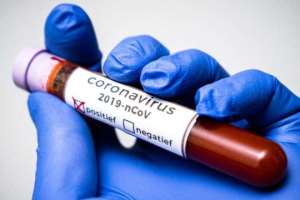
THE COVID-19 virus is like a stealthy ghost stalking the land, taking whom it wants to, and confusing everyone about how to stop it in its tracks.
The job of confusing us is made easy for it by its ability to strike whoever it wants to, wherever he/she might be.
We've heard of Dr Thomas Mensah, who has died in London at the age of 87. It's not been acknowledged yet that it might have been COVID-19 that sadly killed him. But travelling between Ghana and the United Kingdom in recent days could have made him quite vulnerable -- given his age.
We've also heard of the death, in London, of Mike Adjei, journalist and author. Mike was, for a short time, Features Editor of the Daily Graphic, when I became the paper's editor in 1970. It's a terrible feeling to lose such close collaborators, I must confess.
I've written elsewhere about my admiration for Dr Thomas Mensah's courage in openly going to Kyebi, as a lecturer in Law at the University of Ghana, to be a lead pall-bearer of Dr J B Danquah, when the legal luminary passed away at Nsawam Prison on 4 February 1965.
The family of Dr Danquah had been given strict instructions to conclude the funeral ceremony by 6 p.m. Of the day on which the body was released from Nsawam Prison to his nephew, Paa Willie (William Ofori Atta.) The Nkrumah Government was doing this to forestall any possibility of the funeral causing a huge crowd to gather together at Kyebi and pose security problems for the regime.
Everyone knew that Kyebi would be awash with Nkrumah's security agents, and some of those who had the courage to go to the funeral must have adopted a very low profile. After all , who wanted to follow Dr Danquah into Preventive Detention and perhaps, into the grave, as well?
But accompanied by his Legon friend, the late Albert Adu Boahen. (Lecturer in history) Thomas Mensah went to the family home of Dr Danquah at Kyebi, kwahaa ne ntoma (rolled down his cloth from the shoulder downwards, baring his chest) and led the pall-bearers who carried Dr Danquah's coffin to the Presbyterian Church and thence, to the cemetery.One ofd the greatest moments of my journalistic life was to be able to take a very brave photographer, Christian Gbagbo, to Kyebi to record it all for Drum Magazine, the paper I edited.
I have described Dr Mensah's role as an act spinging from “animal courage”, for certainly, he was going to be photographed and placed on file as one of the "anti-Nkrumah" lecturers at Legon. That could mean 5 years in prison under the Preventive Detention Act. When, in conversation years later, I complimented him on his courage in not fearing to be branded an "anti-Nkrumahist" lecturer, he modestly replied that “Danquah was a member of my family, and it was my traditional duty to carry his coffin.” Ha -- there were many other members of Danquah's family, and not all of them responded to his death the way Dr Mensah did.
On my return from Kyebi, I mentioned to my friend, Dr Conor Cruise O'Brien, then Vice-Chancellor of the University of Ghana, that Thomas Mensah had impressed me greatly with his courage on that day. Dr O'Brien's wife. Maire, remembered what I said and recorded it in her autobiography: The Same Age as the State: The Autobiography of Maire Cruise O'Brien
It is my fervent hope that Ghana will continue, in future, to produce people like Dr Mensah, who can defy personal danger and do what seems right and decent to them, no matter what the risk to themselves.
Now to COVID-19: I am afraid that we are dealing more with the effects of the disease than the disease itself. The Government's thoughtful and humanitarian measures to alleviate the suffering of people whose work and lives have been impinged upon by the lockdown are greatly welcome, of course.
The Government should, as much as possible, also tap the experience and expertise of the professionals who used to run the extremely effective "Department of Social Welfare" (even if they are now retired). For you cannot organise food rationing in over-crowded urban centres(for example) without adequate preparation. Yet that seemed to have happened at Nima. The correct method of distribution must be determined, with time-frames and preparatory propaganda, before the food arrives. Or the unfortunate result could be “bread riots”.
Equally as important is the problem of PREVENTING THE DISEASE FROM SPREADING. I am not quite satisfied that we have distributed adequate quantities of personal protection equipment (PPEs) to our health workers. Yet the Chinese, the Koreans, Singaporeans, Germans and other people, who have valiantly fought against, and defeated, COVID-19, did so by testing, testing and testing. And if you do not equip the people doing the testing well, you are not only sending these people who have been trained to possess rare skills, to their deaths but getting them to be infected and to spread the disease themselves – the very opposite of what you intended to do.
I believe PPEs, in particular, are so much in short supply around the world that scammers have set up websites all over the place, inviting Governments and institutions to order equipment from them – equipment which doesn't exist. However, we can find some to buy, if we task the Commercial Attaches and Intelligence Officers in our embassies abroad to hunt, with due diligence, for us and find out what we can get from anywhere, and buy it.
As our gallant President remarked with great wisdom, “We can always bring the economy back. But what we do not know is how to bring dead people back to life!”
I hope and pray that no-one will seek to make political, and/or economic capital out of this calamity. There are some people in the eyes of whom Akufo-Addo can simply never do the right thing. When he declared that electricity charges would be reduced in line with the reductions made in water and other charges, they chided him for 'stealing' the idea of John Mahama! But that idea was on the Internet long before Mahama ever spoke!
Anyway, isn't what a patriotic President is required to do to listen to everyone who has good ideas to contribute -- if such ideas can save the nation?!
PLEASE LET US MOVE FORWARD IN UNITY AND MUTUAL SUPPORT. For we really do have a terrible pestilence to face and conquer.

 Obuasi SHTS sex scandal: Parliament Gender committee demands full accountability
 Some NDC MPs didn't vote for me; NPP votes made me Speaker in 2021 – Bagbin
 Ghana Armed Forces to hold land combat firepower demonstration at Bundase on Oct...
 Gambia to pay victims of Yahya Jammeh’s rule from proceeds of his seized US mans...
 Kolgo Paramount Chief questions 24-hour economy market without security
 'ABFA utilisation data excluded from PIAC's report not withholding of informatio...
 Obuasi SHTS sex scandal: Manasseh never said headmaster is a rapist - Brako-Powe...
 Obuasi SHTS sex scandal: GES to ban teachers from inviting students to bungalows...
 UG directs students with CGPA below 1.00 to go home
 Uganda Revenue Authority delegation visits TOR to understudy Ghana’s oil refinin...


