




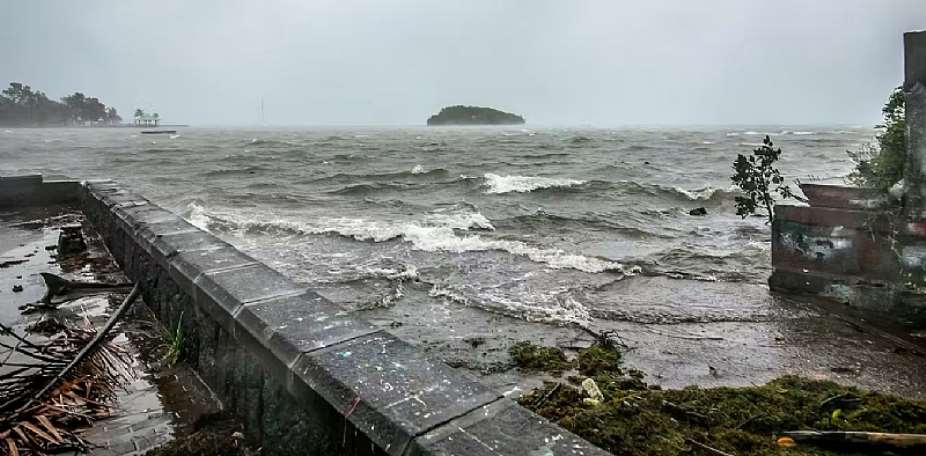
Mauritius is a small African island where natural disasters like floods, cyclones and other extreme weather events have become frequent and intense. They are expected regularly.
Rising sea levels, flash floods and tropical cyclones cause annual direct damage of US$113 million on average every year.
Mauritius needs to adapt to climate change fast. It already has its own government-funded Climate and Sustainability Fund to pay for adaptation. External climate finance organisations, such as the Green Climate Fund and the World Bank, also fund some adaptation projects.
Between 2026 and 2035, Mauritius is projected to spend US$1.5 billion on climate adaptation. But it will need US$5.6 billion more over the next 25 years.
Climate change in small island nations is often framed around rising sea levels, stronger storms and reliance on foreign aid. Less attention is paid to how climate funding is actually managed, and whether governments have the skills and capacity needed to plan, coordinate and use these funds effectively.
My work explores the relationship between climate finance, institutional capacity and governance reform, to help the government build stronger systems for climate adaptation and resilience. 2024 floods in Mauritius.
As part of a recent study I interviewed over 40 climate researchers, banking professionals, policymakers, civil society organisations and anti-corruption officials. The aim was to uncover risks, gaps, and pathways for improvement in Mauritius's climate finance landscape.
I found that Mauritius focuses on getting climate funding in. Yet, once funds enter the system, a lack of comprehensive tracking frameworks and reporting mechanisms often make it unclear where the funds go and what they achieve. This creates the risk that money could be mismanaged or fail to reach the communities that need it most.
To address these problems, the government, regulators and civil society need to establish an independent oversight system. Communities should have a greater role in monitoring how climate funds are allocated and used.
What my research found
My research found a troubling picture:
There is no clear definition in Mauritius of “green” investment. This means it is easier to “greenwash”, or describe a project as environmentally friendly when it is not.
Weak accountability systems increase the risk of climate funds being misused.
Poor coordination between local and national authorities creates delays and red tape.
Local authorities said they were often excluded from funding decisions, even though they are on the front line when climate disasters strike.
Communities don't have much say into how climate funds are allocated and spent.
A shortage of technical skills and digital tools makes climate finance difficult to track.
Mauritius doen't have regular or complete data on the climate. This makes it harder to assess risks and make informed decisions.
There aren't enough climate governance experts. The country's climate risks are underestimated.
Eighty four percent of climate leaders I surveyed viewed corruption as a direct obstacle to climate finance delivery. More than 70% recognised that Mauritius lacks strong civic engagement processes to track how climate funds are raised and spent.
I also found that awareness of climate risks was relatively high. Over 30% of leaders expressed extreme concern about these. But ways of thinking about climate adaptation were largely limited to the need to access international climate finance to pay for projects. Nobody I interviewed spontaneously identified transparency, disclosures, accountability, or anti-corruption safeguards as core components of climate finance tracking and oversight.
The systems that ought to strengthen resilience and manage climate finance efficiently are being undermined by internal governance weaknesses.
Climate finance risks exposed across Africa and Mauritius
As part of my research, I looked at previous and ongoing legal cases around climate corruption. In Africa, there are at least 16 reported corruption cases across high-risk sectors – energy, forestry, construction and mining. Mauritius currently has no legal convictions or formal corruption indictments linked to climate finance.
But I highlight one Mauritius case of mismanagement in my research. A state-owned entity, Drains Infrastructure Construction Ltd, was created in 2021 to speed up projects designed to prevent flooding and help water drain away safely. The entity only finished building 7% of the drainage projects it was awarded. The majority were either delayed, or didn't get financial clearance to begin, or started but failed to reach the implementation phase.
This does not necessarily mean that corruption has taken place. Rather, weak governance structures may enable mismanagement and misuse of climate funds.
My research concluded that having only one central authority controlling the distribution of climate funds to all 12 local councils makes matters worse. This limits funding for urgent, community-based climate resilience work and expands the chance that climate finance can be mismanaged.
What needs to happen next
The answer lies in transparency.
First, control over climate finances must be given to local authorities. This will legally empower and adequately resource district and municipal councils to manage their own climate budgets and be able to deal with local climate disasters.
Second, laws must protect climate and environmental whistleblowers, allowing people to safely report when funds for community adaptation projects are wasted or mismanaged. Countries like Latvia have already moved to embed protection for climate whistleblowers in national law. In the United States, provisions in the law protect people who raise concerns about the mismanagement of climate funds and environmental harm.
I came up with this whistleblower protocol:
Reporting channels must be set up so that people can report wrongdoing verbally or in writing, online and offline.
The people who interact with whistleblowers must be trained to maintain confidentiality, protect data, keep proper records and practise effective ways of listening to whistleblowers and giving them feedback.
The protections must be wide enough to cover anyone reporting a wide range of unlawful, abusive or harmful acts or omissions relating to climate funds.
Individuals need support and protection to speak up.
Whistleblowers must get regular updates on how investigations are going.
Without strong whistleblower protection in climate finance, funding risks disappearing into a bureaucratic vacuum. This will leave local communities exposed to worsening flash floods, and allow mismanagement to go unchecked.
Neekhil Bhowoniah does not work for, consult, own shares in or receive funding from any company or organisation that would benefit from this article, and has disclosed no relevant affiliations beyond their academic appointment.
By Neekhil Bhowoniah, Lecturer in International Finance and Economics, University of Mauritius

 'Chief Justice was talking as a citizen; you have to look at the context in whic...
 Mandatory towing to remove broken-down, stationary vehicles from roads to begin ...
 Domelevo backs OSP probe into alleged GH¢70,000 payment to Appiagyei despite den...
 WAEC releases 2026 WASSCE results, cancels entire results of 861 candidates for ...
 Baffour Agyeman-Duah explains why profitability may not be only reason behind SO...
 Kofi Bentil defends Mahama’s dissolution of nine State Boards
 5-year-old girl dies after falling into water-filled manhole at Winneba
 Sierra Leone ex-president to return after treason case dropped
 'Explain how you spent your Common Fund' — Boako, Annoh Dompreh challenge Tano N...
 Ghana ends South Africa evacuation; brings home nearly 1,900

