




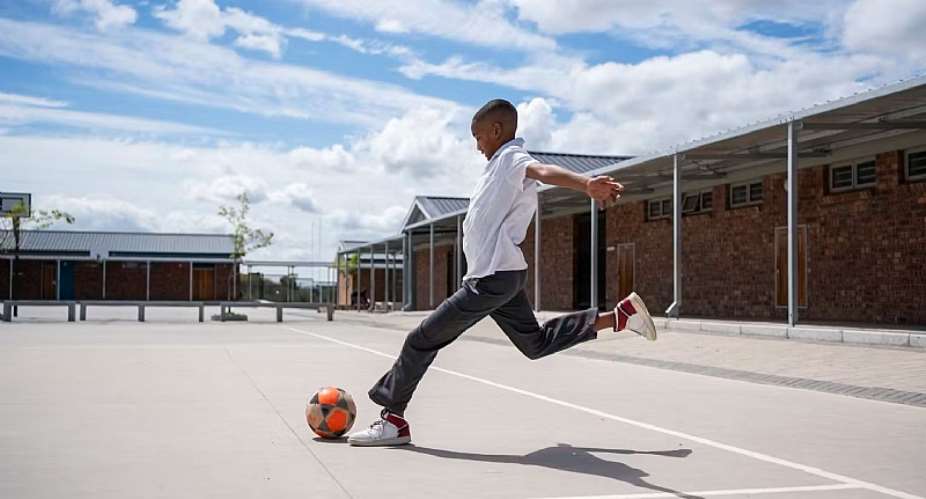
Climate change is making southern Africa hotter. While much attention has focused on climate impacts like droughts, floods and food insecurity, another crisis is unfolding quietly inside classrooms. Research has shown that some schools are becoming dangerously hot places for children to develop, learn and play.
Hot classrooms can affect concentration, memory, behaviour and academic success. Extreme heat also increases risks to children's physical and mental health, especially in schools with poor ventilation, overcrowded classrooms and limited access to drinking water.
For many children, especially those in poor communities, school may now be one of the hottest places to spend their day. This is a serious but under-recognised education and public health issue.
Our research as environmental health scientists at the South African Medical Research Council highlights how rising temperatures are affecting daily life and well-being. Multiple studies support this.
Together with the University of Johannesburg, we've studied classroom thermal conditions and possible impacts on children's health in Gauteng province – more than half of the temperature and humidity readings called for caution or extreme caution. Another of our studies, led by University of Johannesburg environmental health researcher Shalin Bidassey-Manilal, measured classroom temperatures in Johannesburg and found that almost all the children reported low concentration levels. One of our studies traced relationships between classroom temperature and absenteeism, which increased at temperatures over 25°C.
Yet, school buildings and playgrounds are not often designed or adapted for protecting children against extreme heat.
Home isn't always safer either: we've shown that families living in government-built low-cost and informally constructed homes are the most at risk for indoor temperature extremes.
Our most recent study has shown that the impacts differ between rural and urban schools too. For example, one of our findings was that urban classrooms were better at keeping the temperature at a comfortable 25°C-28°C compared to rural classrooms. Differences like this deepen educational and health inequalities.
For many people, climate change still feels like a future problem. But for children sitting in overheated classrooms, it is already affecting their ability to learn, thrive and stay healthy. Education systems across southern Africa must better prepare for a hotter future.
Heat affects how children learn
The human brain works best within a relatively narrow temperature range. When classrooms become too hot, children may struggle to concentrate, process information and retain knowledge.
International studies have linked hotter classroom conditions to poorer test scores, reduced attention spans and lower productivity. Teachers may also experience fatigue, headaches and a reduced ability to teach effectively.
Young children are especially vulnerable because their bodies do not regulate heat as efficiently as adults. Children can also become dehydrated more quickly.
In many southern African schools, temperatures inside classrooms may be even higher than outdoor temperatures because of metal roofs, poor insulation, overcrowding and lack of airflow. Some classrooms effectively become heat traps. This problem is likely to worsen as climate change increases the frequency and intensity of heatwaves.
Poorer communities face the greatest risks
The impact of heat is not experienced equally.
We compared schools in urban and rural areas of South Africa (the city of Tshwane and rural Giyani). Among our key findings were that:
the maximum daily average temperature in the urban school was 32°C; in rural schools it was as high as 42°C
indoor temperatures and humidity levels at rural schools were more variable than those in urban classrooms
fan cooling was effective in the city but not in rural classrooms
broken or missing ceilings in rural schools made the rooms hotter
urban classrooms were better at keeping the temperature at a comfortable 25°C-28°C compared to rural classrooms.
Some learners spend hours in classrooms made from corrugated metal or prefabricated materials that absorb and retain heat. Others walk long distances to school in extreme temperatures. Water shortages create additional risks. Without access to safe drinking water, children may become dehydrated during the school day.
The increase in temperatures due to climate change therefore risks deepening educational inequality across the region.
Heat is also a health issue
Extreme heat affects more than academic performance. Children exposed to high temperatures may experience headaches, dizziness, exhaustion and heat stress. Learners with asthma or other chronic conditions may face additional health risks, especially where heat combines with poor air quality. Sleep disruption during hot nights can further affect children's concentration, mood and school attendance.
Teachers are also affected. High temperatures may contribute to fatigue, stress and reduced workplace wellbeing, particularly during prolonged heatwaves.
Despite these risks, many schools have no heat-health plans or guidance on how to protect learners and staff during extreme heat events. The National Heat Health Action Guidelines call for schools to consider heat in their planning.
Schools need to adapt to a hotter future
The good news is that many solutions are practical and achievable. Schools can reduce heat exposure through better building design, improved ventilation, shade trees, cool roofing materials and access to drinking water. Even relatively simple interventions, such as planting trees or adjusting classroom layouts to improve airflow, can make a meaningful difference.
Governments and education departments should also consider heat when designing new schools and upgrading older infrastructure.
School timetables may need to become more flexible during heatwaves, particularly for sports and outdoor activities.
Teachers and school staff should receive guidance on recognising signs of heat-related illness.
Heat-health warning systems could also include schools as priority sites for communication and intervention.
Importantly, children and young people themselves should be involved in climate adaptation planning. They are already experiencing the impacts of climate change directly.
Caradee Yael Wright receives funding from the South African Medical Research Council.
Natasha Naidoo receives funding from the South African Medical Research Council
By Caradee Yael Wright, Chief Specialist Scientist (Public Health), South African Medical Research Council And
Natasha Naidoo, Specialist Scientist, South African Medical Research Council

 'Chief Justice was talking as a citizen; you have to look at the context in whic...
 Mandatory towing to remove broken-down, stationary vehicles from roads to begin ...
 Domelevo backs OSP probe into alleged GH¢70,000 payment to Appiagyei despite den...
 WAEC releases 2026 WASSCE results, cancels entire results of 861 candidates for ...
 Baffour Agyeman-Duah explains why profitability may not be only reason behind SO...
 Kofi Bentil defends Mahama’s dissolution of nine State Boards
 5-year-old girl dies after falling into water-filled manhole at Winneba
 Sierra Leone ex-president to return after treason case dropped
 'Explain how you spent your Common Fund' — Boako, Annoh Dompreh challenge Tano N...
 Ghana ends South Africa evacuation; brings home nearly 1,900

