




Microorganisms
Delayed hypersensitivity may occur following infections with numerous organisms, for example, tubercle bacilli. Bacteria such as Brucella and typhoid bacillus, which cause chronic infection, granulomas and which multiply inside host cells, are also good inducers of this type of sensitivity.
Following streptococcal, pneumococcal, and diphtheria infections, delayed hypersensitivity has developed, but it is not directly involved in the progress and parthenogenesis of these acute bacterial diseases. Delayed hypersensitivity has also been observed viral fungal, protozoal, and other parasitic infections.
Also, the granulomas seen around Schistosoma mansoni eggs are due in part to delayed hypersensitivity reactions to egg antigen.
Proteins
Although delayed hypersensitivity was first thought to be limited to the infectious process and was referred to as bacterial allergy, similar reactions can be elicited by non-bacterial proteins. To experimentally induce delayed hypersensitivity in animals, protein antigens are emulsified with complete adjuvant; the combination elicits a more potent immune response than does the protein alone.
The adjuvant is usually a suspension of dead tubercle bacilli in oil; but other organisms, such as Nocardia, can substitute for mycobacteria. Considerable work is being out to develop adjuvants safe for use in man. Promising candidates include muramyl-dipeptide (MDP), an active ingredient from mycobacteria, as well as synthetic derivatives of MDP.
Other substances isolated from mycobacteria and Nocardia are being tested as well. Another method of enhancing the immune response is to incorporate antigen and adjuvant into lipid envelopes called liposomes. Further, conjugation of protein antigens with certain lipids enhances delayed hypersensitivity reactions to protein but diminishes the antibody response.
Despite extensive research, mechanisms of adjuvant action is not known; adjuvant may enhance T-cell helper function. Proteins also induce delayed hypersensitivity when injected repeatedly into the skin, either as antigen-antibody complexes or proteins alone. Since many basophils are present in lesions produced in this manner, the reaction is referred to as cutaneous basophilic hypersensitivity.
Chemicals
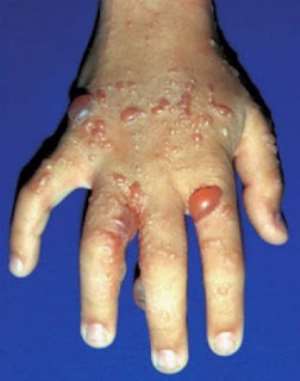
Another form of delayed hypersensitivity can be induced by applying simple chemicals to the skin. In man, the most common example of contact sensitivity is poison ivy contact dermatitis. Experimentally, picryl chloride and 2,4-dinitrochlorobenzene (DNCB) have been extensively used to study this type of sensitivity.
Under these conditions, a small chemical group (hapten) binds to a skin protein via a free amino or sulfhydryl group. The hapten-protein conjugate induces or elicits this type of sensitivity. This was the first form of delayed hypersensitivity to be transferred to an unsensitized animal by injecting cells from the sensitized animal.
Significant basophilic infiltration has recently been described in lesions of hypersensitivity induced by chemicals.


 ‘We have turned the tide’ – Ato Forson says Ghana is ready to take off
 Sammy Gyamfi refuses to file defence, hides behind technicalities — Lawyers
 Osahen Afenyo-Markin vows to pursue case against Sammy Gyamfi despite high court...
 Let us all be mentors to our younger generation - Mahama
 Court stops Osenase homecoming over security concerns
 Supreme Court dismisses Solomon Asamoah's bid to stop Sky Train trial
 GRA denies imposing new 20% tax on Netflix, Google and Amazon subscriptions
 Police arrest 16 suspects, seize 209 rounds of ammunition at Gbane mining site
 ‘Mahama has lost his moral high ground’ – Dr Zaato on Affi Agbenyo’s EC appointm...
 Cassava, hemp could offer alternatives to plastics – Zanetor challenges scientis...


