




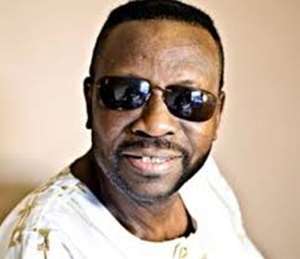
Cor, what could I say to Henry Ofori after his justifiable criticism of my failure to join him at Drum? But fate was to decide that I should go to Drum, and under circumstances which neither Henry Ofori nor I could ever have foreseen!
I was still smarting from Henry's expression of disappointment over my failure to take up my appointment at Drum when I heard on the grapevine that Drum had been banned by the Government of Dr Kwame Nkrumah!
What? There was no announcement, of course, and no explanation whatsoever! So much did the Government take the Ghanaian public for granted. What was undeniable was that Drum was not to be seen being hawked by happy youngsters yelling “ÄFRICAN DRUM! … AFRICAN DRUM!” on the streets at the beginning of each month!
It was hard to believe that the Government of Dr Kwame Nkrumah would deprive Ghanaians of one of the few media organs in the country that had a distinctive personality. The newspapers of the time – the Daily Graphic, the Sunday Mirror, the Ghanaian Times and The Evening News – had all, effectively, become solemn. In fact, they were mere adjuncts to the propaganda machinery of Dr Nkrumah's ruling Convention People's Party. One could “read” each of them in barely three minutes: the “news” that they published was usually news that had been broadcast repeatedly the day before by the Ghana Broadcasting Corporation.
Their features treated exciting issues that were as challenging as “It is better to walk on the pavement than be knocked down by a moving vehicle”! Those who despair of the lack of adequate coverage of news in Ghana even today must realise that very little has changed on the journalistic front since those days. Set a bad precedent, and it will stay a long time with people. The precedent that was set at the time was that journalists employed by the state began to see themselves as servants of the state, not society. How could “civil servants” in journalistic garb be expected to be opinion leaders who leaned on the Government of the day, irreverently if necessary, to do the right thing?
The Drum of the time, half-apolitical but not too afraid to stray into political issues where necessary, was fun, above all, and – let it be said – long before I joined the paper. It had long-established features which one could trust to be funny or weird. It had editions in South Africa, Nigeria, Central Africa and East Africa. Articles from the editions were often syndicated around the whole continent. Many of the more weird features that were Pan-African in nature, and which were also good samples of what journalists call “human interest” stories, allowed readers to obtain first-hand information about how life is lived elsewhere.
For instance, each edition of Drumpublished the Dolly column, which freely borrowed “problems” from the other editions published elsewhere on the African continent. Ostensibly written by a world-wise woman called Dolly, but apparently with “inputs” by the male staff on occasion, the column dished out “advice” to people afflicted with challenges, most especially in their love life. It answered questions like this one from Ghana: “Dear Dolly, I love my husband dearly. But he likes to drink akpeteshie, (locally distilled gin so potent in nature that it flames up when a match is applied to it!). And he also smokes cigarettes.
The combination of scents produced by these two substances gives him extremely bad breath. Yet it is when he is drunk that he becomes romantic and wants to be with me. I have been tolerating it for long time, but now, I am thinking of leaving him, for I know he will never change. But if I leave him, I shall have to find another place to live and my salary will not allow me to pay for a room. Dolly, I am desperate! What can I do?”
Another problem, sent to us when I was editor, but not published because my puritanical attitude of the time regarded it as too risqué, asked (the language had been polished, please note!): “ Dear Dolly, my male organ is short and thin, whereas my wife's organ is deep and wide. I strongly feel that she does not get fullsatisfaction when we make love, especially as I tend to finish too early. But she is too polite to complain. Nevertheless, I fear she may stray elsewhere to get her thrills if I am not careful. I love her very much, especially since she shows so much patience with me. What steps can I take to prevent her becoming unfaithful to me?”
We gave it some thought but in the end took the coward's way out and refused it publication on the grounds that it was too lewd. Someone even suggested that it might be a hoax! I have often wondered what we would have said if we had attempted to advise the guy – penis extensions? [These were not generally known in those days!] Cunnilingus? [Very un-African, is it not?] Fingering? [Some women regard that as a cop-out, and thus hate it!] Oh, well!
Now, an issue like that, published in Drum, could be discussed in homes, work places, clubs and even classrooms for weeks on end. Was the advice given by Dolly for such a problem quite appropriate? So no-one wanted to miss Drum,if it could be helped.
Then there were the funny pieces written by Henry Ofori under his pen-name of Carl Mutt. His strange choice of subjects alone made the column a must-read, and then there was his style: flowing, explicit; challenging one not to laugh.
Next came the articles which, as I have mentioned, were pinched from other parts of Africa – countries which Ghanaians only read about in geography books, or heard about on the radio, but did not have the slightest idea about life as it was lived there. An article from Nigeria in which a Mallam (Islamic priest) promises the writer that he will be blessed with “Plenty, plenty cow! Plenty plenty wife!”. Or one from South Africa about Jake Tuli, a famous boxer of the time. And maybe a story from Southern Rhodesia [now Zimbabwe] in which Joshua Nkomo and George Nyandoro are interviewed from their detention centres, or one from Nyasaland (before it became Malawi) or or Kenya (still waiting for Jomo Kenyatta to be let out of jail and become Prime Minister].
Best of all, Drum exposed its continent-wide readership to feminine beauty as found in other parts of Africa. It always carried the colour picture of a beautiful girl on its cover. Some were stunning; others were not. But, again, this offered a subject for major debate throughout Africa: was it really true that Somali girls were the most beautiful on the continent? Wasn't that South African cover-girl wearing a short grass skirt and with an almost-visible bosom more beautiful than any Somali girl who had ever appeared on the cover? And so on and so forth.
Yet this entertaining magazine had been banned by a Government that claimed to be a “people's government”? Did it not know that the people enjoyedreading it?
Of course, there were people in the Nkrumah Government who did not want the people to “enjoy” anything. To them, enjoyment was a “superficial” aspect of life. Industrialisation, and other abstract words usually ending in “-tion” or
“-ment”, were what a socialist government like Nkrumah's needed to instil into its people, according to some of the so-called socialists (though their private lives indicated completely different beliefs).
Well, that was how the ban was rationalised to those who asked and would listen to the answers . The real reason, however,– as elicited by our socially mobile and intrepid photographer, Christian Gbagbo, from a beautiful former Drum cover-girl who was now the mistress of a wealthy and famous Cabinet Minister (a position she had acceded to, it was presumed, after her colour photograph was seen on the cover of Drum by the Minister!) – was that Henry Ofori, having run a fairly flattering biography of Prime Minister Nkrumah ahead of the referendum through which Nkrumah wanted to transform himself into a President, had then, in the interests of journalistic “balance”, also run a biography of Nkrumah's sole opponent, the “Doyen of Gold Coast politics”, Dr J B Danquah.
According to Christian Gbagbo, the former cover-girl confided to him that her lover and some of his colleagues had complained, in a discussion she had overheard, that Henry Ofori had made Kwame Nkrumah look like a “primitive Nzima boy” in his sketch, whereas he had made Dr Danquah had come through as a man with “a good parentage” (Danquah's father had been a teacher!) who had, naturally, gone on to become a great scholar – the first African to earn a Ph.D at the University of London!
Was it really such pettiness that had robbed Ghana of Drum? I don't know. What I do know is this: Christian Gbagbo convinced the former cover-girl that Henry Ofori was not “anti-government” at all. He told her of the many stories he and Henry Ofori had done about Ghana's development projects. Even if he was anti-government, Gbagbo added, the owner of Drum, Jim Bailey, was not. Bailey was a rich millionaire who was only interested in good stories, especially those that made him laugh (as the former cover-girl herself, having often been taken to the Lido night club in Accra by Bailey) knew very well. Didn't she remember how Jim Bailey could laugh so loudly that the whole night club would turn to look at his table? What did a man like that care about Ghana's internal political squabbles?
The former cover-girl was convinced by Christian and she, in turn, persuaded her boy-friend that the ban was a ridiculous mistake that would only make the government unpopular, as people increasingly suffered withdrawal symptoms from the banning of Drum. The boy-friend took her seriously, and persuaded his Cabinet colleagues that he had a good line to Drum through his “contacts” and that it would be safe to unban the magazine.
Thus it was that in late 1960, the ban on Drum was quietly lifted. Meanwhile, unknown to me, poor Henry Ofori, frightened out of his wits, had betaken himself to the University of Colorado, in Denver, USA, to take a “course in journalism.” This was a ruse, of course, for who could teach Henry Ofori anything about journalism? All he wanted to do was to put some “fresh air” between himself and the CPP Government, which could detain him for five years without trial, if it chose to, under the obnoxious Preventive Detention Act. This law was the single weapon with which Dr Kwame Nkrumah destroyed the democratic spirit which Ghana had inherited at independence, for it made everyone a slave to the state.
You didn't need to have done anything concrete to warrant your detention: if it was perceived that your thoughts were ant-government; if someone powerful had a grudge against you; the state could take you in for a period of five years without trial (renewable by another five years!) if it had reasons that appeared to it “sufficient” to warrant your being removed from society! In enacting such a stupid piece of legislation, Dr Kwame Nkrumah signalled that it was impossible for any Opposition Party to get him to cease exercising power peacefully, and inevitably, he was overthrown by the Ghana army, which, of course, turned out not only to have its own agenda, but also, having demonstrated how easily governments could be changed by force of arms, ushered Ghana into a series of coups d'état that have destabilised many of our institutions to this day.
As for me, I was completely oblivious of the vicissitudes in Drum's life (and that of Henry Ofori) and was heartily enjoying my promotion at the Ghana Broadcasting Corporation as an Editor (with a beautiful, white sports car as my prize). But then, I got word that Jim Bailey was back in town and wanted to see me. Oh, what a bore, I thought. I had rejected Bailey's “lucrative” offer, to Henry Ofori's annoyance. So what more could Bailey want of me? But it occurred to me that this could be an interesting meeting, because, unlike the first, it wasn't Henry who had passed me the word. Had I really made such an impression on Bailey that he wanted to see me behind the back of of his own trusted Editor? No – maybe Henry was not in town.
Subconsciously intrigued though I was, I suspected nothing. I had enjoyed Bailey's company the last time we'd met and I knew that people who had a good sense of humour liked to be with those who appreciated their wit. Maybe he wanted to give me more of a taste of his sense of humour. So I set out to go and see him.
But before the evening was out, he'd told me that he wanted me to reconsider my decision not to join Drum. We didn't discuss terms, but the next day, he sent Christian Gbagbo to me with an offer that was too attractive to ignore. You see, everyone accepted that although Bailey was very rich, he was also stingy with money. Yet he had made me an offer like that – almost double my GBC salary, plus a housing allowance and a car allowance?
I was stunned, but in the exuberance of youth, I could only think of how flattering the offer was. So I gave GBC my notice! There was a a bit of a tussle between the Drummanagement and the GBC over my car advance, which Drum had agreed to refund in full to the GBC. Every time I raised the issue, I was given the impression that a decision was awaited from Bailey, who was, of course, in Johannesburg. Or someone in London. I was getting quite hot under the collar because of the dilly-dallying. I later discovered that this was standard Drum behaviour – by delaying a payment, the management somehow hoped it would go away! Eventually, however, they paid the GBC and I became free to leave.
So, come December 1960, and I make my way to the Drum office in the Cinema Palace building in Accra. No welcoming committee! In fact, the place seemed eerily empty. I sat at a desk and waited. Then Alun Morris, a Welshman with a red beard, walked in and shook my hand. He was the “Editorial Adviser”. We chatted uneasily about this and that and then, he disappeared into his office. I sat there and stared at the ceiling.
Stupidly, I had assumed that everything that everything at Drum would be the same as before the ban; i.e. that Henry Ofori would still be my editor, and me, a feature writer, just like Moses Danquah or Sam Arthur or any of the other big names who had been working under Henry. I had become excited, in fact, on imagining that my fiction-writing would be my main contribution to the paper. I had not made any enquiries at all about my actual role at the paper, but full of self-confidence, was obsessing, instead, over how to repay Jim Bailey by making my mark on the paper through my distinctive writing style that would make me stand out amongst “the other star writers.”
However, unknown to me, Jim Bailey, with his wicked sense of humour, had played a fast one on me. Christian Gbagbo later intimated to me that Bailey had carried out a “night of the long knives” – a massive and absolutely ruthless purge of the entire editorial department! Probably, this was done to impress the Government, but whatever the motivation, all the writing staff – including the affable South African, Arthur Maimane – had left!
This was scary. The Ghanaian staff leaving – that I could understand. But the South African too?
Yup – I was on my own! With a British “Editorial Adviser,” of course, but Alun had arrived in the country not too long ago and I wondered whether he would be writing much about its affairs. I swear – if I could have cut and run, I would have done so without a moment's hesitation. But you don't walk back into the Ghanaian civil service after you've spurned its generous advances, including two promotions in a single year! There was nothing for it but to become Editor of Drum.
It says much for Henry Ofori's talent that his was a very difficult act to follow. Any time I suggested a story at our editorial conference, Christian Gbagbo, who, of course, was a Methuselah at Drum, would say, “We did it with Henry in this (x) or that (y) issue.” So I had to dig deep into the past issues of the paper, in order not to repeat stories that had been done before. If I could not avoid the subject matter, I had to find a new angle to it. The good thing was that in reading the archive, I learnt a lot from Henry Ofori and the other writers before me. But I must admit that I relished the sheer challenge of trying to do beat them all! I had youth on my side and I approached the job with more than a plateful of beans!
Henry came back from America and (I think) took up a PR job in one of the Ministries. He had retained his interest in the Ghana Press Club, which he had founded with other journalists like Carl Reindorf, a former colleague of his from the Daily Graphic and Eric Adjorlolo, one of my former bosses at the Ghana Broadcasting Corporation. Henry, as Secretary of the Club, oversaw the Club's move from a small bungalow opposite the Ridge Hospital in Accra, to a first-class colonial bungalow, that had been the property of the Daily Graphic before the Government acquired the paper. (That building now houses the Ghana Institute of Journalism.)
Henry was instrumental in running the Club so well that it became, at one stage, one of the most exciting places to go to in Accra. Run by an experienced cook-steward called Robson, under the supervision of Henry, there was always chilled beer to be had, plus freshly-grilled beef kebabs. When I became the Club's Entertainment Secretary, I oversaw the institution of a Friday Night “Soiree”, at which a live band always played. Thus, the Press Club became one of the hottest entertainment spots in Accra. When we had visitors from the French-speaking neighbouring countries, I made sure I brought a band I had discovered by accident, that specialised in Congolese and other music from French-speaking Africa. Thus, we began to attract Governmental bigwigs to the Club. Dr Nkrumah's Minister of Defence, Mr Kofi Baako, was almost a permanent fixture there. It was he who brought us a band called The Avengers, made up of young soldiers. They played really well and we enjoyed their performances greatly.
Other important habitués of the Press Club were my friend, Kojo Addison, director of the Kwame Nkrumah Ideological Institute at Winneba; Cecil Forde, Administrative Secretary of the CPP and Yaw Eduful, Press Secretary to Dr Kwame Nkrumah. Also present without fail were the “Party Press” boys, made up of the irrepressible T D Baffoe, editor of the Ghanaian Times; (a very friendly fellow whose buffoonish manner nevertheless hid quite a vicious and authoritarian streak in his personality) and the affable Eric Heymann, editor of The Evening News (who was almost always ruminating over some copy or other he'd brought along to the Club, whilst quaffing his beer); and the smiling but very crafty Kofi Batsa, editor of The Spark (which was based at the Bureau of African Affairs). It was Kofi Batsa who brought along with him, some Nigerian exiles from Chief Obafemi Awolowo's Action Group Party in Western Nigeria (who had escaped from being imprisoned for treasonable felony, alongside their leader, Chief Awolowo. They included the erudite Sam Ikoku, the Action Group Secretary, and Olu Adebanjo, an influential member of the party's executive).
We fraternised; we argued; we sometimes quarrelled —at the Press Club! We hosted (as I have reported before) Malcolm X and the then unknown Maya Angelou. The Ghana Press Club was alive and kicking, just as a real Press Club should be. And much of the credit goes to its Secretary, Henry Ofori, who had seen Press Clubs in operation abroad, and whose personality was such that he could make everyone laugh with an anecdote or two, mostly drawn from his travels. I have remarked before and I repeat my opinion that the open nature of the discourse at the Press Club helped a great deal to prevent the detention of many journalists, who would otherwise have gone to prison, merely on suspicion of being 'subversive', when all they ever did was to exercise their right to question the issues and policies of the government of the day. In any case, it is that much more difficult to recommend the detention of a fellow-journalist, when you have been drinking beer with him on many afternoons, and sharing experiences about women and other matters that made all of you laugh and wonder how similar people's lives could be, irrespective of their political opinions.
I am also certain that it was the cosmopolitan atmosphere in the Club that encouraged Henry Ofori to become steeped in the movement towards forming a Pan-African Union of Journalists. As Secretary of the Ghana Press Club, he had travelled widely – to Eastern Europe, Austria and other places, where he had made contact with many journalists from other African countries. And in the USA, he had seen many very zippy press clubs in action. He tried to bring African journalists together in an Africa-wide body, and eventually, the idea was accepted and promoted by the Ghana Government. An office for the Pan-African Union of Journalists was opened in Accra. But it was Kofi Batsa, who had strong links with the Director of the Bureau of African Affairs, A K Barden, who became its secretary-general. I don't know whether Henry had been interested in the job and had been overlooked. That would not be strange, given his past tussle with the Government when he was editor of Drum. But bonvivant as he was, I never saw him exhibit any hostility towards Kofi Batsa. But, in my view, Henry was the original champion of the move to unite the journalists of Africa. There is still no strong Pan-African body of Journalists – which goes to explain why, in places like Burkina Faso, the Gambia and Ethiopia, journalists can still be picked up by the authorities and treated very badly indeed or even killed.
I cannot end this memoir of Henry Ofori without trying to bring him vividly back to life – through a true anecdote which he narrated to my hearing:
One day, when Henry was passing through Paris on his way back to Ghana from a conference in Budapest, Hungary, he had to go and present himself at a 'Transit' desk to connect to his onward flight.
He showed his ticket and was told with sign language by the French officials (who claimed to “pas parler anglais”) that his plane would not now be leaving till the next day. Engine trouble, they intimated. And then, they ignored him completely and began to gossip animatedly in French. Now, if you have never seen a French snob, then you have never seen a snob!
“So what about my hotel accommodation and food for the night?” Henry asked with a rising voice.
The transit officials stared back blankly at him.
“HOTEL! …HOTEL!” Henry repeated.
The Transit people spread out their hands, indicating that they could do nothing about any ”hotel”! Unless Henry was ready to pay for one. “Vous avez donc d'argent pour l'hotel, monsieur?” they queried. (Do you have money to pay for a hotel, Sir?)
Now, in those days, if you travelled to Eastern Europe (in particular) you could only leave the country with foreign exchange if you had declared it upon arrival. Henry had not been told to declare anything, and so was dispossessed, at his airport of exit, of the few dollars that he had had on him. Or something. The upshot of his situation was that he didn't have enough money to pay for a hotel for the night. In any case, his past experience was that if you were in transit and the flight on which you were supposed to be travelling was delayed, the airline paid for your hotel and board.
So, unusually, Henry, out of frustration, lost his rag when the Paris officials continually pretended to not to know what he was talking about when he explained many times to them that he had travelled many times before, and that when a scheduled flight on an Airline was cancelled, the Airline was responsible for accommodating and feeding any passengers who had an “ok” reservation on that flight.
As we all sometimes do when we instinctively explode whilst expressing our deepest feelings, Henry resorted to his mother tongue, Twi:
“Na nkwaseafuor ben koraa ni? Monnte Brofo na moabetena airport, meka a mo se “pas parler anglais! Pas parler anglais!” Na mennye no den? “Pas parler anglais” na moobetena Transit Desk ha aye den? Ennwan! Mponkye!”
[But what sort of fools are these? You don't speak English and you are sitting here at the airport manning a Transit Desk? What do you want me to do? When I speak, you say, “pas parler anglais!... pas parler anglais!” What business do you have manning a Transit Desk if you don't speak English? Sheep! Goats!”)
Now, as it happened, some Ghanaian diplomats in Paris had just seen off a visitor and were passing through the transit lounge back to their cars when they heard someone yelling in Twi at the top of his voice. They rushed to the direction of the noise and found Henry standing there, surrounded by his luggage, fuming, and completely at the end of his tether. They quickly calmed him down and took him home and looked after him. They then brought him to the airport the next day to catch his flight safely back home.
I am sure they never regretted their kindness, for Henry would have made them laugh throughout the time he was with them.
Henry Ofori was aged 89 when he died on 4 September 2013. What a loss to Ghanaian and African journalism. What a loss to the world. Had he lived in America, I am sure he would have been lionised like Art Buchwald, or James Thurber. But, as is usual in Ghana, you can't even find copies of the two or three books he managed to publish before he died. No-one, but no-one, is interested in the product of his amazing talent.
Yet he was absolutely world class. On his death, only the Ghanaian Chroniclepublished a piece that could pass for a full obituary on him (with the exception of the present writer, who published a full piece on him in the Ghanaian Times.) But genius cannot go unrecognised: as I intimated earlier, South Africa's leading newspaper, the Johannesburg Sunday Times, devoted over 1,000 words to an obituary of Henry Ofori! No greater tribute could have been paid to his Pan-African spirit. But isn't it a pity that the saying made by Jesus over 2,000 years ago still holds true in Ghana, namely, that “A Prophet is not unknown, except in his own country”?
May Henry Ofori rest in perfect peace.

 BoG's $260 million building: It was Ato Forson who first proposed 'sell-and-leas...
 'We have to do soul-searching' — Mahama orders nationwide flood assessment
 Court orders woman beater to pay GHS5,000 compensation to midwife at Tema Commun...
 Over 12,000 women living with obstetric fistula in Ghana — Asokwa MP
 Mahama secures 1,840 farm equipment deal from Belarus
 Titus Glover slams Mahama’s flood report directive, calls it “waste of energy an...
 We have increased posting of doctors from 12 to 100 to underserved regions in 20...
 'You had the effrontery to call me struggling lawyer, you won't come back to pow...
 Belarus manufacturers to storm Ghana next week after President's visit
 Government to offer tax incentives for factories located outside Accra


