




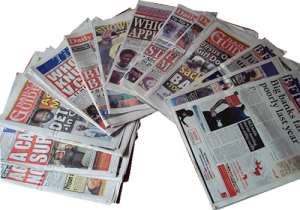
The advocacy for a free media has come at long way with huge challenges. This came as recognition of the fact that a free media is essential for a better society. The power of information lies in its ability to present accurate information so the ordinary people (citizens) could make informed decisions. The April 2010 general elections, referendum on self-determination, constitutional dialogues and other important policy-making processes are examples of sockets in which the media have play a crucial role in the South Sudan context. Human rights, rule of law and transparency and accountability are other aspects well monitored by the media.
However, the other side of the coin is worth counting as well. The media could be catalyst for nation breakup if not well handled. Major scandals involving the media are not hard to find, including the infamous Rwanda Genocide and phone hacking scandals in the developed world.
A moral obligation for the media in South Sudan is investing in informed reporting and peace-building. Today the nature of reports carried by the international media is not only inciting but giving a wrong picture of the country. Insistence on the character of the war as ethnic in nature is pervasively exaggerated. Their accounts are made up from unauthentic, derived reports. News reports are manipulated in such a way that the truth is lost, only to remained opined. It could frankly be stated that Aljazeera's and BBC's reports on the current crisis in South Sudan are neither geared towards peace-building but aiming at promoting hate and lending a heavy hand towards state failure.
A brave journalist is a peace promoter. It is unethical for a journalist to use the media to advance wrong information without basis. To appreciate this, refer to Aljazeera's Mohammed Adow's report of rebel advance towards Juba when they [the rebels] were actually more than three hundred meters north of Juba. The story caused panic among the population – indeed it could cause panic if it were true – besides the absurdity of its carriage. A balance between freedom of expression and moral objectivity is key among journalists, or else citizens would consider any exaggeration of reports an absolute government failure to check on the media.
Self-proclaimed analysts and experts on South Sudan stand to blame for the increasing misinformation. Without intending to discredit some of these experts whose analyses are factual, others are ridiculously misplaced, as seen, for instance, in the France-based L'Express “Understanding the Suicidal War in South Sudan.” (visit http://aidleap.wordpress.com/2014/01/10/understanding-the-suicidal-war-in-south-sudan). In the story, one Gérard Prunier, said to be a former researcher at the CNRS (French National Center for Scientific Research) and longtime director of the French Center for Ethiopian Studies and presently working as an independent consultant, pours out what is not only far from the truth but an utter betrayal of his ignorance. Commenting on the recent visit by Sudanese Presdient Omar El Bashir, Gerard says: “Here's what he [Bashir] said to a now very unpopular Kiir: 'Salva, you're hard up. I am coming to your rescue but in return give me back the oil wells. Don't worry, I'll leave you some crumbs, enough to buy yourself some apartments in London or some villas in Nairobi and to fill your bank accounts in the Virgin Islands or in Luxemburg.” How useful such an analysis for the international media to portray about South Sudan remains questionable.
And without considering the fallacy of the account, one so-called expert rushed to describe Gerard's account as: “This is one of the best analyses of the South Sudan crisis we have seen. We liked it so much we are posting an English translation from the original French article as a guest blog.” What is interesting with this account? What makes this account the best analysis? How did Gerard arrive at saying, “Incidentally, know that this “coup d'état” story is total garbage. Hunted down, Riek Machar is probably only alive thanks to his bodyguards, who hid him as he slipped through a fence'?”
If modern journalism is directed towards exaggeration of the kind portrayed by the international media's perspectives on South Sudan to catch their audience, it is the wrong type. The prototype of a failed media is that which advances propaganda.
The style with which President Salva Kiir's leadership has navigated South Sudan out of entanglement with Sudan is one to appreciate. We may have challenges but any unnecessary upheavals are absolutely uncalled for; they are not constructive but destructive. It is important we collectively build on the little we have instead of destroying it. Approval of the ongoing civil strife by the media is unacceptable in all moral terms.
Today it is in the interest of all South Sudanese to see peace back home. To tame Riek Machar and his group is an urgent necessity, and that is possible. The leadership has a track record of taming individuals considered to be the most fastidious warlords, a factor that could be argued to have contributed to the increasing spirit of rebellion and warlordism. But there is need to be careful this time, because allocation of rewarding political positions to warlords could engender more warlords.
The author of this article,is a Former sudan tribune editorial secretary, and daily columnist of www.modernghana.com Electronic website base in Accra,Ghana.
And his reachable through E-mail: [email protected]

 BoG's $260 million building: It was Ato Forson who first proposed 'sell-and-leas...
 'We have to do soul-searching' — Mahama orders nationwide flood assessment
 Court orders woman beater to pay GHS5,000 compensation to midwife at Tema Commun...
 Over 12,000 women living with obstetric fistula in Ghana — Asokwa MP
 Mahama secures 1,840 farm equipment deal from Belarus
 Titus Glover slams Mahama’s flood report directive, calls it “waste of energy an...
 We have increased posting of doctors from 12 to 100 to underserved regions in 20...
 'You had the effrontery to call me struggling lawyer, you won't come back to pow...
 Belarus manufacturers to storm Ghana next week after President's visit
 Government to offer tax incentives for factories located outside Accra


