





Introduction
We have studied how consumers' behaviour is influenced by the two choices mentioned in the theory propounded with data collected from Ghanaian harbours. This theory has similarity with the opportunity cost model discussed in economics and the financial world. We found out that when people are faced with MNC and PNC, the choices vary, depending on whether people have sentimental affection relationship with individuals or not. It has been established that in matters of economics when people have to deal with choices, they do not inhere in the rational domain alone, but also on social psychological grounds. The question that has to be asked is that, what other practical lessons could we learn from the investigation so far made in connection with practical choices? What contribution does the Shipman theory make in the study of economics?
Magnitude Need Choice (MNC) Versus Priority Need Choice (PNC) in Economics
Let us review the model we published earlier explaining the manner how consumers choose from one of the choices confronting them.
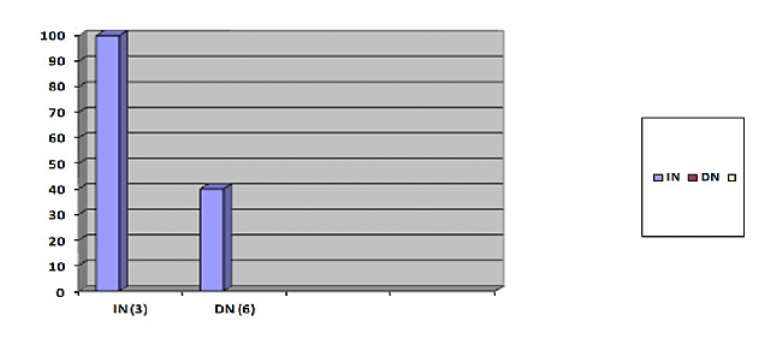
Figure 1. Priority needs at the moment
IN = Immediate Needs
DN = Distance Needs
The model below shows the priority needs at the moment for the Client KM. But though in terms of priority immediate needs come first (i.e., 3), in terms of magnitude Distance needs reign supreme (6). But as the client is faced with choices, he makes the priority needs supreme as against the Distance needs which have magnitude on list. On the Y axis, however, priority needs have double strength, that is, 100 as against the Distance needs which have only 40.
Priority needs
Magnitude (weight)
1. Summarising Discussion
It was seen in the above data that consumers make decisions about economic matters not only on the utilisation of rational methods alone, but also on social-psychological needs. Concerning this piece of work, it was found out that when confronted with personal tragedies which individuals could have dealt with them peacefully by themselves alone, the case becomes automatically shifted to other persons who mean a lot to these persons. It is a prediction that can easily be observed in the real world. But we take it for granted that these things happen and that they concern peoples' choices with regards to priority choices as against magnitude choices. Consumers do not get worried in a cognitive way for making priority needs the first, instead of the magnitude needs in the economic world where rational decision making and profit orientation tasks are appraised than sentimental one. This is one of the reasons why we suggest that Shipman theory should be studied to make it more reliable just like all other theories advanced of late for the investigation in economics. The theorem we gained from this study was If an individual has no one he has sentimental affection with, in matters of tragedy where there is economic consequences, the probability that he will choose the magnitude needs as against the priority needs will be higher. Truly speaking if Dr Shipman, the British Medical Practitioner, did not have a family or other dependants that he cherished so much, he would, like many other people defended himself rather than caused harm to himself. We are certainly sure about this because the choice regarding priority usually gains supreme when it is about those who affectionately mean much for the client or consumer.
PNC = Priority Need Choice
MNC = Magnitude Need Choice
If No Sentimental Affection (NSA) exist, then Magnitude Need Choice (MNC) is greater, that is, p ≥ 1
If Sentimental Affection (SA) is present, then Priority Need Choice is greater, that is, p ≥ 1
Alternatively:
If NSA, then MNC is p ≥ 1
If SA, then PNC is p ≥ 1
Again:
If MNC is p ≥ 1, then there was NSA
If PNC is p ≥ 1, then there was SA
External and Internal Importation of Cars: Some Basic Knowledge
The manner in which cars are imported into the country from abroad and also through the ECOWAS countries could offer us some important knowledge. This follows certain principles which are important to suggest a pattern. As mentioned already, consumers have the urge to consume certain products that originate from their vicinities but also they have developed taste that encouraged them to be enticed to accept from others originating from different directions of the globe. In Ghana many people import into the country different cars from abroad and at home through the common market they have created in the West Africa Zone.
Concerning the wide assortment of cars that have entered into the country, however, certain duties are imposed on them to generate revenue for the country. These revenues are huge such that people are beginning to complain about its exorbitant in nature though they do provide for this country huge sum of money for developmental purposes. It could be asserted that the principle of taxation and how it is outlined and followed by consumers could be stated as follows:
(A + B) = (B + A) implying that when these cars are in the country, importers pay taxes and duties (A) and later register their cars (another form of revenue) before being utilised in the country (B). This occurs with the cars imported into the country from abroad. As for the cars internally imported into the country by consumers, that is, those coming from ECOWAS, they register them (B) as well as later they pay the taxes and duties in the country of domicile (A). These principles are interchangeable. But what happens with the last mentioned, that is, cars that are internally imported by consumers who like wide assortment of goods is that, they could be seen in the following: A (B +A), that is, AB + A2. This implies that when the imported cars from those regions lying in the ECOWAS enter into the country, already some of them that had passed through the Ghanaian Ports as transit cars, which had enabled the Ghana Port Authority to have collected their taxes in the form of penalties and other small charges which in the world of taxation are highly significant. That is no taxes collected on behalf of the Government are seen as small. These taxes signify (A). Then as part of the normal procedure, the individual registers his/her car (B) that provides some amount of revenue to the state and then later pay also the necessary import taxes (A) into the coffers of the state. Thus in terms of the importation of cars into this country, the common two principles are stated as follows:
(A + B) = (B + A) and also A (B +A) or AB + A2.
References
Aronson, E., Wilson, T. D. & Akert, R. M. (2006). Social Psychology (5th ed.). New York: Longman.
Baron, A. (2006). Social Psychology (11th ed.). Boston: Allan & Bacon.
Baron, R. A., Branscombe, N. R., & Byrne, D. (2009). Social Psychology (12th ed.) Person International Edition, Boston: Person.
Brewer, M. B. & Crano, W. D. (1994). Social Psychology. New York: West Publishing.
Forsyth, R. D. (2007). Our Social World. Pacific Grove: Broks/Cole Publishing.
Gleeitman, H., Reisberg, D. & Grost, J. (2007). Psychology. International Student Edition. New York: W. W. Norton & Company. (Read pp. 354-665).
Hogg, A. M. & Vaughan, M. D. (2007). Social Psychology. An Introduction. London: Prentice Hall.
Lord, C. G. (2006). Social Psychology. New York: Harcourt Bruce College Publishers.
Myers, G. D. (2008). Social Psychology. (8th ed.). New York: McGraw Hill Inc: University of Cape Town Press.
Sadava, S. W. & McCreary, D. R. (2005). Applied Social Psychology. New Jersey: Prentice-Hall Inc.
Sear, O. D., Peplau A. L. & Taylor, E. S. (2006). Social Psychology (11th ed.). Englewood Clefts. New Jersey: Prentice Hall.
Tredous, C. Et al., (2005). Psychology and the Law. South Africa: Juta Academic.
Worchel, S. Cooper, J. & Goethals R. G. (2007). Understanding Social Psychology (10th ed.). Pacific Grave, California: Brooks/Cole Publishing Company.
Wrightsman, S. W. Et al. (2004). Psychology and the Legal System. Pacific Grove: Brooks/Cole Publishing Company.
The Author of this article is a former Associate Professor in Åbo Akademi University in Finland and Uppsala University in Sweden. He is currently at Valley View University.

 BoG's $260 million building: It was Ato Forson who first proposed 'sell-and-leas...
 'We have to do soul-searching' — Mahama orders nationwide flood assessment
 Court orders woman beater to pay GHS5,000 compensation to midwife at Tema Commun...
 Over 12,000 women living with obstetric fistula in Ghana — Asokwa MP
 Mahama secures 1,840 farm equipment deal from Belarus
 Titus Glover slams Mahama’s flood report directive, calls it “waste of energy an...
 We have increased posting of doctors from 12 to 100 to underserved regions in 20...
 'You had the effrontery to call me struggling lawyer, you won't come back to pow...
 Belarus manufacturers to storm Ghana next week after President's visit
 Government to offer tax incentives for factories located outside Accra


