




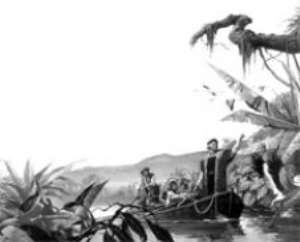
On August 3, 1492, the Italian Explorer Christopher Columbus, financed by the Spanish King and Queen, Ferdinanad 11 of Aragon and Isabella of Castile, sailed from the Port of Palos in Spain, captaining a fleet of three caravelles — the Nina, the Pinta and the Santa Maria.
Columbus, believing the age-old theories about the earth being round, embarked on the voyage to try and find a new sea route to India. He was convinced that he would reach the legendary Orient by travelling east.
On October 11 1942, after two months of exhausting navigation, he reached dry land-not of mythical Asia but a new continent-Hispanic America, or the Caribbean as we know it today.
In his first expedition Columbus discovered and explored the Guanahani Islands (afterwards re-named San Salvador in the Bahamas) Cuba and Haiti.
Credit : The BIG Book of HOW WHEN WHY?
 KMA Deploys Vacuum Sweepers to Tackle Dust, Waste and Flooding in Kumasi
 UCC Probes Death of Level 200 Student Found at Hutchland Beach
 BoG Cracks Down on Crypto Dollar Wallets; Orders Banks to Cut Ties Immediately
 BoG Extends IMTO Registration Deadline to July 31 — Non‑Compliant Operators Face...
 Ato Forson Pushes for New ‘Auditors’ Court’ to Tackle Waste, Strengthen Accounta...
 Big Payout, Big Changes: MMMF Declares 30p Dividend, Endorses New Board
 C/R: Missing UCC student found dead at Hutchland Beach
 Man collapses and dies in front of pharmacy at Abura in Cape Coast
 Gov’t Should Have Anticipated Partey Visa Trouble — Asafo-Adjei Ayeh Fires
 Swiss Vote on Population Cap Sparks Fierce Immigration Debate Ahead of Sunday Re...


