




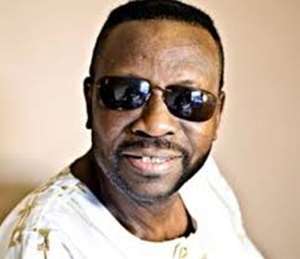
The words above, attributed to the dying Julius Caesar by Shakespeare, must have haunted my friend Dennis Brutus, who died on 26 December 2009, aged 85, all his life.
I can see him, as a student, bearing the taunts of his mates, as they used every opportunity to let him know that they had read Shakespeare's play. Is there any group worse than a bunch of schoolboys bent on showing off to another? Especially -- as in this case -- the name “Brutus” was associated with treachery and betrayal?
Yet the likening of Dennis to his Shakespearan namesake was, in a physical sense, quite justified. You only had to meet Dennis Brutus and take in that sculptured head of his, with its shock of [latterly] white hair, and beard, plus his broad face -- always serene -- to realise that he carried something like a Roman noble's blood in him. Actually, it was French blood that was acknowledged in his family tree. As a “Coloured” or mixed race person in the South Africa of his childhood, all sorts of possibilities existed in his genes: the magnificent Dutch painters, for instance, (his middle name was Vincent, which could easily bring Vincent Van Gogh to mind).
But in his soul, he was jet black. Although the South African racists treated the “Coloureds” marginally better than the Blacks, Dennis was not interested in accepting a position that put him above the majority of his countrymen. At Fort Hare University, he saw with his own eyes that given the opportunity, every human being could equally well acquire the education and skills of modern life. And he fought, all the 85 years of his life to level the playing field for all his countrymen.
It was while he was teaching that he fully realised what a wasteful system apartheid -- or racial separation - was. The sport he most enjoyed was rugby -- more as a coach than player. His exposure to young talent, through their non-white competitions, enabled him to realised that the players officially lionised throughout the nation, were not quite the best available. They only appeared to be so good because they never competed against Black and Coloured players. No matter how good the latter were, they were not allowed by apartheid law, into the best and richest schools, colleges and clubs, where players were given facilities and the best technical coaching that enabled them to shine and be taken to the top of their sports, and ultimately, the singular honour of being selected for the South African national team. But even with their privileges, they were not as good as some of the Coloureds and Blacks. The case of Basil D'Oliveira, whom apartheid racism
Pursued all the way to Britain, is a case in point.
http://www.bbc.co.uk/bbcfour/documentaries/features/not-cricket.shtml
Another case in point is that of Makhaya Ntini, whose selection was at first by racists derided as a sop to “multi-racial sport” and yet went on to play 100 tests and take 390 Test wickets. And 266 ODI wickets.
.http://www.cricinfo.com/ci/content/player/46592.html
Now, white South Africans take their sports seriously indeed. Their rugby teams of the Dennis Brutus era were in regular contention for the top honours against teams from England, Wales, Scotland, Australia and New Zealand. International matches with these countries were something of a sporting festival each season. This “deification” of sport was also accorded to cricket and athletic. But rugby ruled supreme. Football (soccer) on the other hand, was largely relegated to the “townships” for the Blacks and Coloureds.
The anger aroused by seeing Black and Coloured players who were better than Whites, ignored by their nation, while inferior players were turned into rich, national heroes, so lionised that the ground on which they walked was worshipped -- and all because they happened to be White -- made Dennis determine steadfastly to devote his to doing something about the situation. He had read enough leftwing literature to understand that “organisation decides everything”, and so in 1959, he helped to form the “South African Sports Association” (S.A.P.A) and became its founding secretary.
The S.A.P.A. began by naively lobbying all-White sports clubs and organisations to change their practices voluntarily and accept S.A.P.A. for membership. But try as he would to make them see how unfair it was to turn down Black sportsmen for South Africa's international teams in favour of inferior Whites, they wouldn't budge. “It's against our country's laws“, they told Dennis and his fellow sportsmen.
The activities of the S.A.P.A were, of course, reported to the apartheid regime and in 1960-- the year in which 69 Africans were shot to death in Sharpeville while fleeing from the police -- Dennis was “banned”. This meant he could not be present with more than two other people at any one time.
But in 1962, he cleverly manoeuvred to escape the limitations imposed on him by his banning order and helped form a new group to challenge South Africa's official Olympic Committee. This organization was called “the South African Non-Racial Olympic Committee“ (San-Roc). Dennis became its president. It mounted an extremely effective campaign and persuaded Olympic committees from other countries to vote to suspend South Africa from the 1968 Olympics in Mexico. By 1970, the group had gathered enough votes from national Olympic committees, particularly those in Africa and Asia, to expel South Africa from the Olympic movement.
Dennis did not see all this success first-hand. In the course of his campaign work, he met with a Swiss journalist and others in 1963. The group had been followed and Dennis was sentenced to 18 months in prison for breaking his banning order. He decided, however, that his work made it necessary for him to go outside the country, and he jumped bail and fled to Swaziland. But he tried to go to Mozambique to find a flight to Europe (all flights to Europe from Swaziland had to stop in Johannesburg) and the Portuguese secret police caught him and returned him to the South Africans. Yipes!
In Johannesburg, he tried to escape, and was shot in the back by the police at point-blank range. After only partly recovering from the wound, Mr. Brutus was sent to Robben Island, where he was imprisoned for 16 months, five in solitary confinement. On his release he was ordered not to leave his home for five years. But after a year, he made a deal to emigrate to Britain on the condition he not return to South Africa. Ever!
Dennis told me in an interview in London in 1986 that he believed the South African police deliberately guarded him loosely, in Johannesburg, in order to tempt him to try and escape. He did try to escape, whereupon he was shot in the back by a policeman at point-blank range.
He didn't realise at first that he had ben shot. But as he ran, he felt weaker and weaker, and he saw blood dripping down his leg. When he fell down after running for a while, he was left to lie where he was -- just outside the Anglo-American Corporation building. The excuse given by the police was that all the ambulances nearby were for Whites and that they had to wait a long time for one meant for Blacks to arrive.
Brutus had only partly recovered from the wound when, as stated before, he was sent to Robben Island. He spent 16 months on the Island, , five of them in solitary confinement. His cell there was next to that of Nelson Mandela!
It was on his release that he was ordered not to leave his home for five years -- an order which helped him to make up his mind to leave the country. He left for Britain. The deal to emigrate, on the condition that he would never return to South Africa, was also offered to many other anti-apartheid activists, including Lewis Nkosi, Bloke Modisani, Iskia Mphahlele and others. The cruelty of the apartheid monsters does not bear thinking about.
After four years in Britain, Dennis Brutus moved to the United States, where he taught at Northwestern University and the University of Pittsburgh. In a highly publicized case, United States immigration authorities, on the orders of the Reagan Administration (which was in cahoots with threw apartheid regime) tried to deport Dennis in the early 1980's because he lacked “proper residence documents.”
His lawyer of the time, Ms Susan Gzesh of Chicago, Illinois, describes the situation as follows:
“It was not really the case that Brutus had trouble winning asylum in the US because the Reagan Administration changed the general policy on refugees. …The Reagan administration was, in fact, actively involved in politics behind the scenes, trying to get Brutus out of the US… Brutus won his case for asylum because the anti-apartheid movement was able to create a political climate in which it would have been impossible for the US government to deny that Brutus would have been persecuted had he been returned to South Africa.” The assassination of Ruth First by a bomb in Mozambique -- clearly the work of the apartheid regime's assassination squads in the Bureau of State security (BOSS) made it impossible for the Reagan Administration to deny that given his campaigning history, Brutus would be in mortal danger if deported back to South Africa.
Dennis Brutus was the author of 14 books, mainly of poetry. He was critical of South Africa's total embrace of capitalism under Mandela and Mbeki and remained deeply sceptical about racial attitudes in the country, long after apartheid had ostensibly ended. In 2007, when the South African Sport Hall of Fame sought to induct him, he refused, saying that the Hall was full of “heroes” who had achieved sporting fame only because no blacks were allowed to compete against them. Dennis said:
“To be inducted to a sports hall of fame is an honour under most circumstances. . . [But] I cannot be party to an event where unapologetic racists [who belong in a hall of infamy] are also honoured…. It is incompatible to have those who championed racist sport alongside its genuine victims.”
Dennis is survived by his wife, the former May Jaggers; two sisters; eight children; nine grandchildren; and four great-grandchildren.
Development / Accra / Ghana / Africa / Modernghana.com

 BoG's $260 million building: It was Ato Forson who first proposed 'sell-and-leas...
 'We have to do soul-searching' — Mahama orders nationwide flood assessment
 Court orders woman beater to pay GHS5,000 compensation to midwife at Tema Commun...
 Over 12,000 women living with obstetric fistula in Ghana — Asokwa MP
 Mahama secures 1,840 farm equipment deal from Belarus
 Titus Glover slams Mahama’s flood report directive, calls it “waste of energy an...
 We have increased posting of doctors from 12 to 100 to underserved regions in 20...
 'You had the effrontery to call me struggling lawyer, you won't come back to pow...
 Belarus manufacturers to storm Ghana next week after President's visit
 Government to offer tax incentives for factories located outside Accra


