




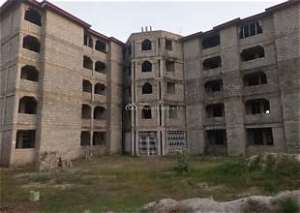
The Case for Broader Real Estate Market
As the world marked World Cities Day on 31st October 2026, attention turned to a question central to Ghana’s future: how can our cities grow in ways that provide adequate housing, improve living conditions and create sustainable opportunities for their residents? The 2026 theme, “Regenerating the City: Adequate Housing for All”, offers a timely lens through which to consider the role of real estate investment in Ghana.
Ghana’s urban centres are changing rapidly. Population growth, migration, expanding economic activity and changing household needs are placing pressure on housing, transportation, sanitation, drainage and other essential services. These pressures are especially visible in Accra, but they are not confined to the capital. Regional capitals and other growing urban centres face their own development demands and present opportunities for carefully planned investment.
Rethinking The Real Estate Opportunity
For many years, much of the public conversation about Ghanaian real estate has been dominated by high-end apartments, gated communities and luxury residential developments. These developments have an important place in the market, but they represent only one segment of the sector and do not address the full range of housing needs or investment opportunities available in Ghana.
The scale of the challenge is significant. The 2024 Ghana Housing Profile reports a housing deficit of approximately 1.8 million units, based on the 2021 Population and Housing Census. It also estimates that inadequate housing units account for about 30 per cent of the existing housing stock, while noting that a precise count is not available. These figures point not only to a need for additional housing, but also to the importance of improving housing quality, affordability and access to basic services.
Housing figures: UN-Habitat, Ghana Housing Profile (2024), drawing on the 2021 Population and Housing Census.
A broader approach to real estate investment must look beyond the premium end of the market and consider the housing needs of middle-income households, salaried workers, young professionals, growing families and others who may be underserved by existing options. It also points to opportunities in well-managed rental accommodation, student and worker housing, and mixed-use developments connected to jobs, education, transport and everyday services. Investment in these areas can respond to identifiable demand while supporting more inclusive urban growth.
The opportunity is not simply to build more, but to provide the right types of accommodation, at appropriate price points, in locations supported by the necessary infrastructure.
Housing That Responds To Everyday Needs
1. Middle-income and affordable rental housing
The housing conversation must extend beyond luxury property and recognise the need for safe, decent accommodation that is within reach of ordinary working households. Salaried workers, young professionals, growing families and other households need options that are realistic in relation to their incomes. Well-designed apartments, compact homes and rental developments close to employment centres and transport routes may offer viable opportunities where demand, affordability and infrastructure have been properly assessed.
Financing is also a significant constraint. The National Homeownership Fund reports that Ghana’s mortgage-to-GDP ratio stood at 0.18 per cent at the end of 2025, illustrating the limited depth of formal mortgage finance. High house prices and the limited availability of affordable, long-term mortgage products make home ownership difficult for many low- and middle-income households. Rental housing and rent-to-own arrangements may therefore provide important alternatives alongside conventional home ownership.
Mortgage-market data: National Homeownership Fund, Policy Brief, mortgage-market overview (data as at 31 December 2025).
Affordability should not be treated as a label alone. Developers and investors should consider the total cost of occupying a home, including rent or mortgage payments, transport, utilities and service charges. A development that is inexpensive to construct but isolated from jobs and public services may impose significant costs on residents.
2. Purpose-built student accomodation
Student accommodation is another sector worth examining. Universities and other tertiary institutions attract students from across Ghana and beyond, creating demand for safe, accessible and appropriately managed accommodation. Purpose-built hostels can contribute to meeting that need, particularly where they are located within reasonable reach of campuses and public transport.
The commercial case must nevertheless be tested carefully. Investors should examine enrolment trends, existing and planned accommodation, competing supply, achievable rents, operating costs, management arrangements and seasonal occupancy. Proximity to a campus is important, but it is not by itself a guarantee of occupancy or returns.
3. Worker accomondation and mixed-use development
Commercial, industrial, logistics and institutional centres can generate demand for accommodation suited to workers and households whose livelihoods are tied to those activities. In appropriate locations, well-planned worker housing and mixed-use developments with residential, retail and service components may reduce the distance between homes, employment and everyday needs. Their success will depend on local demand, affordability, transport connections, access to utilities and effective long-term management.
Investors should avoid assuming that one development model will suit every location. The economic activity and needs of the surrounding community should guide the scale, design and intended use of each project.
Looking Beyond The Capital
A national real estate strategy should not begin and end with Accra. Kumasi, Takoradi, Tamale, Koforidua and other regional and commercial centres have distinct economic roles, population patterns, educational institutions and infrastructure needs. These differences can create opportunities for residential, student, worker and mixed-use accommodation.
Investors should resist the temptation to assume that a successful model in one city can simply be replicated in another. Each location requires its own assessment of employment and business activity, household incomes, transport links, land availability, utilities, planning controls and competing developments. Local partnerships and reliable market information can be valuable in understanding these conditions.
Looking beyond the capital is not merely a matter of finding cheaper land. It is an opportunity to support regional economic activity, reduce excessive concentration of development and help cities grow around their own strengths.
Regenerating Existing Cities and Neighbourhoods
Urban development should not be understood only as the construction of new buildings on the outskirts of expanding cities. Regeneration also involves making better use of existing urban areas, rehabilitating ageing or underutilised properties, improving neighbourhood infrastructure and supporting the renewal of places where people already live and work.
In Ghana, opportunities may arise from carefully planned redevelopment, the refurbishment or adaptive reuse of suitable buildings, and improvements to public spaces, drainage, sanitation and local access. Such projects can help make established neighbourhoods safer, more functional and more attractive for residents and businesses. However, regeneration should be undertaken with sensitivity to existing communities. Consultation, fair treatment of affected occupants and appropriate safeguards against involuntary displacement should form part of responsible project planning.
For investors, regeneration can offer an alternative to greenfield development, but it requires careful assessment of existing ownership, occupancy, infrastructure constraints, construction costs and the legal rights of residents and other stakeholders.
Building Better Cities Through Responsible Investment
World Cities Day is a reminder that the quality of urban development matters as much as the quantity of buildings delivered. Real estate projects influence neighbourhoods, mobility, public services, the environment and the daily lives of residents. Responsible investment therefore requires attention to more than projected rental yield or resale value:
• Planning and land use: Ensure that the proposed development is consistent with applicable spatial plans, zoning requirements and permitted land uses.
• Infrastructure and connectivity: Assess access to roads, public transport, water, electricity, drainage, sanitation and other services, including the capacity of existing networks.
• Environmental resilience: Consider flood risk, stormwater management, waste, energy efficiency, green space and the likely effects of climate-related hazards.
• Neighbourhood and community impact: Consider how a project affects existing residents, access, local services and the character of the surrounding area. Meaningful engagement is particularly important where regeneration may affect existing occupants.
• Quality and long-term management: Provide for safe construction, maintenance, security and effective management throughout the life of the development.
The Legal Foundations of a Sound Investment
A promising location and a viable business plan are not enough. Real estate investment in Ghana must be supported by careful legal due diligence, appropriate structuring and compliance with the Land Act, 2020 (Act 1036), and other laws and regulatory requirements applicable to the particular land and project.
1. Establishing good title and authority to transact.
Before committing funds, investors should investigate the nature of the interest being acquired, the identity and capacity of the grantor, the root and history of title, the boundaries and extent of the land, existing interests, encumbrances and any disputes. Where land is held customarily, the relevant customary ownership and the authority of the person or body purporting to make the grant must be established. Investors should also identify and obtain any concurrence or consent required by statute or applicable customary law. Where relevant, records held by the appropriate Customary Land Secretariat and other customary land administration bodies may assist with this exercise.
A thorough due diligence process should include official searches at the Lands Commission, examination of relevant land registration records and review of survey and mapping information. Site plans should be checked against available records, and boundaries should be verified through an appropriately qualified surveyor. Physical inspection of the land is also important. Where appropriate, further enquiries should be made into pending litigation, injunctions, competing claims, occupation and other restrictions affecting the property.
A search or registration record is important, but it should not be treated as a substitute for investigating the underlying transaction, the grantor’s authority and the history of the land.
2. Choosing an appropriate investment structure.
Depending on the scale of the project, ownership arrangements and investment objectives, an investor may hold the property personally or through a company or special purpose vehicle (SPV). An appropriate structure can clarify ownership, governance, financing, risk allocation and the relationship among co-investors. It may also assist with accounting and tax administration.
The choice of structure should be made with professional advice and should reflect Ghanaian company, tax, land and foreign-investment requirements. Foreign investors should pay particular attention to the restrictions under the Land Act on the interests in land that may be acquired by non-citizens. For example, a non-citizen may not acquire a freehold interest, and a leasehold granted to a non-citizen cannot exceed fifty years at any one time. The Act also treats a company or corporate body as a non-citizen where more than 40 per cent of its equity shareholding or ownership is held by non-citizens.
Investment registration, sector-specific rules, tax obligations and foreign-exchange procedures should also be considered.
3. Securing permits and regulatory approvals
Developers must identify and obtain the approvals required for the particular site and proposed use before construction begins. These may include development or building permits from the relevant Metropolitan, Municipal or District Assembly. Depending on the nature, scale and likely environmental impact of the undertaking, environmental registration, assessment or a permit from the Environmental Protection Authority may also be required under the Environmental Protection Act, 2025 (Act 1124) and the applicable environmental assessment regulations. Fire, utility, road-access, health, tourism or other sector-specific requirements may also arise.
The applicable requirements should be confirmed with the relevant authorities at the planning stage rather than after construction has commenced. Proceeding without required approvals can expose a developer to enforcement action, suspension or delay of works, additional expense and difficulties in leasing, financing or disposing of the property.
4. Planning for tax, contracts and management
Investors should also address tax treatment, financing documentation, construction contracts, insurance, leases, service-charge arrangements and property management. Clear agreements and proper records help reduce disputes and protect the interests of owners, lenders, tenants and other stakeholders.
An Opportunity and a Responsibility
Ghana’s real estate opportunity should be measured not only by the number of projects launched or the value of properties sold, but also by the contribution those projects make to the places where people live, work and study. Middle-income housing, student and worker accommodation, mixed-use development, and investment in emerging urban centres can form part of a more inclusive property market when they are grounded in credible demand, sound planning and responsible development.
As Ghana’s cities continue to grow, investors, developers, public authorities and professional advisers all have a role to play. The future of our cities will not be determined simply by how many buildings we construct, but by how intelligently we plan, where we invest and how effectively development improves the lives of the people who call these cities home.
About the Author
Ekua Eguakun is the Managing Partner of Herald Law Chambers, a firm with a focus on real estate law and corporate transactions.


 Two bail applications fail as Asante Akyem North MP remains in Dutch custody – D...
 Government imposes 11-hour curfew on Hamile and surrounding communities
 ‘It was a free port under Akufo-Addo; the drugs were coming in’ – Larry Dogbey
 Mahama is displaying weak leadership, pampering corruption and illicit drugs – N...
 Ablakwa is running from accountability despite being an apostle of it in opposit...
 VALCO introduces 1:4:4 shift system to drive 24-hour operations, expand workforc...
 Ghana introduces 21-day monitoring for travellers from Ebola-affected countries
 Let’s stop bashing NACOC anytime there is drug bust – Hopeson Adorye
 Sam George threatens to shut down political, religious affiliated media houses i...
 Chief Justice orders Supreme Court to sit despite ongoing JUSAG strike


