




The Institute of Economic Affairs (IEA) is calling for Ghana to adopt a binding long-term national development plan that successive governments would be required to follow, regardless of changes in political administration.
The proposal forms part of the Institute’s response to the constitutional review recommendations of the Prof. H. K. Prempeh-led Committee and the government’s position on the proposals.
The IEA is supporting the establishment of an independent National Development Planning Commission (NDPC) with the authority to formulate and oversee binding long-term national development plans.
The Institute also wants the tenure of NDPC members to be separated from the tenure of the President to safeguard the Commission’s independence and enable it to operate effectively beyond changes in government.
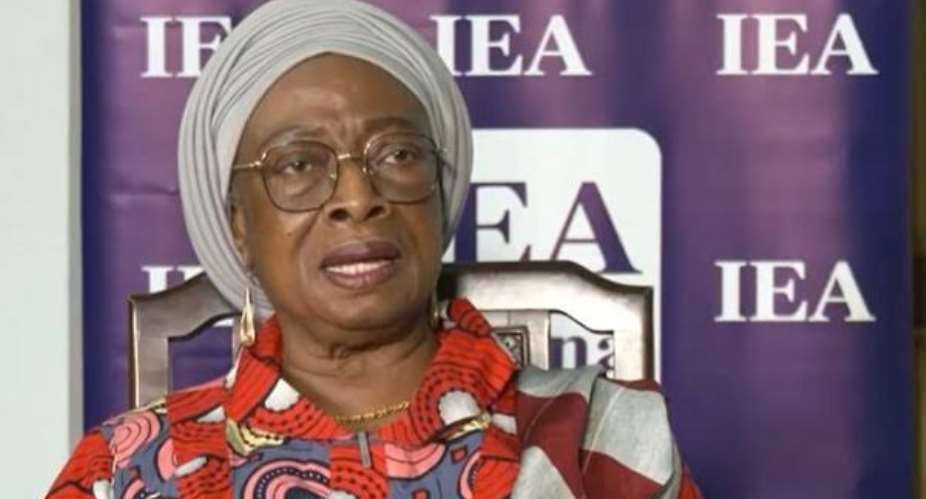
Presenting the proposals at a press conference in Accra on Wednesday, September 2, former Chief Justice and Distinguished Fellow at IEA Ghana, Sophia Akuffo, said political parties should be required to align their manifestos with the national development plan approved by the NDPC.
According to the IEA, Ghana’s development priorities should not be subjected to major changes each time a new government assumes office.
“Instead of repeatedly resetting Ghana’s development agenda with every change of government, a credible long-term national development framework can provide continuity while allowing successive governments sufficient room to pursue their electoral mandates within an agreed national direction,” the Institute stated.
Under the proposed arrangement, Ministries, Departments and Agencies, as well as Metropolitan, Municipal and District Assemblies, would remain responsible for implementing the development plan.
The independent NDPC, meanwhile, would be responsible for coordinating, monitoring and evaluating the implementation of the national development framework.
Government has rejected the Prempeh Committee’s proposal, arguing that granting an independent body such powers could amount to transferring executive functions to unelected technocrats and restrict the policy choices of future administrations.
The IEA, however, maintains that a credible and binding long-term development framework would provide greater consistency in Ghana’s development efforts while preserving the ability of elected governments to implement the mandates given to them by voters.
The Institute believes the proposed framework would help reduce policy discontinuity, strengthen long-term planning and ensure that national development remains guided by a clear direction rather than changing significantly with every change of government.

 IEA proposes binding long term national development plan to stop successive gove...
 Health Minister moves to prevent stockouts of HIV, TB and Malaria commodities
 IEA wants MPs, ministers barred from serving on State-Owned Enterprise boards
 Constitutional review: IEA warns against changes that could turn judiciary into ...
 Eastern Regional Minister orders temporary closure of two SHSs after violent stu...
 Supreme Court dismisses Oppong Nkrumah’s bid to overturn injunction ruling
 72% of Ghanaian youth want to leave the country — NDPC Chairman
 Mahama set to reshuffle CEOs of state institutions
 Mahama will not tolerate conduct that undermines gov't — Callistus Mahama to app...

