




The Institute of Economic Affairs (IEA) has raised concerns about some proposed constitutional amendments, warning that changes to the process for removing senior judges could undermine judicial independence and turn the judiciary into a political football.
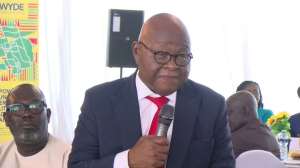
Former Speaker of Parliament and Distinguished Fellow of the IEA, Rt. Hon. Prof. Aaron Mike Oquaye, said the institute has serious concerns about provisions governing the removal of a Chief Justice and other aspects of the constitutional review proposals.
He argued that any constitutional framework must protect the independence of the judiciary and prevent political actors from gaining excessive influence over judicial disciplinary processes.
Prof. Oquaye also cautioned against rushing the constitutional amendment process, saying Ghanaians need adequate time to understand and discuss proposed changes to the country’s supreme law.
He said the National Commission for Civic Education and other relevant institutions should be given enough time to educate the public before any amendments are pursued.
The former Speaker further urged political parties to build consensus around constitutional reforms rather than treating the Constitution as ordinary legislation that can be changed whenever a new government assumes office.
He said the Constitution should not become a “football” in partisan politics, where each political party changes it when it comes to power.
Prof. Oquaye also questioned the continued involvement of Members of Parliament on the boards of public corporations, describing the arrangement as a conflict of interest because Parliament is responsible for holding public institutions accountable.
He said the IEA’s position is that the Constitution should clearly address the issue.
Meanwhile, former Chief Justice and Distinguished Fellow of the IEA, Justice Sophia Akuffo, has criticised what she described as excessive presidential appointment powers.
She said the President’s appointment authority covers more than 400 positions and should be reviewed as part of efforts to strengthen Ghana’s democratic institutions.
Justice Akuffo also rejected a proposal to extend the presidential term from four years to five years.
She argued that elected governments should be prepared to begin governing promptly after assuming office, rather than requiring additional time to form governments and appoint officials.
On the proposed cap on the number of Supreme Court judges, Justice Akuffo said the IEA supports having a limit, although it has not endorsed a specific number.
She also called for reforms to reduce the number of cases reaching the Supreme Court, saying Ghana’s current system allows even relatively minor cases to travel through the courts and eventually reach the apex court.
According to her, some cases should end at the Court of Appeal, particularly where they do not raise new or significant constitutional questions.
The IEA says its position on the constitutional review proposals is based on its long-running analysis of Ghana’s constitutional system and is intended to promote stronger democratic institutions and accountability.

 Adu-Boahene’s lawyers ask court to strike out fabricated, invented evidence in D...
 'He is part of National Film Authority' – Kwasi Kwarteng exposes Obuasi SHTS hea...
 'Mahama should have appointed Edudzi Tameklo to EC to teach hypocrite NPP some s...
 'You have no moral right to complain about cost of living' – Prof Anankware to B...
 'You did the same thing' – Solomon Owusu defends EC appointment
 GFL vows to pursue justice for worker who lost five fingers at Afienya Industria...
 State to call first witness on January 12 in Canadian murder case
 Haruna Iddrisu refers Obuasi SHS headmaster's sexual misconduct allegations to C...
 Bawumia is a ‘prophet of pocket economy’ in opposition, ‘priest of paper economy...
 Bolgatanga Technical University Council Chairman allegedly locks up Vice-Chancel...



Comments
The Experienced Critical Mindset expressed on the Judiary System ( Checks and BALANCES Oragn ) and the Presidential Powers by IEA, are worthy of Valutation. Thanks.