




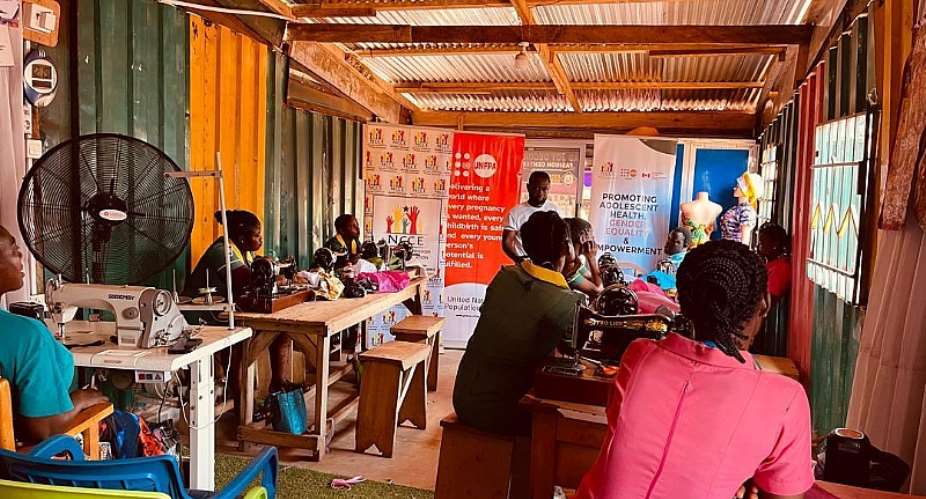
The National Commission for Civic Education (NCCE) in the Upper Manya Krobo District of the Eastern Region, in partnership with the United Nations Population Fund (UNFPA) and with financial support from Global Affairs Canada, has intensified sustained civic engagements aimed at empowering adolescent girls with knowledge on their sexual and reproductive health and rights.
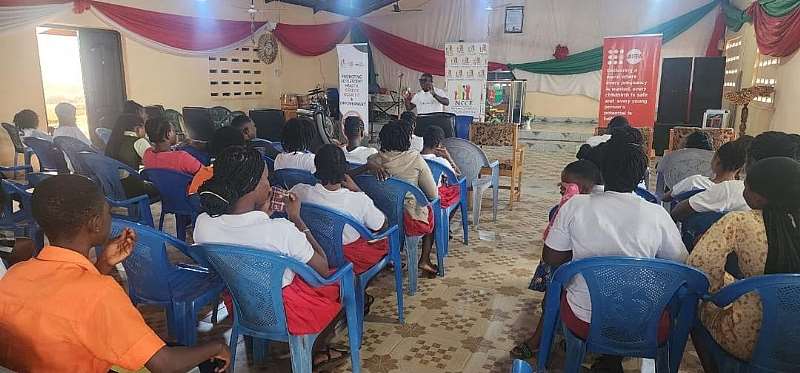
The three-week intensive sensitization drive, held from August 10 to August 28, 2026, deployed a dual strategy of adolescent girls' group/club engagements and mobile van community outreaches to reach hundreds of girls in both formal and informal settings across the district.
The intervention forms part of a broader national effort to strengthen awareness on Adolescent Sexual and Reproductive Health and Rights (ASRHR), promote gender equality, and prevent Gender-Based Violence (GBV) through sustained civic education.
Speaking during the engagements, Mr. Eric Kwasi Yanney, the Upper Manya Krobo District Director of the NCCE, emphasized that adolescence remains a critical and defining stage of human development, particularly for girls, who undergo significant physical, emotional, psychological, and social transitions.
He stressed that the period should not be a time to chastise or stigmatize the girl-child for the natural changes they experience but rather a strategic window to equip them with accurate information and practical life skills.
According to him, such empowerment enables adolescent girls to make informed decisions, safeguard their health, uphold their fundamental rights, and contribute positively to national development.
"When we invest in accurate information for our girls, we are investing in healthier families, stronger communities, and a more progressive Ghana," Mr. Yanney noted.
He reiterated that the NCCE, recognizing these peculiar needs of adolescents, deliberately partnered with UNFPA and Global Affairs Canada to roll out the series of sensitization programmes focused on ASRHR, prevention of GBV, recognizing and reporting GBV, debunking myths around contraceptives and family planning services, promoting open dialogue on sexual and reproductive health, and guiding adolescents on how and where to access youth-friendly sexual and reproductive health services.
Officers of the Commission further educated participants and community members during the mobile van outreaches that sexual and reproductive health extends far beyond the prevention of diseases and unintended pregnancies.
They explained that it encompasses access to accurate information, quality healthcare services, bodily autonomy, respectful relationships, and the right to live free from violence, coercion, and discrimination.
Participants were admonished to appreciate that these rights are fundamental, inalienable, and must be respected regardless of age, gender, or social background.
The civic educators underscored that silence, misinformation, and cultural myths continue to expose many adolescent girls to teenage pregnancy, unsafe abortions, sexually transmitted infections, school dropouts, and various forms of abuse, all of which undermine Ghana's human capital development and the attainment of the Sustainable Development Goals, particularly Goals 3, 4, and 5 on health, education, and gender equality.
In all the engagements, the NCCE openly acknowledged the pivotal role of the tripartite partnership between the NCCE, UNFPA, and Global Affairs Canada, describing the collaboration as the key enabler that has sustained the outreach to hard-to-reach and vulnerable groups.
The general objective, according to the District Directorate, was to strengthen awareness and empower adolescent girls to become advocates for adolescent health, gender equality, and the prevention of gender-based violence through sustained civic engagement.
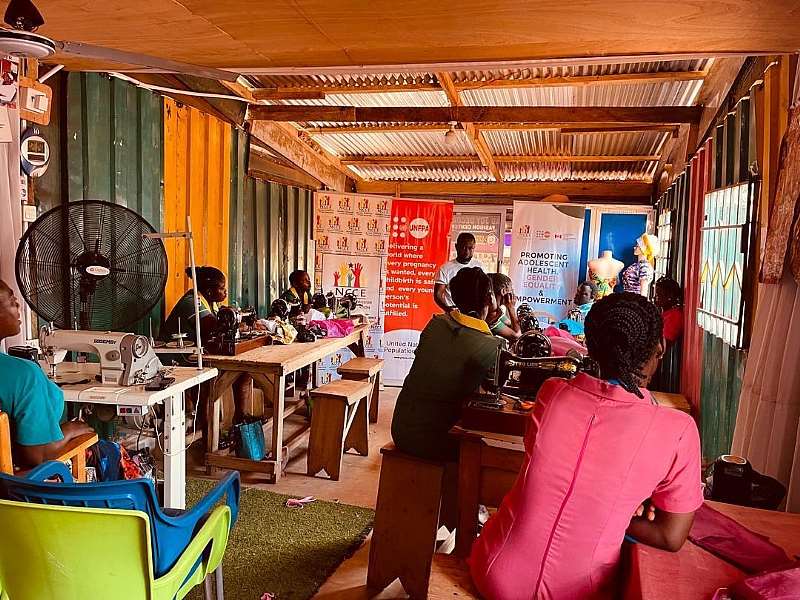
Targeted adolescent girls’ clubs and groups engaged included the Akateng Community Adolescent Girls Group, adolescent girls at the Sekesua CHPS Compound, Dawa Korlewa Adolescent Girls, ladies undergoing apprenticeship at Nyongmorwoko Fashion in Asesewa, EuniLack Fashion in Asesewa, T. Matthias Fashion in Asesewa, and Nyamekye Beauty Salon at Dawa Korlewa, among others.
This approach, officials said, was deliberate to capture out-of-school girls and apprentices who are often excluded from mainstream school-based reproductive health education, yet remain highly vulnerable.
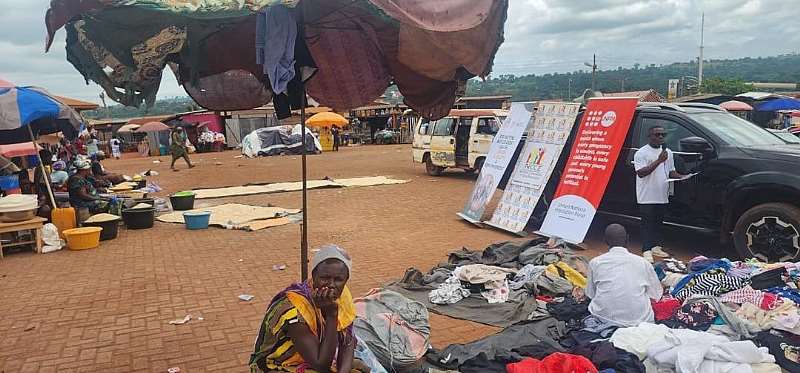
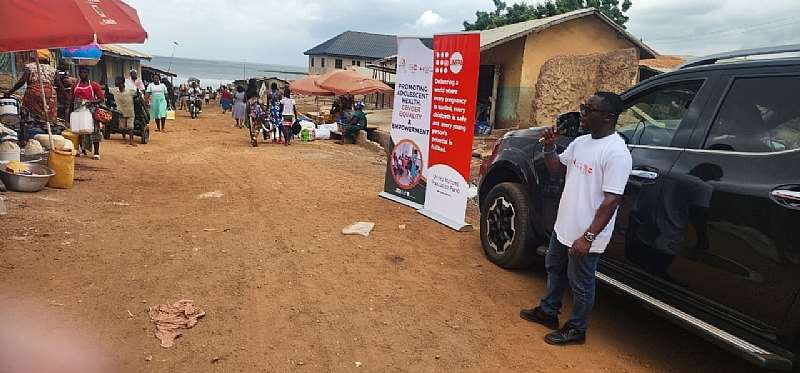
Complementing the group sessions, the NCCE’s civic education mobile van toured several communities, including Akateng, Asesewa, Mensah Dawa, Dawa Korlewa, Otrokpe, Sekesua, and surrounding communities, drawing large community participation and fostering open intergenerational dialogue on adolescent health.
Community members, including parents, guardians, and traditional opinion leaders, were urged to create safe and supportive environments where girls can freely discuss reproductive health issues without fear or shame and to report cases of abuse to appropriate authorities promptly.
A dedicated team of NCCE officers carried out the engagements, comprising Mr Eric Kwasi Yanney, District Director; Mr Isaac Nartey, Assistant Director; and Mr Wisdom T. Korletey, Civic Education Officer.
Mr. Yanney expressed optimism that the sustained engagements would contribute significantly to reducing teenage pregnancy, dismantling harmful myths about contraception, increasing uptake of youth-friendly health services, and building a generation of confident, informed, and rights-conscious young women ready to lead Ghana’s future.
He called on stakeholders, including the Ghana Health Service, the Department of Social Welfare, traditional authorities, religious bodies, and the media, to complement the efforts of the NCCE and its partners to ensure no adolescent girl is left behind in the national development agenda.
 IEA proposes binding long term national development plan to stop successive gove...
 Health Minister moves to prevent stockouts of HIV, TB and Malaria commodities
 IEA wants MPs, ministers barred from serving on State-Owned Enterprise boards
 Constitutional review: IEA warns against changes that could turn judiciary into ...
 Eastern Regional Minister orders temporary closure of two SHSs after violent stu...
 Supreme Court dismisses Oppong Nkrumah’s bid to overturn injunction ruling
 72% of Ghanaian youth want to leave the country — NDPC Chairman
 Mahama set to reshuffle CEOs of state institutions
 Mahama will not tolerate conduct that undermines gov't — Callistus Mahama to app...

