




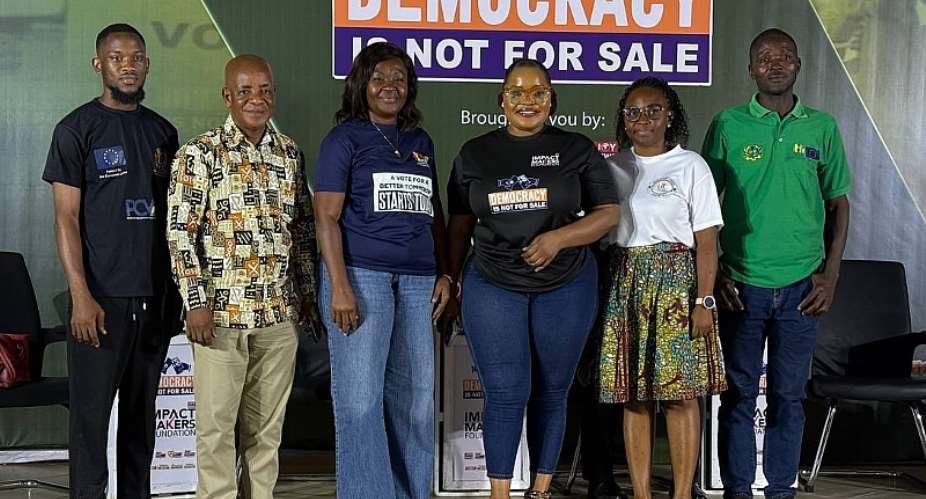
Ghana’s democracy can only be sustained if citizens move beyond civic awareness to active participation in the democratic process, the Eastern Regional Director of the National Commission for Civic Education (NCCE), Ms Ophelia Nana Yaa Ankrah, has said.
She identified vote buying as one of the major threats to Ghana’s democratic development, warning that the practice undermines the integrity of elections and weakens public confidence in governance.
Speaking at a public forum in Koforidua, Ms Ankrah stressed that citizens must respect the laws governing the country’s democratic system, including those that protect the integrity of the electoral process.
“Ghana’s democratic system is founded on laws agreed upon by the people, and these laws must be respected,” she said.
“The 1992 Constitution guarantees every eligible citizen the right to vote, but it does not permit the offering or acceptance of bribes to influence electoral choices,” she added.
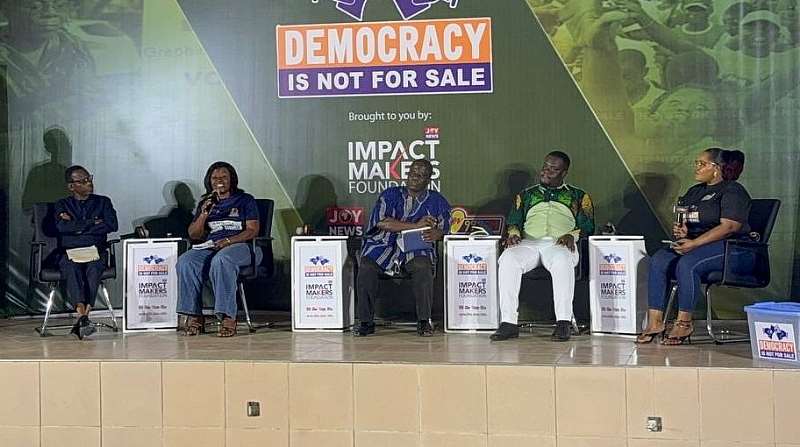
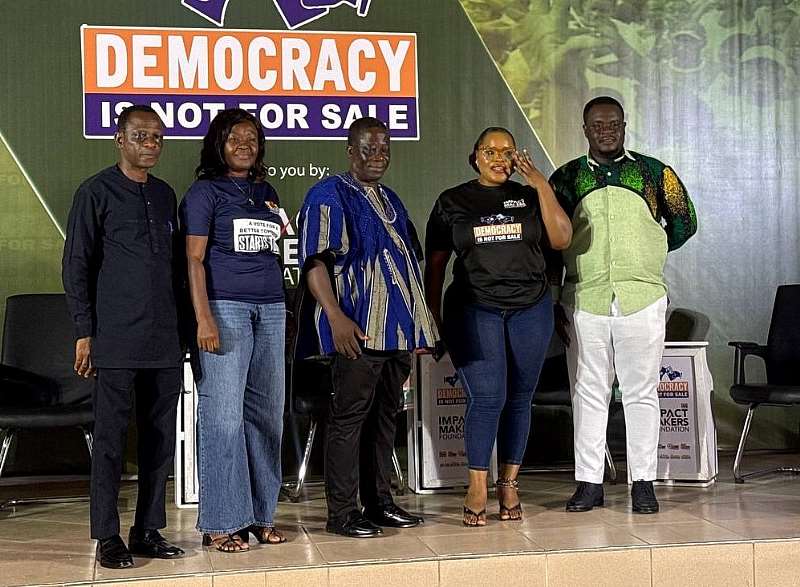
The forum, dubbed “Democracy Is Not For Sale,” was organised on Friday, August 28, 2026, by Adom Brands of the Multimedia Group Limited in partnership with the JoyNews Impact Makers Foundation.
It brought together representatives of state institutions, traditional authorities, governance experts and members of the public to discuss the growing influence of money in Ghana’s electoral politics.
Ms Ankrah acknowledged that economic hardship had left some voters vulnerable to inducements, but urged citizens not to allow their immediate financial difficulties to compromise the country’s democratic future.
“Economic hardship can sometimes make citizens vulnerable to inducements. But we must recognize this challenge for what it is and work together as a nation to address it,” she said.
She reiterated the NCCE’s constitutional responsibility to educate citizens about their rights, responsibilities and civic duties, stressing that civic education should not end with the acquisition of knowledge but should encourage responsible behaviour.
“We can build the Ghana we want collectively by upholding our values, respecting our laws and igniting the spirit of civic responsibility,” she added.
The forum featured contributions from Mr George Adzovie, Chief Investigator at the Commission on Human Rights and Administrative Justice (CHRAJ); Mr Edward Gyamfi, Deputy Director of the Electoral Commission (EC) in the Eastern Region; and Nana Yaw Debrah, Presiding Member of the New Juaben South Municipal Assembly.
Speakers at the forum agreed that vote buying undermines the electoral process by giving an advantage to financial resources rather than competence, integrity, vision and leadership.
They warned that allowing the practice to persist could deepen corruption, weaken accountability and ultimately affect the quality of leadership produced through elections.
Participants also expressed concern over reports that vote buying was beginning to emerge in school elections, including at the primary-school level, where pupils were allegedly being offered inducements to influence prefectural and other school-based elections.
They described the development as worrying, arguing that exposing children to transactional politics at an early age could influence their understanding of leadership and public service.
Stakeholders therefore called for a coordinated national effort involving state institutions, political parties, civil society organisations, the media, traditional authorities, religious bodies and parents to confront the practice.
They advocated intensified civic education in schools, stricter enforcement of electoral laws, greater transparency in campaign financing and sustained public education on the consequences of electoral inducement.
Members of the public who participated in the interactive session also shared experiences of alleged vote buying, including the distribution of money, food and other items before elections.
Others raised concerns about the increasing monetisation of political party primaries, arguing that the practice creates conditions that could eventually influence the conduct of national elections.
The “Democracy Is Not For Sale” forum forms part of efforts to promote electoral integrity and deepen public awareness of the dangers of money politics ahead of future elections.
Organisers said the campaign would be extended to other parts of the country to encourage citizens to protect Ghana’s democratic gains through informed and active participation.

 IEA proposes binding long term national development plan to stop successive gove...
 Health Minister moves to prevent stockouts of HIV, TB and Malaria commodities
 IEA wants MPs, ministers barred from serving on State-Owned Enterprise boards
 Constitutional review: IEA warns against changes that could turn judiciary into ...
 Eastern Regional Minister orders temporary closure of two SHSs after violent stu...
 Supreme Court dismisses Oppong Nkrumah’s bid to overturn injunction ruling
 72% of Ghanaian youth want to leave the country — NDPC Chairman
 Mahama set to reshuffle CEOs of state institutions
 Mahama will not tolerate conduct that undermines gov't — Callistus Mahama to app...

