




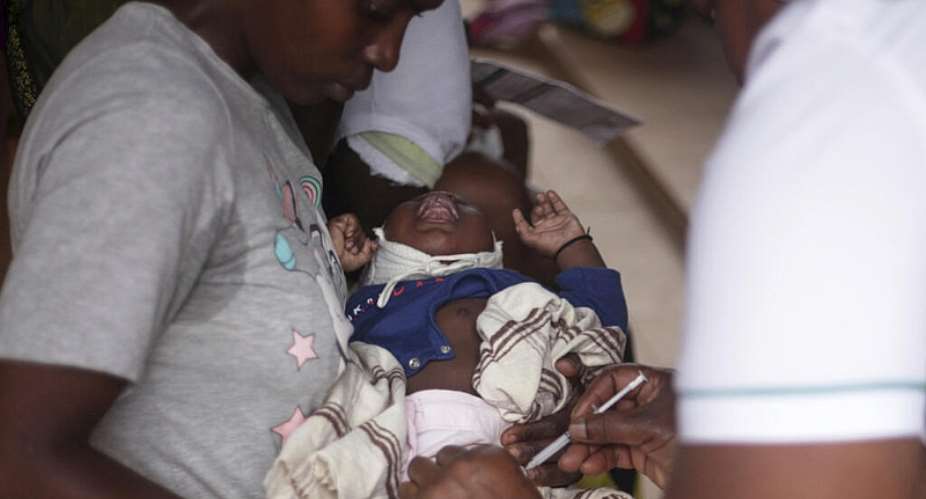
The RTS,S vaccine marked a turning point in the fight against malaria.
The World Health Organization (WHO) first recommended the use of the vaccine against Plasmodium falciparum, the parasite responsible for the deadliest form of malaria, in October 2021.
Since then, the roll-out of these vaccines has been incorporated into childhood vaccination programmes in 25 African countries, with more than 10 million children targeted each year.
According to the World Malaria Report 2025, more than 170 million cases of malaria and around 1 million deaths were prevented worldwide in 2024, thanks to the wider use of prevention tools, including vaccines, mainly in Africa – where more than 90 percent of malaria deaths occur.
Another major breakthrough came in April this year when the WHO pre-qualified the first anti-malarial treatment designed specifically for newborns and young infants. This marks a significant milestone, given that around 30 million babies are born each year in areas of Africa where the disease is endemic.
Malaria fight under threat as US funding cuts raise fears in Africa
Reduction in mortality
A study published in May 2026 in The Lancet assessed the impact of the RTS,S vaccine on mortality among young children in Ghana, Kenya and Malawi. The researchers monitored the roll-out of the vaccine over 46 months across 158 areas across the three countries.
They found that the introduction of RTS,S led to a significant reduction in mortality among young children: approximately one in eight deaths is estimated to have been prevented in the areas studied.
Africa now has four countries certified as malaria-free by the WHO: Algeria, Mauritius, Cabo Verde and Egypt.
However, despite this progress, malaria remains one of the main public health concerns on the continent. In 2024, around 579,000 malaria-related deaths were recorded across Africa, according to the WHO. Children under the age of five accounted for around three-quarters of these deaths.
How technology is helping African countries fight malaria from the skies
A new species
Among the challenges remaining, however, is the arrival of a new mosquito species in urban areas. Anopheles stephensi, a species native to South Asia, was first detected in Djibouti in 2012.
Since then, its presence has been reported in several East African countries and, more recently, in West Africa, notably in Nigeria and Ghana.
Anopheles stephensi is particularly well adapted to urban environments, and can breed in reservoirs and other artificial water containers found near homes.
It is also capable of surviving the very high temperatures of the dry season, a period during which malaria transmission usually declines. This could therefore extend the transmission period and facilitate the spread of malaria in cities.
A model cited in scientific studies estimates that its spread, combined with urbanisation, could expose a further 120 million Africans to malaria.
This article has been adapted from the original version in French by Diarouga Aziz Balde.


 Accra-Kumasi return flight now costs up to GH¢5,000 despite lower inflation — Ak...
 NDC using 24-hour markets to cover failure to implement 24-hour economy — Okyere...
 'No African country can solve the problem of road crashes alone' — Transport Min...
 ORC announces temporary disruption to e-Registrar services
 NDC’s GoldBod is a copy of NPP’s plan but implementation has failed — Ocquaye Jr
 Sammy Gyamfi’s words on Afenyo-Markin were harsh; I wouldn’t use them on such pl...
 Bawumia, Japanese Ambassador discuss digitalization, fintech, artificial intelli...
 Supreme Court to rule on bid to halt High Court trials during legal vacation on ...
 Accra–Tema Motorway project reaches 50% completion as roads minister demands fas...
 Nationwide blackout: Power supply expected to stabilise next month – Energy Mini...

