





Politics is often described as the art of governance and the science of managing competing interests for the common good. In every functioning democracy, political parties exist to offer citizens alternative visions of how society should be governed. For that reason, elections are designed to allow the voting masses compare ideas, evaluate records, and decide which group is best suited to administer public affairs. After an election, the defeated parties re-group, learn from their mistakes, improve their programmes, and prepare for another opportunity. The winners govern with the understanding that power belongs ultimately to the people and that they, too, could in future find themselves in opposition. That is how democracy is supposed to work.
Sadly, this is not how politics is practised in many parts of the world, especially in African countries. Rather than see one another as healthy competitors in the marketplace of governance and administrative ideas, politicians often regard their opponents as enemies, billed for destruction. Political contests become battles for survival. Campaigns begin to resemble wars. The election arena becomes a theatre of intimidation. Election victory itself becomes celebrated as total conquest, while defeat is treated as political obituary. The consequences of this destructive mentality have been devastating, costing countless lives, destroying democratic institutions and slowing the continent's march towards political maturity.
The greatest and most regrettable of this tragedy is that this hostility is completely unnecessary, totally uncalled for. It is, in every sense of the word, idiotic. It is an irrational way of conducting public affairs because politics is not warfare. It is public service. Political opponents are not enemies of the state and have no right or reason to be enemies of the ruling party. They are fellow citizens who simply disagree on how the nation should be governed.
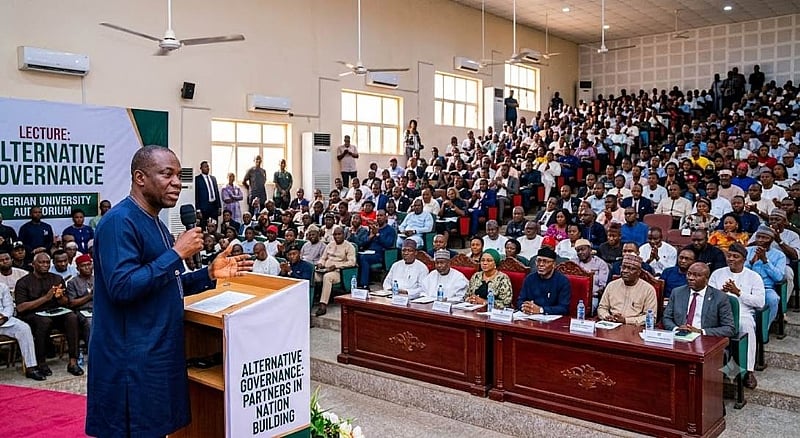
Indeed, one great strength of democracy is its recognition that no individual, party or ideology possesses a monopoly of wisdom. Every political party is capable of producing brilliant ideas, competent leaderships and innovative policies. By the same token, every party is capable of making mistakes. Democracy acknowledges this reality by allowing different viewpoints to compete peacefully while it leaves the final decision in the hands of the electorate. To that extent therefore, the opposition performs an indispensable function. It questions government policies, exposes institutional weaknesses, proposes alternative forms of governance and keeps those in power accountable. In a very crucial way, the opposition is the oxygen the government needs to survive. Without the opposition, democracy would gradually degenerate into authoritarianism.
This is why in mature democracies like we have in the UK, opposition parties are widely known as "alternative governments." They are governments-in-waiting. Their responsibility is not to malign the country in order to take over from the ruling party, nor is the duty of the ruling party to cripple the opposition in order to remain in office forever. Both sides ultimately serve the same nation. And so, their disagreement should only concern methods, priorities and policies, not patriotism itself.
Unfortunately, politics in many African countries has evolved into a winner-take-all enterprise. Winning an election frequently means controlling enormous state resources, determining public appointments, contracts, security votes and agencies, and directing public institutions. Losing often means exclusion from political influence, diminished economic opportunities and, in some cases, exposure to politically motivated investigations or persecution. Under such conditions, elections cease to be ordinary democratic exercises. They become desperate struggles in which every available weapon is deployed.
This reality has continued to encourage politicians to perceive opponents not merely as rivals but as existential threats. Every election becomes a battle between "us" and "them." Every criticism becomes interpreted as sabotage. Every opposing voice becomes labelled as disloyal. Every political setback begins to invite retaliation. And democracy gradually transforms into permanent political warfare.
The irony is that this political warfare mentality ultimately harms everyone, including those who temporarily benefit from it. Governments that are consumed by hostility spend valuable time and money fighting opponents, instead of directing their efforts toward solving pressing national problems. Opposition parties become more interested in frustrating government efforts and its development plans than offer constructive alternatives. National development suffers while politicians continue waging endless battles for supremacy. The victims extend far beyond the politicians themselves. Ordinary citizens pay the highest price as businesses intentionally avoid politically unstable environments. Inevitably, foreign investments decline, ultimately weakening public confidence in democratic institutions.
Young adults lose faith in politics altogether, believing that it is only designed as an avenue for personal enrichment and violent competition rather than for public service. Even more tragic are the lives lost to political violence. Across different African countries, history records politically-motivated assassinations, suspicious disappearances, violent attacks during election campaigns and extra-judicial killings allegedly linked to political conflicts. The truth is that every life lost in the name of politics represents a monumental failure of democracy. And no political office is worth the spilled blood of a single citizen. No electoral victory justifies violence against political opponents.
Some of these tragedies occur because political leaders deliberately inflame passions. Instead of educating supporters about healthy democratic competition, they mobilize them as though they were preparing for war. Opponents are portrayed as enemies of the ruling party. Every election becomes a moral crusade in which collaboration is equated with weakness and coexistence is treated as betrayal. Such rhetoric inevitably encourages violence among supporters who simply emulate the language and attitudes of their leaders.
The roots of this unfortunate political culture are complex. It is always claimed that colonial administrations concentrated enormous powers in central governments. But after so many decades of self-rule, it would be childish to point a finger at colonialism for what is happening today in African politics. On another level, many years of military rule had further entrenched authoritarian habits. In addition, weak democratic institutions often left politicians uncertain about their safety after leaving office. Politics of patronage also successfully made access to government synonymous with access to wealth and influence. Sometimes, ethnic and regional divisions deepened political rivalry, transforming ordinary elections into struggles between communities rather than contests between party policies.

These realities explain why there is political hostility in African politics, but they do not justify it. Understanding a problem is not the same as excusing it. African leaders must recognise that democracy cannot flourish where opponents are treated as enemies. The notion that politics should be a do-or-die affair reflects a profound misunderstanding of democratic governance. The bottom line is that political office is temporary. Nations are permanent. Governments come and go, but the country remains. Every administration inherits institutions built by its predecessors and leaves foundations upon which its successors would build. No government begins history afresh, from the start. Every administration is merely one chapter in an ongoing national history.
The most successful democracies understand this continuity. New governments may alter policies, introduce reforms or pursue different priorities, but they rarely regard everything done by previous administrations as worthless simply because their political rivals initiated those programmes. They preserve what works, improve what requires adjustment and discard only what is demonstrably harmful to the society. Such continuity strengthens public confidence and accelerates national development.
In contrast, where the concept of enmity dominates the political space, incoming governments often dismantle worthwhile projects merely because opponents conceived them. Roads remain abandoned. Housing schemes deteriorate. Industrial projects are neglected. Educational reforms are discarded. National resources are wasted simply because politicians refuse to ever acknowledge that rivals can produce good ideas. This is not governance. It is pettiness masquerading as politics.
True patriotism demands a higher standard. Every political party should remember that it seeks to govern the same country, serve the same people and protect the same national interest. Their methods may differ, but their destination ought to be identical with national progress. Partnership in nation-building should not mean eliminating political competition. On the contrary, vigorous competition is healthy. Citizens deserve genuine choices. Governments should be criticized when they fail. Opposition parties should expose corruption, incompetence and abuse of power wherever they exist. There should be robust debates because they enrich democracy.
No matter the circumstance, political disagreement must never descend into hatred. Political rivalry must never be allowed to degenerate into personal hostility. Elections should determine who governs, not who deserves to exist. Defeat should not produce persecution, and victory should never produce arrogance. This requires leaders who possess democratic maturity. Leaders who recognise that criticism strengthens governance rather than weaken it. They understand that opposition parties represent millions of citizens whose voices deserve to be heard with respect. They appreciate the fact that collaboration is not surrender: it is statesmanship.
National institutions also matter very much in these political issues. Independent electoral commissions, independent and impartial courts, professional security agencies and effective legislatures will inevitably reduce the temptation to manage politics as warfare. When politicians trust that elections will be credible and that constitutional rights will be protected regardless of who wins, the stakes become less existential. Equally important is the political education of citizens. Supporters must learn that belonging to different parties does not make their neighbours enemies. Families should not be divided permanently by elections. Religious organisations, traditional institutions, educational establishments and the media, all of them have responsibilities to promote democratic culture and democratic tolerance. Citizens should judge politicians by competence, integrity and performance rather than any inflammatory rhetoric. The media, in particular, must avoid becoming instruments of political warfare. Journalism should inform, educate, entertain and hold every government and its officials accountable, without becoming captive to partisan interests. Responsible reporting encourages peaceful democratic engagement rather than emotional polarization.
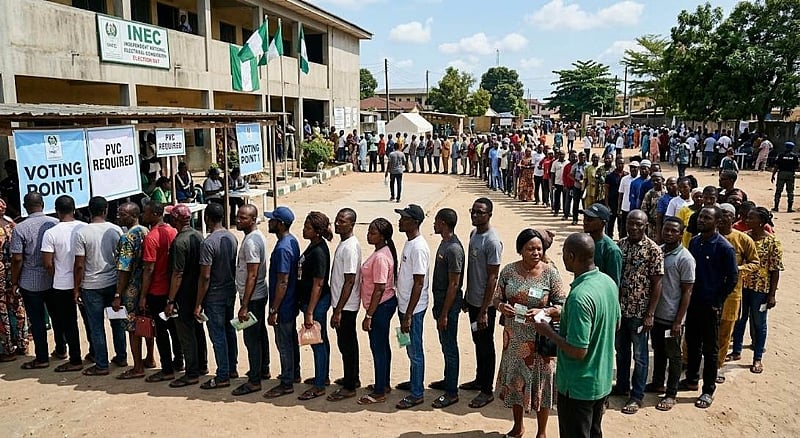
Political leaders themselves must intentionally cultivate a new cultural language of democracy. Instead of regarding rivals as enemies, they should refer to them as opponents. Instead of preaching hostility, they should encourage respectful disagreement. Instead of threatening revenge, they should promise accountability under the law. Words matter because they shape attitudes, and attitudes ultimately shape behaviour.
I should not forget to add that there is also an urgent need to reduce the excessive rewards attached to political offices. Given the situation that public office has become the quickest route to wealth, influence and privilege, competition will inevitably become ruthless. In that case, strong, effective and financially independent anti-corruption institutions, transparent public procurement and equitable economic opportunities outside government can reduce the desperation surrounding elections. Ultimately, democracy does not automatically succeed just because politicians always agree on points but because they accept rules that allow disagreement without violence. In that sense, the ballot exists precisely to replace the bullet. And elections are designed to settle political disputes peacefully so that societies need not resort to conflict.
Africa has already demonstrated encouraging signs in several countries showing that peaceful transfers of power have become increasingly common. Former ruling parties have quietly accepted defeat without beating drums of war. Opposition leaders have assumed office constitutionally. Incumbents have handed over peacefully after losing elections. These examples prove that democratic maturity is indeed possible on the continent. They deserve to become the norm rather than the exception. The future of African democracy will depend largely upon abandoning the destructive psychology of political enmity. Leaders must reject the illusion that opponents are adversaries to be crushed. Instead, they should recognise them as fellow patriots entrusted by different segments of the population with advancing alternative ideas for national unity and development.
The yardstick to measure democratic civilisation is never that political parties agreed on every issue. That would be impossible. The true measure is whether they can disagree vigorously while they still recognise one another's legitimacy and common commitment to the spirit of nationalism. When governments govern well, the nation benefits, regardless of party affiliation. When opposition parties offer constructive criticism, the nation benefits, regardless of who occupies public office. When elections are transparent and peaceful, investors gain confidence, institutions grow stronger and citizens become more hopeful about the future. Everybody wins.
So then, let us accept and in 2027 work towards that understanding that political parties are not enemies marching towards a battlefield. They are and will remain different teams participating in the same national enterprise. They may wear different colours, chant different slogans and advocate different policies, but they all owe allegiance to the same flag and responsibility to the same people.
The day African politicians fully embrace this simple truth, that day will mark the beginning of a new democratic culture in which elections are friendly contests rather than cold or open wars, opposition is respected rather than persecuted, governments govern rather than seek revenge, and politics returns to its noble purpose of service to the people. Until then, the needless hatred that turns fellow citizens into enemies will remain one of the greatest absurdities of African politics. And it is an absurdity that deserves to be called by its proper name: the idiocy of political enmity.
· Asinugo is a British-Nigerian, London-based veteran journalist, author and publisher of ROLU Business Magazine (Website: https://rolultd.com)


 Missing 8-month-old baby found safe in Kpando
 Captain Smart cuts sod for first DVLA office in Gomoa enclave
 Committee tasked to review Adamus Resources Limited licence revocation petition ...
 'The Tribunals Bill appears to preempt constitutional review recommendations' — ...
 'Tribunals are prone to political manipulation' — Kofi Bentil cautions
 'The fear is completely unfounded' — Akwatia MP defends Tribunals Bill
 'Let's start; if it doesn't work, we can review it' — Martin Kpebu backs Tribuna...
 Spain face Argentina in battle for World Cup supremacy
 Ex‑NAFCO Boss Petitions AG: ‘I’m Being Harassed, Detained and Tortured’ — Abdul‑...
 “No Table Will Turn”: Gaming Commission Deputy Tells NPP to Stop Politicising EO...

