




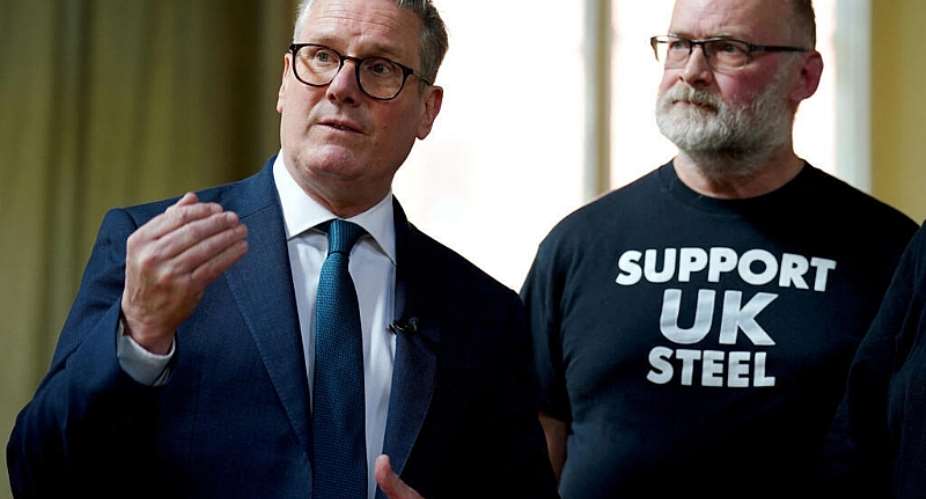
The UK on Thursday nationalised British Steel, taking over the loss-making company previously owned by Chinese steelmaker Jingye, in an effort to "protect the future of steel production in the UK".
The UK had "forcibly" taken over the company and "disregarded" Jingye's contributions to the British economy and society, according to a spokesperson from China's Ministry of Commerce.
He said the move "seriously damaged" Jingye's legitimate rights and interests, and "severely undermined" Chinese companies' confidence in investing in the UK, adding that Beijing would "closely monitor developments and support Chinese firms in protecting their rights".
He urged the UK to fulfil its obligations under the China-UK Investment Protection Agreement.
The spokesperson did not say what the protection of Chinese companies' rights might entail.
EU unveils 'Made in Europe' rules in bid to stem industrial decline
National interest
The nationalisation of British Steel is the latest in a series of measures the UK has taken to support its steel industry – which include a new set of tariffs and quotas to protect the sector from the dumping of cheap steel, and a tariff deal with the United States.
"Today's decision secures the future of steelmaking in the UK, protects skilled jobs and safeguards a vital national capability," outgoing Prime Minister Keir Starmer said.
The government seized operational control of British Steel from Jingye in April 2025 to prevent the closure of the steelworks in Scunthorpe in northern England and protect 2,700 jobs at the plant, as well as thousands more in the supply chain.
The plant, the country's last remaining primary steelmaking site, supplies the rail, construction and automotive industries.
But in recent years it has struggled with the UK's high energy costs and a glut of steel in the global market. Business minister Peter Kyle told Times Radio that the government was spending more than £1 million a day to keep it running.
Chinese investment in Europe hits seven-year high but rebound may be short-lived The British Steel works in Scunthorpe, the country's last remaining primary steelmaking site.
"We need that virgin steel production because if this were to disappear, we would become at the mercy of international markets and supply from other countries," he said.
Estimating that the government had already spent £640 million (€752 million) to keep the plant open, Kyle said: "It is value for money for the British public, but we need to make sure that this business moves forward."
Legislation to allow the government to take ownership of British Steel received final approval on Wednesday after the state failed to find a buyer for the company, which was privatised under Margaret Thatcher in 1988.
Industry group UK Steel said nationalisation was the right move, and the sector now needed "a long-term plan that restores British Steel to commercial sustainability".
(with newswires)


 "He stood for peace, good neighborliness" — Bawku Naba mourns demise of Yaa Naa ...
 Mahama targets completion of Ho Sports Stadium before Ghana's 70th anniversary
 'Repression will not silence Ghanaians' — Richard Ahiagbah tells Mahama over Tik...
 'I would have loved to have experienced Asiedu Nketiah remain NDC National Chair...
 NDC not a principled political party over Supreme Court nominations — Afenyo-Mar...
 Miracles Aboagye’s arrest: EOCO is ‘unprofessional, are liars’ - Nana B
 Black Stars can win AFCON, World Cup if team and coach is maintained – Mahama
 GNAT, NAGRAT and PRETAG threaten strike over unresolved conditions of service
 GHS55m probe: Miracles is not a threat; NPP using national communicator ambition...
 Creating new tribunal system to compete with existing courts will create chaos i...

