




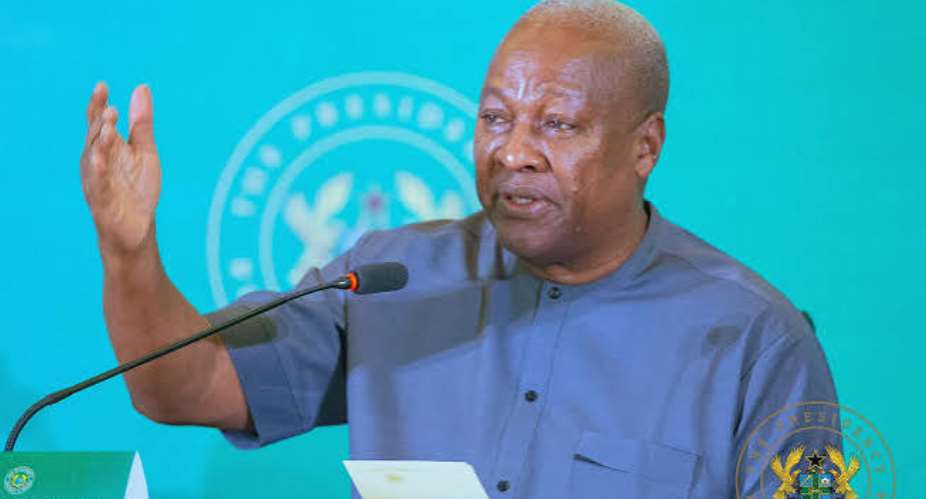
President John Dramani Mahama's recent pledge to improve the welfare of retirees has rekindled hope among thousands of Ghanaian pensioners. His assurance that pension benefits will improve as the economy recovers is more than a political statement. It is a recognition that a nation's development cannot be measured solely by GDP growth, infrastructure projects or employment figures. It must also be measured by how it treats those who spent decades building the Republic.
Across Ghana, retired teachers, nurses, lecturers, soldiers, police officers, agricultural extension officers, civil servants, and public-sector workers have devoted the best years of their lives to national service. Today, many face financial hardship, rising medical costs, and diminishing purchasing power. For them, the President's words are welcome. Yet history has taught pensioners to temper hope with cautious optimism. The challenge before government is therefore straightforward but profound: transform a reassuring promise into measurable policy.
The Economic Reality of Ghana's Pensioners
Retirement should represent security after decades of sacrifice. Unfortunately, for many Ghanaian pensioners, it has become a period marked by financial uncertainty.
Inflation continues to erode fixed incomes. Healthcare costs rise steadily with age. Utility bills, transportation fares and food prices continue to climb while pension adjustments often lag behind the actual cost of living. Unlike active workers, retirees have limited opportunities to earn additional income. Every increase in prices directly reduces their purchasing power. This is why pension reform is not merely a financial issue. It is a social justice issue.
The President Deserves Credit
It is important to acknowledge what the President has done right. By publicly recognizing the welfare challenges confronting retirees, President Mahama has elevated pensioners' concerns onto the national development agenda. Too often, public debate focuses on wages, taxes and employment while pensioners remain largely invisible. Recognition is the first step towards reform. However, meaningful reforms require more than good intentions.
Promises Need Timelines
Perhaps the greatest concern among pensioners is uncertainty.
- What specific reforms are being contemplated?
- When will they be implemented?
- How will pension increases be determined?
- Will future adjustments be linked to inflation?
Without timelines and measurable targets, even the most sincere promises risk being overtaken by changing economic realities.
Lessons from Other African Countries
Several African countries have demonstrated that meaningful support for retirees is achievable.
- Mauritius has consistently expanded social protection for older persons through regular pension reviews.
- Botswana has maintained strong elderly support programmes that complement pension benefits.
- South Africa periodically reviews old-age grants and social assistance to cushion vulnerable citizens against inflation.
- Rwanda continues strengthening community-based health insurance to improve healthcare access for older citizens.
Ghana need not copy these models wholesale, but it can learn valuable lessons from them.
The Role of SSNIT
The Social Security and National Insurance Trust occupies a central place in pension administration. Beyond paying monthly pensions promptly, SSNIT should continue improving customer service, strengthening transparency, embracing digital innovations and deepening engagement with pensioners' associations.
Many retirees desire regular consultations before major policy decisions are announced. Listening to pensioners should become institutional practice rather than an occasional exercise.
Healthcare Must Become a National Priority
Perhaps no issue affects retirees more than healthcare. Growing older inevitably brings higher medical expenses. Unfortunately, many pensioners postpone treatment because they simply cannot afford it. Government should therefore explore:
- Expanded NHIS coverage for retirees.
- Special geriatric clinics within regional hospitals.
- Reduced costs for chronic disease medications.
- Faster healthcare access for senior citizens.
Improving healthcare may ultimately have a greater impact than modest pension increases alone.
Beyond Monthly Pension Payments
A truly comprehensive welfare policy should include:
- Periodic pension reviews linked to inflation.
- Affordable housing initiatives for retirees.
- Public transport concessions.
- Utility support for low-income pensioners.
- Recreational and wellness programmes for senior citizens.
- Financial literacy support for newly retired workers.
Retirement should not merely mean receiving a monthly cheque. It should represent a secure and dignified stage of life.
Shared Responsibility
Government cannot do everything. Families must continue caring for elderly relatives. Corporate Ghana can establish pensioner support initiatives. Religious organizations can expand outreach programmes. Traditional authorities can help preserve Ghana's longstanding culture of respect for older people. Supporting retirees should become a collective national responsibility.
Turning a Promise into a Legacy
President Mahama has opened an important national conversation. The opportunity now exists to implement reforms that future generations will remember. Successful pension reform would not merely improve the lives of today's retirees. It would reassure every young worker currently contributing to the pension system that their own retirement will one day be secure. That confidence strengthens national productivity, trust and social cohesion.
Every Ghanaian worker is a future pensioner. How we treat today's retirees is therefore a reflection of how we expect tomorrow's retirees to be treated. I repeat, President Mahama's pledge deserves commendation. Now comes the more difficult task: translating hope into policy, promises into programmes, and speeches into sustainable improvements in the lives of Ghana's senior citizens. If this administration succeeds in restoring dignity to retirement, it will not simply have increased pensions. It will have reaffirmed one of the most important values of any civilized society. That those who built the nation should never be forgotten when their working years are over.
My Thoughts: Ten Immediate Actions Government Can Take Before the 2027 Budget
President Mahama's pledge has raised legitimate expectations among Ghanaian retirees. While comprehensive pension reform may take time, there are practical measures that can be initiated before the presentation of the 2027 Budget to demonstrate the Government's commitment.
- Convene a National Pensioners' Dialogue: Bring together representatives of pensioners' associations, SSNIT, organized labour, employers, the Ministry of Finance, and the National Pensions Regulatory Authority (NPRA) to identify priority concerns and agree on a reform roadmap.
- Review the Pension Indexation Formula: Develop a transparent mechanism that takes inflation, the cost of living, and wage growth into account when adjusting pensions, so that retirees do not continually lose purchasing power.
- Strengthen Healthcare Support for Pensioners: Expand NHIS benefits for retirees, improve access to medicines for chronic conditions, and establish dedicated service desks or priority care for senior citizens in public health facilities.
- Introduce a Pensioners' Cost-of-Living Relief Programme: Where fiscal conditions permit, provide targeted relief to low-income pensioners during periods of high inflation through temporary support measures.
- Deepen Stakeholder Engagement: Major decisions affecting pensioners should follow structured consultations with recognized pensioners' associations. Those directly affected deserve a voice in shaping policies that concern them.
- Improve Customer Service at SSNIT: Continue investing in digital services, reduce processing times, strengthen regional support offices, and improve communication so pensioners can access services with dignity and convenience.
- Promote Financial Planning Before Retirement: Encourage pre-retirement education to help workers prepare financially and psychologically for retirement, reducing avoidable hardship in later life.
- Expand Social Protection for Vulnerable Elderly Persons: Collaborate with Metropolitan, Municipal and District Assemblies, faith-based organizations, and civil society to identify and support pensioners facing severe hardship.
- Publish Annual Progress Reports: Government should issue periodic public updates on pension reform commitments, ensuring transparency, accountability, and public confidence.
- Make Retirees Partners in National Development: Many retired professionals possess decades of valuable experience. Creating opportunities for mentoring, advisory roles, voluntary public service, and community engagement would allow Ghana to continue benefiting from their expertise while promoting active ageing.
The measure of a compassionate nation is not how loudly it celebrates workers on the day they retire, but how faithfully it stands by them in the years that follow. President Mahama has offered a promise that has inspired hope. The next step is implementation. If Government, Parliament, SSNIT, organized labour, and pensioners themselves work together, Ghana can build a retirement system that offers not merely subsistence, but dignity, security, and peace of mind. Every worker is a future retiree. Investing in today's pensioners is, ultimately, an investment in the future of every Ghanaian.
FUSEINI ABDULAI BRAIMAH
+233208282575 / +233550558008
[email protected]

 Ounahi stars as Morocco outclass Canada to advance to last eight at World Cup
 Hezbollah, Hamas and Houthi officials attend funeral ceremonies for Iran's Khame...
 World Cup 2026: Ounahi fires Morocco to quarter-finals with decisive brace
 ‘International law is our compass’ in global conflict, UN rights chief tells RFI
 Govt set to name two new military barracks after distinguished generals
 Government begins distribution of relief items to June 29 flood victims
 Accra is technically a flat-lying area, drains alone can’t solve Accra floods — ...
 FDA closes Italian Boy Lounge at Teshie following suspected illicit drug raid
 Sierra Leone President commiserates with Mahama on June 29 flood disaster
 I want to uphold my father's dying wishes, not to chase his properties — Adwoa S...
