




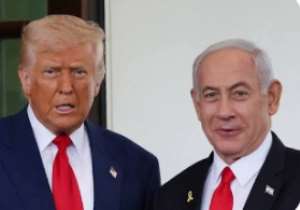
There was a time not long ago when Donald Trump was the most popular foreign leader in Israel. Streets were named after him. Coin medallions bore his face alongside the Star of David. He addressed the Israeli Knesset to thunderous applause, was showered with awards by Jewish organizations, and boasted, without much pushback, that Israel had never had a better friend in the White House.
Now, in the summer of 2026, he is being called a traitor in op-eds of Israel's leading newspapers, his name attached to the word "humiliation," and his photograph placed beside Barack Obama's the president Israelis once most despised as a symbol of American betrayal.
How did the closest thing to a love story in modern US-Israeli diplomatic history unravel so rapidly, and so publicly? The answer lies in the collision between Trump's transactional politics and Israel's existential insecurities and in the brutal arithmetic of a war that neither side quite won.
The Record That Built the Myth
To understand the depth of the current disillusionment, one must first understand the extraordinary affection Trump earned in Israel. The Israel Allies Foundation honored Trump for major achievements including the relocation of the US Embassy to Jerusalem, the recognition of Israeli sovereignty over the Golan Heights, and the brokering of the Abraham Accords, declaring that his "commitment to Israel has altered the course of history"
Trump himself told an Israeli-American audience that Israel had never had a better friend in the White House because, unlike his predecessors, he had kept his promises referencing in particular his recognition of Jerusalem as Israel's capital and the relocation of the US Embassy from Tel Aviv.
And for many Israelis, those were not empty words. Previous American presidents had promised the embassy move and never delivered. Trump delivered. Previous administrations had insisted on demanding Israeli concessions as preconditions for Arab normalization. Trump bypassed that framework entirely and produced the Abraham Accords agreements normalizing relations between Israel and the UAE, Bahrain, Morocco and Sudan (Britannica, Abraham Accords). He withdrew from the Iran nuclear deal his predecessor Barack Obama had signed, a deal many Israelis considered an existential threat. He imposed the "maximum pressure" sanctions campaign on Tehran. He was, in the telling of Netanyahu and his allies, uniquely aligned with Israel's security worldview.
Netanyahu himself, standing before the Israeli Knesset as the last living hostages were finally freed from Gaza, declared that no American president had ever done more for Israel, adding: "It ain't even close" .
That was October 2025. By June 2026, the same landscape looked unrecognizable.
A War Begun Together, Ended Apart
The fracture did not come from nowhere. When the United States and Israel attacked Iran on February 28, 2026, the allies appeared shoulder to shoulder. Netanyahu said the goal was to degrade the Islamic Republic's military, eradicate its nuclear and ballistic missile programmes, and topple its government. Trump announced the death of Iran's supreme leader in the opening barrage and urged Iranians to "take back" their country.
But from almost the outset, a fundamental divergence was visible beneath the surface of unity. It soon became clear that while Trump was seeking a quick win, Netanyahu wanted to vanquish Iran and its allies, even if it required an extended conflict. As Iran withstood weeks of heavy strikes and kept the Strait of Hormuz closed, Americans and Israelis grew increasingly frustrated but for different reasons.
Trump, whose party faces elections later in 2026, wanted to wind down an unpopular war and reopen the Strait of Hormuz to ease oil prices. Netanyahu, who also faces elections, was under pressure to stop Hezbollah's attacks and prove he was winning.
The collision came in early June. Trump reportedly called Netanyahu "f***ing crazy" for potentially upending Washington's efforts to reach a preliminary peace agreement with Iran, after Netanyahu ordered an attack on a Hezbollah stronghold in Beirut. According to reports, Trump told the Israeli leader in an expletive-laden call: "You'd be in prison if it weren't for me. I'm saving your ass. Everybody hates you now. Everybody hates Israel because of this".
The humiliation was not confined to private phone calls. Reports emerged that Trump was treating Netanyahu less like the leader of a sovereign ally and more like a subordinate expected to obey instructions, with Israel looking less like an independent regional power and more like an American client state.
The Deal That Broke the Relationship
Then came the Memorandum of Understanding a US-Iran interim agreement negotiated, crucially, without Israel's involvement. For Israelis, its terms were shocking. Under the agreement, all fighting, including the Israeli offensive launched against Lebanon in early March was to be concluded immediately. Both sides were also to commit to respecting the territorial integrity and sovereignty of Lebanon of which Israel currently occupies around a fifth.
In one particularly blistering op-ed published in one of Israel's leading newspapers, titled "You could have been the greatest president of all, but you failed," Trump was accused of having signed a "surrender agreement with a murderous and cruel terror regime." It accused Trump of bringing about the "humiliation" of Israel and pointedly compared him unfavorably to Obama whose 2015 nuclear deal Trump had once called the worst ever.
Hagai Ram, a professor at Ben Gurion University, observed that Trump was until recently "the most popular figure in Israel" but had now been turned "into a villain," describing the reaction as rooted in "an all-encompassing sense of American betrayal of Israel".
A poll by Israel's Channel 12 television appeared to mark a historic break: only 11 percent of Israelis felt their country had "won" the war the US and Israel launched against Iran, while an overwhelming 71 percent said they no longer trusted the Trump administration to safeguard Israeli interests.
From Partners to Dependents
Perhaps the most psychologically damaging aspect of the rupture for Israelis is not what Trump said but what it revealed about the nature of the relationship. Netanyahu's opponents and even some of his former allies accused him of mortgaging Israel's sovereignty and reducing the country to strategic dependence on Washington.
Analysts at the Carnegie Endowment for International Peace noted that Trump has been both preternaturally pro-Israel and pro-Netanyahu, while simultaneously applying an unprecedented degree of pressure on the Israeli leader, often ignoring Netanyahu's suggestions or blindsiding him on important policy decisions. The result, they argued, is that Trump today has unmatched leverage on Israel no president in any administration has ever compelled an Israeli prime minister to accept a US peace initiative, and no Israeli prime minister has ever had less capacity to push back .
The same analysis observed that Trump's support for Israel appears transactional and functional, designed partly to engage evangelical voters and paint Democrats as enemies of a Jewish state.
As one analysis in the Times of Israel noted, in a transactional framework, loyalty is measured less by history than by present alignment what are you doing for me now? If the answer changes, the relationship changes. That can feel shocking to Israelis and American Jews who view the alliance as an enduring moral and strategic commitment.
Ordinary Israelis: Worried, But Without Solutions
The political elite are not the only Israelis unnerved. A poll found that 72 percent of Israelis are worried about the nation's eroded standing in American public opinion, even as Israel prepares for elections likely in the autumn. Udi Sommer, professor of political science at Tel Aviv University, described the trend as "not just worrying; it is an existential concern," noting that Israelis feel the shift in sentiment when they travel or engage online. Yet even as the anxiety is widespread, responses remain thin Israeli politicians, by nature, focus on the immediate. In a post-October 7 world, the urgent security, borders, hostages almost always displaces the important long-term public diplomacy.
Opposition leader Yair Lapid was blunter than most, writing that the US-Iran deal represented "one of the most shocking failures in Israel's foreign and security policy," laying the blame squarely at Netanyahu's door .
The Alliance Survives But Changed
Analysts are careful to note that the strategic alliance itself has not collapsed. Michael Singh of the Washington Institute for Near East Policy observed that tensions in the US-Israel relationship are not uncommon but "what's so different right now is how publicly it's playing out" .
Vice President JD Vance offered the most forthright US defence, arguing that Trump "is the only head of state in the entire world who is sympathetic to the nation of Israel at this moment in time," and warning Israel's cabinet against attacking the only powerful ally they have left.
That blunt statement captures both the reassurance and the threat embedded in the current relationship. Trump remains, by the measure of global political alignment, the most sympathetic major power Israel can claim. Yet the nature of that sympathy has been exposed as conditional, volatile and ultimately subordinate to American domestic politics and Trump's own desire for legacy-defining deals.
A Verdict Still Pending
Whether Iran's nuclear programme was permanently crippled, whether its regional proxy networks were fundamentally weakened, whether deterrence has truly been restored or merely reset until the next round these questions remain unresolved. Iran may have suffered serious setbacks. Israel may have demonstrated military reach and intelligence capability. Yet the central questions of the war that brought the two countries to this point together remain unanswered.
What is clear is that the image of Trump as Israel's unconditional champion the president who moved the embassy, secured the Golan, brokered normalization deals, tore up Obama's Iran agreement and stood with Jerusalem at every turn has given way to something more complicated and more painful: the image of a dealmaker who will always, in the end, prioritize his own political clock over his ally's security imperatives.
For Israelis, who once placed Trump's image on commemorative coins, that realization may be the most consequential diplomatic lesson of their generation. In the end, even the best friend America has ever given Israel turned out to be an American first.
Mustapha Bature Sallama.
Medical/ Science Communicator,
Private Investigator, Criminal investigation and Intelligence Analysis.
International Conflict Management and Peace Building.USIP
[email protected]
+233-555-275-880
References
The Jerusalem Post "Donald Trump Honoured with Israel Allies Lifetime Award," December 2025. https://www.jpost.com/international/article-880157
Arab News "Trump: I Am Israel's Best Pal in the White House." https://www.arabnews.com/node/1595821/amp
Washington Times "Letter to the Editor: Trump Is the Best Friend Israel's Ever Had," April 20, 2026. https://www.washingtontimes.com/news/2026/apr/20/letter-editor-trump-best-friend-israels-ever/
Al Jazeera "'You Could've Been the Greatest': Trump Faces Israeli Anger Over Iran Deal," June 20, 2026. https://www.aljazeera.com/news/2026/6/20/you-could-have-been-the-greatest-trump-faces-israeli-anger-over-iran-deal
PBS NewsHour / AP "Netanyahu and Trump Started a War Together. Now, Their Differing Goals Have Put Them at Odds," June 2026. https://www.pbs.org/newshour/world/netanyahu-and-trump-started-a-war-together-now-their-differing-goals-have-put-them-at-odds
PBS NewsHour "Israelis Angry Over US-Iran Peace Deal Lash Out at Netanyahu," June 2026. https://www.pbs.org/newshour/world/israelis-argry-over-u-s-iran-peace-deal-lash-out-at-netanyahu
Time Magazine "Trump Says Netanyahu 'Turned His Troops Around' After He Asked Israel Not to Bomb Beirut," June 2, 2026. https://time.com/article/2026/06/02/trump-netanyahu-crazy-lebanon-hezbollah-ceasefire-iran-us-peace-deal/
The Forward "Trump's Humiliation of Netanyahu Marks a Sea Change in the US-Israel Relationship," June 2026. https://forward.com/opinion/829331/trump-netanyahu-hezbollah-iran/
Carnegie Endowment for International Peace "There's Never Been a President Like Trump on Israel," Aaron David Miller and Daniel C. Kurtzer, January 2026. https://carnegieendowment.org/emissary/2026/01/trump-netanyahu-israel-gaza-board-of-peace-plan
Times of Israel Blogs "From 'Best Friend' to 'Crazy': Why Trump Is Turning on Netanyahu," Seth Eisenberg, June 2026. https://blogs.timesofisrael.com/from-best-friend-to-crazy-why-trump-is-turning-on-netanyahu/
Christian Science Monitor "Israelis Are Worried About US Ties, But Few Offer Solutions," May 8, 2026. https://www.csmonitor.com/World/Middle-East/2026/0508/trump-netanyahu-israel-american-public-opinion
Pew Research Center "US Views of Israel, Netanyahu More Negative in 2026, Especially Among Young Adults," April 7, 2026. https://www.pewresearch.org/short-reads/2026/04/07/negative-views-of-israel-netanyahu-continue-to-rise-among-americans-especially-young-people/
Britannica "Abraham Accords." https://www.britannica.com/topic/Abraham-Accords
CNN "Ceasefire Falters as Israel and Iran Trade Worst Strikes in Months," June 7–8, 2026. https://www.cnn.com/2026/06/07/world/live-news/iran-war-trump-israel-lebanon
Institute for National Security Studies (INSS) "The Day After Trump: How Israel Should Prepare for the Expected Turmoil," November 2025. https://www.inss.org.il/publication/day-after-trump/

 GTEC questions dismissal of Bolgatanga Technical University Vice Chancellor
 'You can't come and abuse Ghana's resources and run away to avoid accountability...
 Dr. Adutwum Campaign Aide appeals for calm as Ken Agyapong row deepens
 Mahama demands strict quality checks before road payments
 Turmoil in NPP as Ken Agyepong supporters blast executives over alleged dismissa...
 June 27: Cedi sells at GHS12.30 on forex market, GHS11.30 on BoG interbank
 Odaw River dredging to be completed by December 2027 — Works Minister
 Appointees must stay in Ghana for one year after office — Kofi Bentil proposes
 2026 World Cup: Africa sets new record with seven teams reaching knockout stage
 2026 World Cup: Black Stars secure Round of 32 qualification ahead of Croatia cl...


