




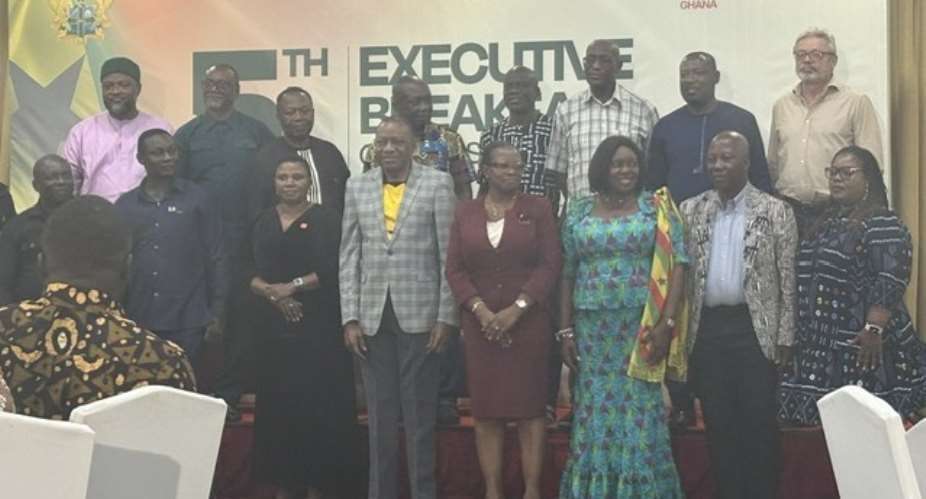
Mrs. Rita Naa Odoley Sowah (MP), Deputy Minister for Local Government, Chieftaincy, and Religious Affairs (MLGCRA), has deduced that the solution to Ghana’s sanitation problem, especially indiscriminate waste disposal, is for the nation to invest in sanitation-conscious children.
“If we want cleaner communities tomorrow, we must invest in sanitation-conscious children today and help our young people understand that sanitation is not only about cleanliness. It is about responsibility, citizenship, protecting public health, and safeguarding the future,” the Deputy Minister stated to launch the 7th School Sanitation Solutions Challenge (Triple S) contest in Accra.
“As a ministry responsible for Local Government, Chieftaincy and Religious Affairs, we have come to appreciate that one of our greatest opportunities lies not only in infrastructure but also in changing mindsets.
“We can construct public toilets, provide waste bins, and improve collection systems, but unless attitudes and behaviours change, our progress will remain limited.
“The long-term solution, therefore, lies in building a culture of environmental responsibility, and that culture must be nurtured from an early age. This is where schools become critically important,” Mrs. Odoley Sowah, who represented the sector minister, stated.
The 2026 "Triple S" challenge was launched during the 5th Executive Breakfast Conversation, which was on the theme "Sanitation as a Key Performance Indicator for MMDCEs and the Role of Relevant Ministries, Departments, and Agencies—Prospects, Opportunities, and Constraints."
Organized by the MLGCRA, in collaboration with sector agencies, World Vision Ghana, and the Media Coalition Against Open Defecation (M-CODe) and Ghana WASH Journalists Network serving as the main media partners.
It aimed to secure the highest socio-political prioritisation and multi-stakeholder commitment towards realising sanitation as a catalyst for health, job creation, and economic well-being.
Dr. Audrey Smock Amoah, Director-General of the National Development Planning Commission, chaired the event while Dr. Rachid Pelpuo, Minister of Labour, Job, and Employment, was the special guest.
The Deputy Minister noted that over the years, the Triple S Challenge, organized by World Vision Ghana, Kings Hall Media, Ghana Education Service, Zoomlion Foundation, and other partners, has established that young people are not passive recipients of development programmes.
“They are innovators, advocates, and problem-solvers, and they are capable of generating practical solutions to challenges affecting their schools and communities.
“Many of the ideas emerging from previous editions of the Triple S Challenge have shown remarkable creativity, ingenuity, and a deep understanding of local sanitation realities.
“This gives us confidence that the next generation of Ghanaian leaders is prepared to contribute meaningfully to building cleaner and healthier communities. I therefore encourage schools across the country to participate actively in this year's competition,” Mrs. Odoley Sowah indicated.
Mrs. Odoley Sowah noted, "Whilst I urge teachers to mentor and support their students, I also encourage parents to take interest in the ideas their children develop, and to our pupils, I say never underestimate the value of your ideas and never assume that you are too young to make a difference.”
She predicted that the future of sanitation in Ghana will be shaped not only by government policies but also by the innovations, attitudes, and actions of young people.
“As we deliberate today, let us challenge ourselves to think beyond the problems and focus more on the solutions,” she echoed.
Mr. Yaw Attah Arhin, World Vision Ghana's WASH Technical Specialist, explained that the School Sanitation Solutions Challenge seeks to get schoolchildren involved in fixing sanitation problems.
He said it aims to influence kids to become “sanitation-conscious diplomats of change” and to co-create sustainable solutions for sanitation in schools, communities, and public spaces.
Mr Attah Arhin noted that even though Ghana has made progress on safe water and sanitation, ending open defecation is still slow, adding that many schools also lack adequate, well-maintained, gender-segregated, or accessible toilets.
“Triple S is meant to build children’s capacity to influence policy and WASH improvements,” the World Vision Ghana WASH Technical Specialist stated.





 I’ve put Uri Gellar in a bottle for challenging his spiritual powers – Kwaku Bon...
 GCB Board Chairman Prof. Joshua Alabi promises $100,000 winning bonus for Black ...
 President Mahama cuts sod for 24-hour economy market at Assin Bereku
 Big Push projects have slowed down because of heavy rainfall — Mahama
 Police probe suspected foul play after woman found hanging dead in Somanya
 GARID project to be completed by December 2027 to tackle Accra flooding – Housin...
 I've lifted the curse I placed on Harry Kane – Kwaku Bonsam
 Mahama begins Central Region Resetting Ghana Tour
 2026 not a year for major public sector salary renegotiations – Vice President O...
 Govt to introduce new rent law to strengthen tenant protection


