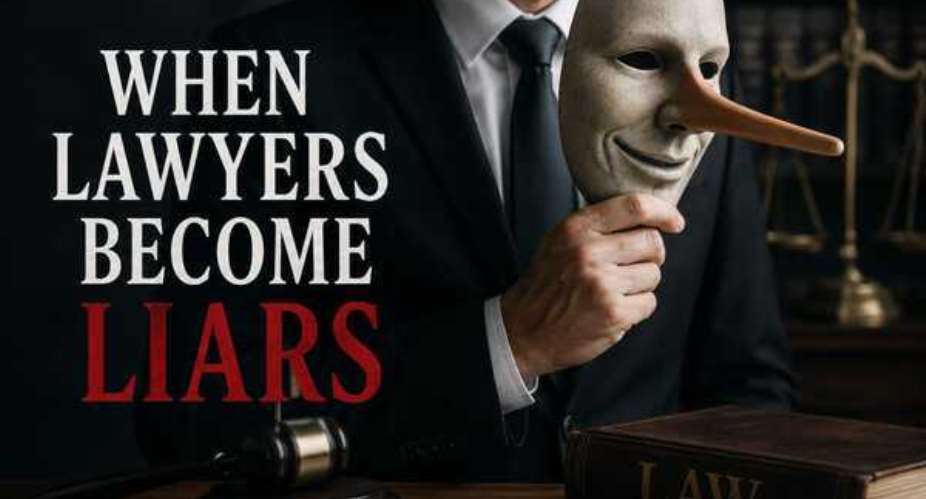
There is a sacred covenant between a nation and its people: that when they stand before the bar of justice, they will be heard fairly, judged impartially, and protected by those sworn to uphold the law.
In Nigeria and across much of the African continent, that covenant has been broken. The guardians of justice have become its executioners. When lawyers become liars, and judges become pawns of power, the common man is left with nowhere to turn.
The legal profession in Nigeria was once regarded with reverence, a calling for those who would defend the helpless and speak truth to power. Today, that temple has become a marketplace where justice is negotiated, not delivered. As former Presidents Olusegun Obasanjo and Goodluck Jonathan, alongside the Sultan of Sokoto, recently warned, justice in Nigeria is “too often negotiated, not delivered”. This is not rhetorical flourish; it is an indictment of a system that has drifted from adjudication to auction.
What we are witnessing has been aptly described as “judicial rascality”, a culture of lawlessness within the law. Midnight ex parte orders overturn broad daylight realities. Contradictory injunctions issue from courts of coordinate jurisdiction. Bail is dispensed as a favor, not a right. The judge becomes a partisan tactician; the courtroom behaves like a campaign secretariat; the docket bends for the powerful and breaks the poor.
When citizens learn that knowing the judge is more valuable than knowing the law, the social contract begins to tear. A widow can wait years to be heard on a small land case, while a developer's injunction materializes overnight. One buys results; the other buys despair.
The erosion of Nigeria's justice system is driven not only by corrupt judges but by legal practitioners who have abandoned their roles as ministers in the temple of justice for unethical commercialism. Lawyers have become the architects and facilitators of this decay, presenting tainted materials, suppressing facts, and misrepresenting court orders to deceive the bench.
Human rights lawyer Victor Giwa's ordeal offers a chilling illustration. Giwa is being prosecuted for alleged forgery, a case built on claims that the supposed victim, Senior Advocate Awa Kalu, has explicitly denied. Despite Kalu's formal letter to the Inspector General of Police stating that his letterhead was never forged and that he never lodged any complaint, the police pressed charges anyway. The complainant, a connected individual, allegedly funds the trial and communicates with the court concerning proceedings. Giwa's motion for the judge to recuse himself was dismissed. A civil society organization has petitioned the Chief Justice of Nigeria to probe what it describes as the “persecution” of this human rights lawyer by judicial officers.
Political interference in the judiciary did not creep in quietly, it marched in through appointments weaponized by loyalty tests, through strategic postings, and through the quiet shepherding of “sensitive” cases to particular hands. Underfunding and insecure welfare make virtue lonely. Complex procedures reward obstruction.
The consequences are devastating. Human rights lawyer Deji Adeyanju has blamed Nigeria's “systemic culture of impunity” and executive interference for stalled accountability following the #EndSARS protests. Court judgments awarding damages to victims were simply ignored by the government. As Kunle Edun (SAN) observed: “Disrespect for judgments is an invitation to anarchy, not even a million soldiers can stop it”.
The Citizens' Liberties Committee of the Nigerian Bar Association has decried the persistent disobedience of court orders by government institutions and powerful individuals. Supreme Court judgments affirming local government autonomy remain unenforced. Court orders declaring suspensions illegal are flouted. When the government itself refuses to obey the law, what message does this send to the common citizen?
Perhaps most damning is the silence of the Nigerian Bar Association itself, the body created to defend the rule of law and protect the legal order. The family of Nnamdi Kanu has condemned the NBA for remaining silent over what it describes as the unlawful trial of the detained IPOB leader, a trial based on a repealed, non-existent law. “This is not neutrality,” the family declared. “It is aiding injustice by doing nothing”.
Former NBA presidential aspirant Ubani has similarly criticized the association's failure to intervene in the widespread injustices and inefficiencies lawyers face in Nigeria's judiciary. “The Bar's silence in the face of these indignities is not only disappointing but deeply troubling,” Ubani stated. “A legal profession that cannot defend its own is doomed to irrelevance”.
The fate of those who dare to speak truth to power is instructive. Professor Chidi Anselm Odinkalu, a senior lawyer and former Chairperson of the National Human Rights Commission, has faced professional reprisals for publicly raising concerns about judicial conduct and executive interference in Nigeria. After publishing an article examining improper relationships between senior judicial officers and the executive branch, a senior government minister reportedly petitioned the Body of Benchers to “invite and discipline” him. The Special Rapporteur on the independence of judges and lawyers has expressed serious concern over these developments.
Lawyers who defend their clients' rights are arrested and detained. Aloy Ejimakor, counsel to Nnamdi Kanu, was arrested during a peaceful protest and remanded in Kuje prison. Omoyele Sowore has been arrested multiple times for exercising his constitutional rights. In September 2025, lawyer Chinedu Agu was remanded in prison on criminal defamation charges over opinion articles criticizing the Imo State governor.
Across Africa, the story is the same. In Eswatini, lawyers face daunting obstacles in operating independently amid serious and ongoing threats to their lives, intimidation, harassment, and surveillance. Prominent human rights lawyer Thulani Maseko was extrajudicially killed in his home in front of his wife and children in January 2023, and the authorities have failed to bring anyone to justice. Lawyers in Eswatini fear being followed, harassed, threatened, and even killed. Women lawyers are threatened with sexual violence. Lawyers face adverse economic consequences for taking on cases perceived as “political”.
In Uganda, human rights lawyer Eron Kiiza was sentenced by a military court, without access to a civilian trial, for “contempt of court”. Soldiers physically prevented him from entering the military court to represent his client.
In the Democratic Republic of the Congo, lawyer Guillaume Muyembe was arrested after responding to a summons from the National Cyber Defence Council.
When lawyers become liars and judges become pawns, it is the common man who pays the price. The widow fighting for her land. The trader cheated by a powerful contractor. The young protester demanding accountability. The journalist speaking truth. The human rights defender standing up for the voiceless.
Investors read African courts like risk charts. Where contract enforcement is uncertain and court orders are optional, the cost of capital rises, timelines balloon, and innovation flees. As Goodluck Jonathan cautioned, capital runs from places where justice is for sale. But the damage goes deeper than economics. When citizens learn that the system is rigged, they retreat from courts into private arrangements that soothe the moment but corrode the republic.
The legal profession across Africa must confront an uncomfortable truth: it has failed the people it swore to serve. The Nigerian Bar Association and its counterparts across the continent must wake from their slumber. They must speak out against injustice, defend their members who are targeted for doing their duty, and hold to account those within their ranks who have betrayed the profession.
As one lawyer has warned: unless the association wakes up to its responsibilities, the future of legal practice in Nigeria could face irreversible decline. The same is true across the continent.
The temple of justice can be restored, but only if those who guard its gates remember that they are guardians, not gatekeepers for the powerful. Only if lawyers remember that they are ministers in the temple of justice, not merchants in a marketplace of outcomes. Only if judges remember that they serve the law, not those who would bend it.
When lawyers become liars, justice dies. And when justice dies, a nation dies with it. The time to reclaim the profession, and the continent, is now.

 Passport Office denies claims Fella Makafui has diplomatic passport
 Suspected thief caned, forced to carry heavy logs over alleged repeated stealing
 Ghana, Denmark partner to preserve Osu heritage sites linked to slave trade hist...
 June 25: Cedi sells at GHS12.25 on forex market, GHS11.23 on BoG interbank
 Media uproar as Court jails Herald Newspaper editor Larry Dogbe seven days for c...
 ECOWAS defence chiefs deny bribery allegations during Guinea-Bissau mission
 Wontumi's lawyers file motion to postpone July 3 judgment in Samreboi case
 Chieftaincy disputes becoming a major security threat in Ghana — Muntaka
 Sedina Tamakloe has been in custody since her extradition - Interior Minister
 'Deeply disappointing' -- Ahiagbah reacts to ECOWAS Court's dismissal of Justice...