




The Unfinished Liberation
Growing up as a Ghanaian, I have often found myself asking a difficult question: how can a continent blessed with vast fertile land, favourable climates, and millions of hardworking farmers still struggle to feed itself? As a biotechnology student studying in India, I have witnessed how nations that invest in agriculture, science, and innovation transform their economies. These experiences have convinced me that Africa's next great struggle is not for political independence, but for food independence.
Political independence was a historic achievement, but political independence alone does not guarantee sovereignty. True freedom requires the ability of nations to make strategic decisions without excessive dependence on external powers for essential needs. Among those needs, none is more fundamental than food.
Today, Africa possesses approximately 60 per cent of the world's remaining uncultivated arable land (AfDB, 2022), yet the continent continues to face persistent food insecurity. According to the Food and Agriculture Organisation (FAO), more than 280 million people in Africa experienced undernourishment in recent years (FAO, 2023). At the same time, the African Development Bank estimates that Africa spends tens of billions of dollars annually importing food (AfDB, 2024) that could potentially be produced within its own borders.
This contradiction represents one of the greatest development challenges of our time. A continent blessed with abundant agricultural resources remains vulnerable to global food price shocks, supply chain disruptions, climate pressures, and geopolitical conflicts. The COVID-19 pandemic and the Russia–Ukraine war exposed the risks associated with excessive dependence on external food systems, demonstrating how events thousands of kilometres away can directly affect food availability and affordability across African countries.
The implications extend far beyond agriculture. Food insecurity weakens economic growth, fuels poverty, contributes to social instability, and undermines national resilience. History repeatedly demonstrates that nations unable to secure their food systems often struggle to achieve sustainable economic and political independence.
Conversely, countries that transformed their agricultural sectors frequently laid the foundation for broader national development. The agricultural reforms that supported the rise of China, India's Green Revolution, Brazil's transformation into an agricultural powerhouse, and Vietnam's emergence as a major food exporter all illustrate a common lesson: agricultural strength is often a prerequisite for economic strength.
The next chapter of the continent's development will not be determined solely by elections, trade agreements, or natural resource exports. It will also be determined by whether African nations can build resilient food systems capable of feeding growing populations, creating employment, reducing import dependence, and strengthening economic sovereignty.
The second liberation of Africa will not be won through political declarations alone. It will be won through the farms, research institutions, processing facilities, innovations, and leadership decisions that enable the continent to feed itself and shape its own destiny.
For Africa, the path to true freedom may begin with a simple but profound objective: feeding itself.
Political Independence vs Economic Independence
The struggle for African independence was one of the most significant political transformations of the twentieth century. Across the continent, courageous leaders and ordinary citizens challenged colonial rule and demanded the right to govern their own affairs. Their sacrifices secured political sovereignty and restored the dignity of self-government to millions of Africans.
However, political independence and economic independence are not the same.
A nation may control its flag, parliament, and constitution, yet remain vulnerable if its economy depends heavily on external actors for critical necessities. In today's interconnected world, economic dependence can be just as limiting as political domination. Countries that rely excessively on foreign aid, imported technology, external financing, or imported food often find their policy choices constrained by factors beyond their control.
Food occupies a unique position in this discussion because it is not a luxury; it is a necessity. Every nation must feed its population every day. When a country becomes heavily dependent on external sources for staple foods, it exposes itself to risks that can threaten both economic stability and national security.
In 2019, Africa spent US$43 billion on food imports, a figure projected to reach US$90 billion by 2030. The decline in per capita food production on the continent is partly due to a population explosion that has not been matched by adequate food production. This has widened the gap between food production and associated consumption, according to the Africa Common Position on Food Systems (ACPOFS, 2021). Currently, Nigeria is a food-deficit nation, spending approximately US$10 billion annually on food imports to feed its growing population. Although the country leads globally in the production of crops such as cassava, yam, and taro, much of this output has resulted from the expansion of cultivated land rather than substantial productivity improvements.
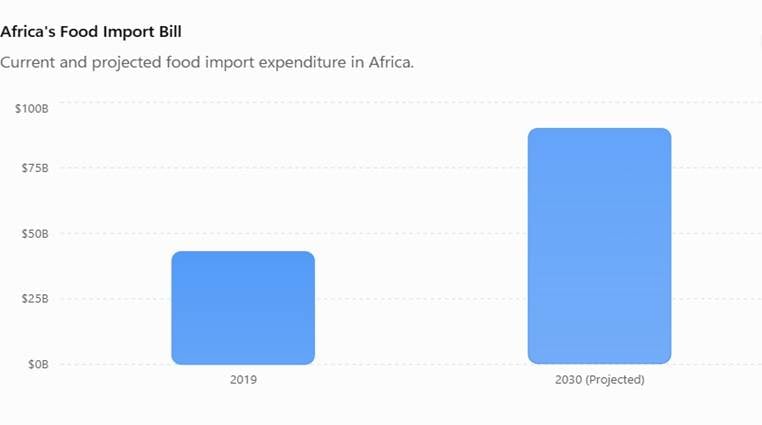
Figure 1. Africa's food import bill is projected to increase from approximately US$43 billion in 2019 to US$90 billion by 2030, highlighting the urgent need to strengthen domestic agricultural production, value addition, and food sovereignty (ACPOFS, 2021).
Recent global events have illustrated this reality. During the COVID-19 pandemic, disruptions to international trade and logistics affected food supply chains worldwide (World Bank, 2023). Similarly, the Russia–Ukraine conflict contributed to sharp increases in global prices for wheat, fertiliser, and other agricultural commodities. Many African countries felt the effects immediately because they depended heavily on imports from external markets. Rising food prices placed pressure on households, governments, and national budgets.
These events revealed an important truth: dependence creates vulnerability.
The challenge is not that international trade is inherently harmful. Trade remains an essential component of modern economic development. The problem arises when nations become excessively dependent on imports of products they can produce themselves. Such dependence shifts economic opportunities abroad, weakens domestic industries, and reduces resilience during crises.
This reality has led many scholars and policymakers to discuss the concept of agricultural sovereignty: the ability of a nation to maintain sufficient control over its food systems to ensure long-term food security, resilience, and economic stability. Agricultural sovereignty does not mean complete isolation from global markets. Rather, it means developing the productive capacity, infrastructure, technology, and institutions necessary to reduce unnecessary dependence and strengthen national resilience.
Several countries have recognised this principle. China's economic transformation was preceded by major agricultural reforms that improved productivity and food availability (Hazell, 2009). India's Green Revolution significantly increased domestic food production and reduced vulnerability to food shortages. Vietnam transformed itself from a food-deficient country into one of the world's leading agricultural exporters.
Africa's challenge is therefore larger than increasing crop yields. Building economies capable of supporting their own populations, competing effectively in global markets, and ensuring that future generations inherit nations that are not only politically independent but also economically resilient.
True sovereignty is not measured solely by the existence of national borders. It is measured by a nation's ability to provide for its people, withstand external shocks, and determine its own future. In that regard, agricultural development is not merely an economic issue; it is a strategic imperative. 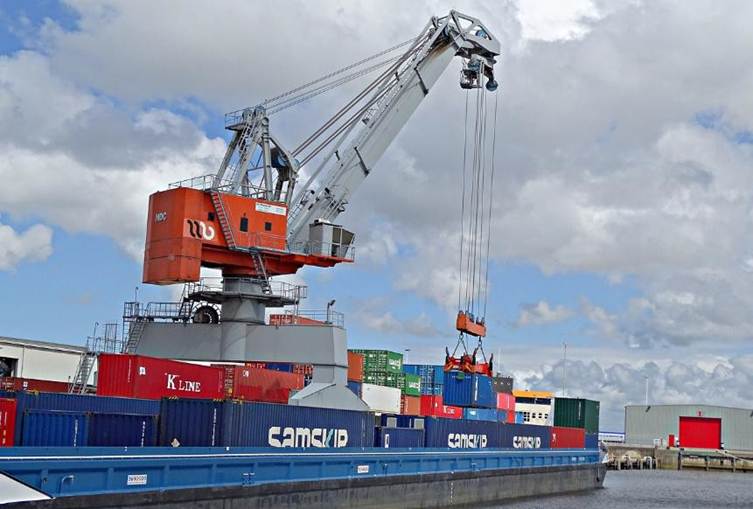
Figure 2: International trade supports economic growth, but excessive dependence on food imports can create strategic vulnerabilities. Image Source: Pixabay.
Ghana provides a striking example of this contradiction. While agriculture remains a major contributor to employment, the country continues to import significant quantities of rice, poultry products, and processed foods (World Bank, 2024). Every shipment arriving at our ports represents money that could have strengthened local farmers, food processors, and agribusinesses. The challenge is not a lack of potential; it is the gap between potential and deliberate investment.
The Cost of Food Dependency
Food dependency is often discussed as an agricultural issue, but its consequences extend far beyond the farm. It affects economic growth, foreign exchange reserves, employment, national stability, and even a country's ability to respond to crises. For many African nations, the cost of food dependency is measured not only in dollars but also in lost opportunities for development.
According to the African Development Bank (AfDB), Africa spends more than US$50 billion annually on food imports (AfDB, 2024), a figure that could rise significantly if current trends continue. This means that every year, billions of dollars leave African economies to pay for products that, in many cases, could be produced domestically with the right investments in agriculture, infrastructure, research, and value addition.
The challenge becomes even more severe during periods of global uncertainty. When international food prices rise, countries that rely heavily on imports face higher import bills and greater pressure on foreign exchange reserves. Governments may be forced to spend scarce resources subsidising food prices or managing economic shocks, while households experience declining purchasing power and increased hardship.
Egypt, one of the world's largest wheat importers, has historically been vulnerable to fluctuations in global grain markets. During the Russia–Ukraine conflict, disruptions in wheat supplies and rising prices highlighted the risks associated with dependence on external food sources. Similar concerns emerged across numerous African countries that import significant quantities of wheat, fertiliser, and other agricultural commodities.
Nigeria presents another instructive example. Despite possessing vast agricultural potential and a large domestic market, the country has spent billions of dollars importing food over the years. While efforts have been made to encourage local production, the continued reliance on imports demonstrates how agricultural potential alone does not guarantee agricultural resilience. Productivity, infrastructure, storage, processing, financing, and policy consistency are equally important.
Food dependency also affects employment. When domestic agricultural production struggles to compete with imports, opportunities for farmers and agribusinesses decline, contributing to rural poverty and youth unemployment.
Perhaps most importantly, food dependency creates strategic vulnerability. A nation that cannot secure adequate food supplies during times of crisis risks economic instability, social unrest, and political pressure. History has repeatedly shown that food shortages and rising food prices can contribute to public dissatisfaction and social tension.
This does not mean that Africa should reject international trade. Trade remains essential for economic growth and regional integration. The goal is not isolation but resilience. African nations should participate actively in global markets while simultaneously strengthening their capacity to produce, process, and distribute food domestically.
The true cost of food dependency is therefore not simply the size of the import bill. Rather, the true cost lies in the cumulative loss of economic opportunities, jobs, resilience, and strategic autonomy. Every dollar spent unnecessarily on food imports represents a missed opportunity to strengthen local agriculture and build a more self-reliant future.
If Africa is to achieve genuine economic independence, reducing excessive food dependency must become a development priority rather than merely an agricultural objective.
Food Security as National Security
For many years, national security was viewed primarily through a military lens. Governments invested in armies, intelligence services, border protection, and defence systems to safeguard their nations from external threats. While these remain important, the twenty-first century has demonstrated that a nation can possess a strong military and still be vulnerable if it cannot guarantee food security for its people.
A hungry population is not merely a humanitarian concern; it is a national security concern.
Food security exists when all people have reliable physical and economic access to sufficient, safe, and nutritious food. When that access is disrupted, the consequences can extend beyond individual households and affect entire societies. Rising food prices, food shortages, and agricultural disruptions can fuel social unrest, increase poverty, and weaken public confidence in institutions.
The relationship between food and stability is particularly important for Africa because of the continent's rapidly growing population. The United Nations projects that Africa's population will continue to expand significantly throughout the century (UNDP, 2023). This growth presents tremendous opportunities, but it also increases the urgency of ensuring reliable food systems capable of meeting future demand.
China invested heavily in agricultural modernisation, research, irrigation, and rural development to strengthen food self-sufficiency and reduce vulnerability to external shocks. Israel, despite limited natural resources and challenging climatic conditions, developed advanced agricultural technologies to maximise productivity and secure food supplies. Singapore, though heavily dependent on imports, has implemented long-term food security strategies that include diversifying suppliers, technological innovation, and investing in local production.
These examples demonstrate an important principle: food sovereignty does not happen by accident. Such outcomes result from deliberate leadership, long-term planning, and sustained investment.
For Africa, food security should be viewed through the same strategic lens. The ability to produce, store, process, and distribute food efficiently is as important to national resilience as infrastructure, energy, and defence. Nations that can feed their populations are better positioned to maintain stability, attract investment, create employment, and respond effectively to crises.
This reality places a significant responsibility on African leaders. Sustainable food production cannot remain confined to ministries of agriculture alone. It must become a national priority that involves ministries of finance, education, science and technology, trade, environment, and national planning. It requires coordinated policies that connect farmers to markets, encourage innovation, support agricultural research, and strengthen value chains.
Ultimately, resilient food systems are not only about preventing hunger. They are fundamental to national stability, economic prosperity, and the future of entire societies. In an increasingly uncertain world, the nations that secure their food systems will be better positioned to secure their futures.
A country that cannot feed its people remains vulnerable. A country that can feed its people possesses one of the strongest foundations upon which lasting peace and prosperity can be built.
Lessons from Nations That Chose Agriculture First
One of the greatest misconceptions in development policy is the belief that agriculture and modernisation are opposing forces. In reality, many of the world's most successful economies invested heavily in agriculture before achieving large-scale industrial and economic transformation. Their experiences demonstrate that agricultural development is not a sign of economic backwardness; it is often the foundation of national progress.
China provides one of the most compelling examples. Before becoming the world's second-largest economy, China prioritised agricultural reform. Beginning in the late 1970s, reforms increased agricultural productivity, improved rural incomes, and strengthened food availability. By securing its food system and empowering rural communities, China created the conditions necessary for broader economic expansion. Agricultural success helped release labour, generate income, and support industrial development.
India followed a similar path through the Green Revolution. Faced with recurring food shortages in the 1960s, India invested heavily in agricultural research, improved crop varieties, irrigation infrastructure, and farmer support programs. The result was a dramatic increase in food production that transformed the country from a food-deficit nation into one that could largely meet its domestic food requirements (Pingali, 2012). The lesson was clear: reliable food systems created the stability needed for long-term economic growth.
The common thread among these countries is not geography, culture, or political systems. The common denominator is leadership. Their leaders recognised that sustainable national development required a strong agricultural foundation. They invested in research, infrastructure, education, technology, and policies that empowered farmers and strengthened food systems.
Rwanda has made significant progress through agricultural modernisation programs, improved land management, and investments in productivity-enhancing technologies (UNECA, 2022). The country's commitment to agricultural transformation has contributed to improvements in food production and rural development.
Ethiopia, despite facing numerous challenges, has invested heavily in agricultural extension services and rural development initiatives (UNECA, 2022). These efforts have helped millions of smallholder farmers access improved farming practices and technologies.
For Africa, the lesson is not that every country should copy another nation's model. Every country has unique circumstances, resources, and priorities. The lesson is that successful nations treat agriculture as a strategic sector rather than a subsistence activity. They view farmers as economic actors, research as an investment rather than an expense, and food security as a national priority rather than a seasonal concern.
The countries that achieved lasting economic progress did not abandon agriculture in pursuit of development. They used agriculture as a platform for development.
Africa's future may depend on embracing the same principle. The continent does not need to reinvent the path to prosperity. It can learn from nations that recognised a simple truth: before a country can build great industries, it must first secure the foundations that sustain its people.
Agriculture is one of those foundations.
Science, Biotechnology, and the Future of Agricultural Sovereignty
If agriculture is to become the foundation of Africa's second liberation, then science must become one of its most powerful tools. The challenges facing African agriculture today, including low productivity, climate change, pests and diseases, post-harvest losses, land degradation, and limited value addition—cannot be solved through traditional approaches alone. They require innovation.
As a biotechnology student, I do not view science as something confined to laboratories. I see it as a practical tool that can help African farmers harvest more from less land, reduce post-harvest losses, combat crop diseases, and adapt to climate change. For me, biotechnology is not merely an academic discipline; it is one of the keys to Africa's agricultural future. Biotechnology provides techniques that can improve agricultural productivity, food quality, disease resistance, and sustainability (FAO, 2021; Adegbaju et al., 2024). From improved crop breeding and disease diagnostics to biofertilizers, biopesticides, tissue culture, and bioinformatics, biotechnology is transforming agriculture across the world.
One of Africa's most pressing challenges remains low agricultural productivity. In many regions, crop yields are significantly lower than global averages due to poor soil fertility, pests, diseases, and limited access to improved planting materials. Scientific innovations can help bridge this gap by developing crops that are more resistant to drought, pests, and environmental stress.
Climate change further strengthens the case for scientific innovation. African farmers are increasingly facing unpredictable rainfall patterns, prolonged droughts, floods, and extreme weather events. Developing climate-resilient crop varieties will be essential if the continent is to maintain food production while adapting to changing environmental conditions.
Biotechnology also offers solutions beyond production. Post-harvest losses continue to deprive Africa of enormous quantities of food each year. Improved storage technologies, biological preservation methods, disease detection systems, and advanced food processing techniques can help reduce waste and increase the availability of food without requiring additional farmland.
Brazil's agricultural transformation was driven in large part by investments in agricultural research and innovation. Through institutions such as EMBRAPA, the country developed technologies that enabled farmers to cultivate previously unproductive land and dramatically increase output.
India's Green Revolution was built upon scientific research, improved crop varieties, irrigation systems, and farmer education. The result was one of the most significant increases in food production in modern history.
Israel, despite its limited land and water resources, became a global leader in agricultural technology through innovations in irrigation, crop management, and precision agriculture (FAO, 2021). Its success demonstrates that scientific ingenuity can overcome even severe natural constraints.
Africa possesses no shortage of scientific talent. Across the continent, universities, research institutes, startups, and young innovators are developing solutions to local agricultural challenges. However, scientific potential alone is not enough. Research must be supported by investment, policy commitment, and strong institutions capable of translating discoveries into practical benefits for farmers and consumers.
This reality highlights the importance of investing in education and research. Agricultural transformation requires not only farmers but also scientists, engineers, data analysts, entrepreneurs, and policymakers. It requires governments that recognise research as a strategic national investment rather than a discretionary expense.
The future of African agriculture will not be determined solely by the amount of land under cultivation. It will be determined by how effectively knowledge, technology, and innovation are applied to that land.
If the first liberation of Africa was driven by political visionaries, the second liberation will also require scientific visionaries. The laboratories, research centres, universities, and innovation hubs of today may prove just as important to Africa's future as the independence movements of the past.
Agricultural sovereignty in the twenty-first century will belong not only to nations that cultivate the most land, but to those that cultivate the most knowledge.

Figure 3: Scientific innovation and biotechnology are essential tools for strengthening agricultural productivity and resilience. Image Source: Pexels.
The Leadership Imperative: The Africa We Must Build
The future of African agriculture is not merely a question of technology, climate, or economics. At its core, it is a question of leadership.
Throughout history, nations have rarely risen above the quality of their leadership. Transformational progress occurs when leaders possess the vision to identify long-term opportunities, the courage to make difficult decisions, and the discipline to pursue national interests beyond electoral cycles. Agriculture is no exception.
One of the greatest challenges facing African development is the tendency to treat agriculture as a sector of survival rather than a sector of strategy. In many countries, agriculture is discussed primarily in the context of poverty reduction, food aid, or rural livelihoods. While these issues are important, they represent only part of the picture.
The leaders who transformed countries such as China, Vietnam, Brazil, and India understood this reality. They did not view agriculture as a burden to be managed; they viewed it as an asset to be developed. They invested in research institutions, irrigation systems, transportation networks, agricultural education, rural infrastructure, and policies that enabled farmers to become productive contributors to national growth.
Whenever I speak with fellow African students, I am reminded that our generation has inherited both an enormous challenge and an extraordinary opportunity. We cannot continue discussing Africa's future while neglecting the sector that feeds our people. The future scientists, policymakers, entrepreneurs, and farmers sitting in today's classrooms may ultimately determine whether Africa becomes food-secure or remains dependent on external systems.
The continent's future leaders must recognise that sustainable food production is not a seasonal issue to be discussed during periods of crisis. It is a long-term national priority. The decisions made today regarding agricultural investment, scientific research, education, land management, and infrastructure will influence the prosperity of future generations.
Leadership also requires moving beyond short-term thinking. Agricultural transformation does not happen within a single election cycle but requires sustained commitment, policy consistency, and strategic planning.
Equally important is the need to invest in Africa's youth. The average age of many African farmers continues to rise, while younger generations often perceive agriculture as unattractive or unprofitable. Yet the future of African agriculture will depend on young entrepreneurs, scientists, engineers, biotechnologists, agribusiness leaders, and innovators who can modernise the sector and unlock new opportunities.
This transformation will not occur if agriculture remains disconnected from education, technology, and entrepreneurship. It requires creating an environment in which young people view agriculture not as a last resort, but as a platform for innovation, wealth creation, and national development.
The question facing Africa is not whether the continent possesses the resources necessary for agricultural transformation. It does. The question is whether African leaders, institutions, and citizens are prepared to treat food security and agricultural sovereignty as foundational pillars of national development.
The generation that fought for political independence understood that freedom required sacrifice and vision. The current generation faces a different challenge. Its task is not to reclaim sovereignty from colonial powers, but to strengthen sovereignty through economic resilience, resilient agrifood systems, scientific innovation, and strategic leadership.
The Africa we must build is an Africa that feeds itself, invests in its people, values its farmers, empowers its scientists, and transforms its agricultural potential into lasting prosperity.
That vision will not be achieved by chance. It will be achieved by leadership.

Figure 4: The future of African agriculture will depend on visionary leadership, innovation, and long-term strategic investment.
Conclusion: Feeding Ourselves, Freeing Ourselves
More than sixty years after the wave of independence movements transformed Africa, the continent stands before a new challenge. The struggle is no longer against colonial administrations or foreign rule. It is a struggle against poverty, food insecurity, economic vulnerability, and underdevelopment. It is a struggle to build nations that are not only politically independent but also economically resilient and capable of determining their own future.
The continent possesses vast arable land, abundant natural resources, a growing population, and an increasingly educated generation of young people. What has often been lacking is not potential, but the strategic commitment to transform that potential into lasting prosperity. The experiences of countries such as China, India, Brazil, and Vietnam demonstrate that agricultural transformation is not merely about increasing food production. It is about creating the conditions for broader economic growth, social stability, and national development.
For Africa, food independence must be viewed as more than an agricultural objective. Food independence is an economic imperative, a national security priority, and a foundation for genuine sovereignty. A continent that depends excessively on others to feed its people remains vulnerable to forces beyond its control. Conversely, a continent that can feed itself possesses greater freedom to shape its own destiny.
The path forward will require visionary leadership, sustained investment, scientific innovation, and long-term planning. Achieving this vision will require governments that prioritise agricultural transformation, institutions that support research and development, and citizens who recognise the strategic importance of food systems. Success will also depend on empowering farmers, supporting entrepreneurs, strengthening value chains, and creating opportunities for young Africans to become active participants in the continent's agricultural future.
The second liberation of Africa will not be achieved through political declarations alone. It will be achieved through productive farms, thriving agribusinesses, world-class research institutions, resilient food systems, and leaders willing to think beyond the present generation.
I believe the second liberation of Africa will not be fought on battlefields or negotiated in conference rooms. It will be won in laboratories, universities, farms, agribusinesses, and innovation centres across the continent. It will be achieved when African nations decide that feeding their people is not merely an agricultural goal but a strategic national mission. The Africa I envision feeds itself, innovates for itself, and ultimately determines its own future.
As a young Ghanaian and an aspiring computational biologist, I believe Africa possesses both the talent and the resources to achieve this transformation. What remains is the collective determination to act.
"The first liberation gave Africa a flag. The second liberation must ensure that every African can eat beneath it."
Philip Antwi Boasiako
References
- Adegbaju, M. S., Ajose, T., Adegbaju, I. E., Omosebi, T., Ajenifujah-Solebo, S. O., Falana, O. Y., Shittu, O. B., Adetunji, C. O., & Akinbo, O. (2024). Genetic engineering and genome editing technologies as catalysts for Africa’s food security: The case of plant biotechnology in Nigeria. Frontiers in Genome Editing, 6, Article 1398813. https://doi.org/10.3389/fgeed.2024.1398813
- African Development Bank (AfDB). (2022). Feed Africa: Strategy for Agricultural Transformation in Africa. Abidjan, Côte d'Ivoire: African Development Bank.
- African Development Bank (AfDB). (2024). African Economic Outlook 2024. Abidjan, Côte d'Ivoire: African Development Bank.
- African Union Commission (AUC). (2021). Africa Common Position on Food Systems (ACPOFS). Addis Ababa, Ethiopia: African Union Commission.
- Food and Agriculture Organisation (FAO). (2021). The State of Food and Agriculture 2021: Making Agrifood Systems More Resilient to Shocks and Stresses. Rome: FAO.
- Food and Agriculture Organisation (FAO). (2023). The State of Food Security and Nutrition in the World 2023. Rome: Food and Agriculture Organisation of the United Nations.
- Fan, S., Brzeska, J., Keyzer, M. & Halsema, A. (2013). From Subsistence to Profit: Transforming Smallholder Farms. Food Policy, 38, pp. 1–7.
- Hazell, P.B.R. (2009). The Asian Green Revolution. IFPRI Discussion Paper Series. Washington, DC: International Food Policy Research Institute.
- International Food Policy Research Institute (IFPRI). (2023). Global Food Policy Report 2023: Rethinking Food Crisis Responses. Washington, DC: IFPRI.
- Pingali, P.L. (2012). Green Revolution: Impacts, Limits, and the Path Ahead. Proceedings of the National Academy of Sciences, 109(31), pp. 12302–12308.
- United Nations Economic Commission for Africa (UNECA). (2022). Economic Report on Africa 2022: Addressing Food Security Challenges. Addis Ababa: UNECA.
- United Nations Development Programme (UNDP). (2023). Africa Human Development Report. New York: United Nations Development Programme.
- World Bank. (2023). Food Security Update. Washington, DC: World Bank.
- World Bank. (2024). Africa's Pulse: An Analysis of Issues Shaping Africa's Economic Future. Washington, DC: World Bank.
About the Author

Philip Antwi Boasiako is a Biotechnology undergraduate at Andhra University, India, with research interests in bioinformatics, computational biology, agricultural biotechnology, environmental sustainability and food security. He is passionate about leveraging science, innovation, and data-driven solutions to address Africa's agricultural and development challenges.
Email: [email protected]
LinkedIn: https://www.linkedin.com/in/philip-b-antwi-a69729384
 Four medical laboratories shut down in Bolgatanga over regulatory breaches
 Dismiss Kennedy Agyapong from NPP — Agyenim Boateng
 Asantehene receives rousing homecoming at Prempeh Airport after Europe, North Am...
 June 22: Cedi sells at GHS12.35 on forex market, GHS11.22 on BoG interbank
 Ghana would avoid ‘8 years of hardship’ under parliamentary democracy — Franklin...
 Ada Traditional Council praises Electrochem’s transformation, calls for massive ...
 NACOC dismantles cannabis production hub in Volta Region, arrests 3
 PHFAoG calls for inclusion in government health workers posting policy
 UK to get new Prime Minister by September as Starmer announces resignation
 NDC cannot defeat a united NPP — Osahen Afenyo-Markin calls for unity behind Baw...


