




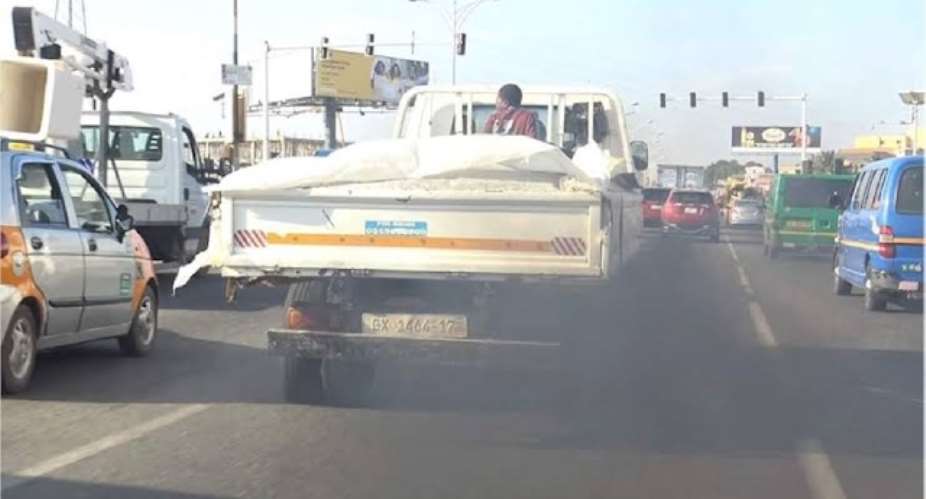
Air pollution has emerged as Ghana’s second leading risk factor for death after high blood pressure, according to data from the World Health Organisation (WHO), UNICEF and the State of Global Air report.
The findings highlight air pollution as one of the country’s most pressing public health concerns, with vehicle emissions identified as a major source of deteriorating air quality, particularly in urban centres.
Data from the Environmental Protection Agency (EPA) indicate that particulate matter pollution, commonly known as PM2.5, contributes to an estimated 2,800 deaths each year within the Greater Accra Metropolitan Area alone. Vehicles operating on heavily congested roads have been identified as the primary source of PM2.5 emissions in the capital.
Across the country, air pollution is estimated to cause between 28,000 and 32,000 deaths annually, representing about 14 per cent of all deaths recorded in Ghana.
Health experts warn that prolonged exposure to polluted air is associated with a wide range of respiratory and non-communicable diseases. Research shows that air pollution contributes to 39 per cent of stroke-related deaths, 33 per cent of lung cancer deaths, 66 per cent of Chronic Obstructive Pulmonary Disease (COPD) deaths, 33 per cent of lower respiratory infection deaths and 33 per cent of neonatal deaths.
Children are among the most affected groups. Reports indicate that approximately 5,900 people under the age of 20 died from air pollution-related causes in 2023.
Authorities attribute a significant portion of the problem to Ghana’s ageing vehicle fleet. The country’s transport sector was estimated to have about 3.2 million vehicles in 2022, with more than 95 per cent classified as old and highly polluting.
Diesel emissions, which are common among many imported vehicles, have been classified as carcinogenic and are known to increase the risk of lung cancer and other serious health conditions.
Although Ghana has adopted various policies aimed at promoting climate resilience and low-carbon development, concerns remain over the implementation of measures to curb vehicle emissions and improve air quality.
At present, the country does not have a dedicated national policy specifically focused on managing vehicle pollution, despite emission standards established by the EPA and the Ghana Standards Authority.
The Driver and Vehicle Licensing Authority (DVLA) and the EPA are yet to provide detailed plans on tackling vehicle-related pollution nationwide or outline comprehensive strategies for addressing the growing public health risks associated with poor air quality.
The findings have renewed calls for stronger regulatory enforcement and investment in cleaner transportation systems to reduce pollution levels and protect public health.
 Meet the new team Bawumia appointed to his office ahead of 2028
 I will walk from Dormaa Ahenkro to Accra to thank you if you complete Accra-Kuma...
 World leaders arrive in Ghana for Next Steps Conference on reparatory justice
 GNFS saves newly built Asankrangwa court from fire destruction
 New study highlights Ghana’s parliamentary opposition leader Afenyo Markin as mo...
 Air pollution now Ghana’s second leading risk factor for death — Reports reveal
 Gender Ministry to address legal disparities in age of consent to sex and marria...
 Here are areas to be affected by ECG's planned maintenance today
 V/R: Missionary flouting directives by Regional Minister to move from foot of Ad...
 Sedina Tamakloe is in prison — NDC lawyer confirms


