




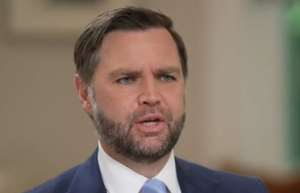
In American politics, the most consequential decisions are often announced in the quietest language. Speaking on CBS Sunday Morning on June 14, 2026, United States Vice President JD Vance did not declare his candidacy for the 2028 presidential race.
He did something arguably more calculated he told the world he would think about it after the midterms, that his wife Usha would be part of the conversation, and that President Donald Trump would be "very supportive" of whatever he ultimately decides. In Washington, that is not a non-answer. That is a campaign signal dressed in the language of domestic deliberation.
What Vance Said and What He Meant
Vice President JD Vance says that he and his wife, Second Lady Usha Vance, will discuss whether he should seek the 2028 Republican presidential nomination later this year, following the 2026 midterms. While he has not yet decided about entering the GOP race, Vance told CBS Sunday Morning that he expects President Donald Trump to be "very supportive" of whatever Vance decides to do regarding the next campaign for the White House.
"I have no doubt that the president of the United States is going to be very supportive of anything that I ultimately decide to do," Vance said. "But we really just haven't talked about what that thing will be."
For now, Vance said his political future is not top of mind, remarking he is not "sitting around figuring out whether I'm going to run for president." "Usha and I will absolutely sit down and talk about what comes next for our family," he said, adding that it will be after the results of the 2026 midterm elections.
The timing of this statement is no accident. His remarks on the 2028 race were part of an interview taped last Tuesday at the vice presidential residence, which aired on CBS Sunday Morning June 14. The interview also touched on his new memoir about his conversion to Catholicism, called "Communion: Finding My Way Back to Faith," releasing this week, as well as the news that he and Usha are expecting their fourth child.
A new book. A new baby. A carefully modulated signal about 2028. JD Vance is doing what every serious American presidential aspirant does long before they formally enter a race: he is building his narrative.
The Heir Apparent
Vance has been seen as the heir apparent since Trump named him as his running mate in 2024. That perception has only solidified in the months since. Fifty-three percent of respondents at the Conservative Political Action Conference last weekend said Vance was their preferred candidate in the 2028 Republican primary.
Secretary of State Marco Rubio earned 35% support in the CPAC survey. Those are not the numbers of a man who has to fight for his party's affection. They are the numbers of a frontrunner one who can afford to speak carefully, let others jostle for position, and wait for the midterms to confirm or complicate the political landscape before making his move.
Republican supporters have already begun speaking of Vance in presidential terms. At a recent appearance in Iowa, April Melton, who chairs the Republican Party in Iowa's Black Hawk County, said she had come to hear the "next president of the United States." Another attendee described him as being "like Donald Trump" in his desire to see America succeed.
The Midterms as the Proving Ground
Vance has been consistent on one point: the 2026 midterm elections come first. The vice president has said he is "very focused on the midterm elections," and "then after that, I'm going to sit down with the president of the United States and talk to him about it." He added that his primary concern is ensuring Republican victories in 2026, warning that if Democrats gain power, "they're gonna try to screw up a lot of the great things the president of the United States has done."
This framing is politically astute. By tying his 2028 decision to midterm outcomes, Vance achieves several things simultaneously. He positions himself as a team player focused on the present rather than an ambitious self-promoter eyeing the future. He gives himself a natural inflection point win or loses in November, the conversation about 2028 begins. And he keeps his options open without committing to anything that can be used against him.
The vice president's careful positioning comes as wealthy Republicans gird for an anticipated blue wave in the midterms, with political groups aligned with Trump expected to spend hundreds of millions of dollars in the next eight months. How those midterms unfold will shape the Republican Party's appetite for continuity versus change and with it, Vance's path to the nomination.
The Vance Profile: From Hillbilly Elegy to the White House Steps
Vance represented Ohio for two years in the U.S. Senate before Trump picked him as his running mate in 2024. Prior to that, he served in the United States Marine Corps, and earned his law degree from Yale Law School. In 2016, he wrote a bestselling memoir, "Hillbilly Elegy."
That memoir a raw, unflinching account of poverty, addiction, and survival in the Rust Belt made Vance a cultural phenomenon before he was a political one. It gave him something rare in American politics: a personal story that crosses class lines, that speaks to the grievances of working-class white America while being credentialed enough to be taken seriously by the establishment. Combined with his conversion to Catholicism the subject of his new book Vance has crafted a biographical arc that speaks directly to the cultural and religious anxieties that animate the modern Republican base.
He is, in many ways, the intellectual version of the MAGA movement someone who can translate its instincts into policy arguments, who can speak its language while also being taken seriously on a debate stage, in a foreign policy briefing, or on a Sunday morning television programme.
The Democratic Counterpoint
Vance will not walk to the White House unopposed. Polls show that in a hypothetical 2028 matchup, Vance holds 36 percent of the potential vote compared to former California Governor Gavin Newsom's 33 percent, with 12 percent undecided. In a separate hypothetical matchup against Congresswoman Alexandria Ocasio-Cortez, Vance again polls at 36 percent to her 33 percent.
Those margins consistent but narrow suggest that while Vance enters any 2028 race as a strong contender, the political environment remains genuinely competitive. A great deal will depend on the state of the American economy, the outcome of ongoing foreign policy challenges including the Iran situation, and how the 2026 midterms reshape the political landscape for both parties.
Newsom himself has said he will consider a 2028 presidential run after the 2026 midterms a near-identical timeline to Vance's own stated approach, suggesting that both parties' leading 2028 contenders have privately reached the same strategic conclusion: wait for November, and then decide.
What This Means for the World
For observers outside the United States including across Africa and the Global South the question of who succeeds Donald Trump as president matters enormously. The Trump administration has reshaped America's relationships with international institutions, with allies, with development partners, and with the multilateral frameworks that govern everything from trade to climate to security.
A Vance presidency would, by all available evidence, represent continuity with that direction perhaps with greater intellectual coherence and institutional savvy, but in the same fundamental orientation. Vance is not a traditional Republican internationalist. He is a nationalist who believes America's resources and attention should be directed inward before they are directed outward.
For countries that depend on American foreign assistance, American diplomatic engagement, or American security guarantees, the prospect of a Vance White House is one that should be watched carefully and planned for now.
The Long Game
JD Vance did not announce his candidacy on CBS Sunday Morning. But he did something more interesting he reminded the American public and the world that he exists, that he is planning, that his family is growing, that his faith is deepening, and that his political future is a matter of family conversation rather than personal ambition. That is the language of a man who has thought very carefully about how presidential candidates are supposed to sound before they become presidential candidates.
The midterms are in November. The conversation with Usha follows. And after that, if the signals are right and the numbers hold, JD Vance the boy from Appalachian poverty who went to Yale, served in the Marines, wrote a bestseller, converted to Catholicism, and became Vice President of the United States may well begin the next chapter of one of American politics' most remarkable personal journeys.
The world would do well to pay attention.
Mustapha Bature Sallama.
Medical/ Science Communicator,
Private Investigator, Criminal investigation and Intelligence Analysis.
International Conflict Management and Peace Building.USIP
[email protected]
+233-555-275-880

 KMA Deploys Vacuum Sweepers to Tackle Dust, Waste and Flooding in Kumasi
 UCC Probes Death of Level 200 Student Found at Hutchland Beach
 BoG Cracks Down on Crypto Dollar Wallets; Orders Banks to Cut Ties Immediately
 BoG Extends IMTO Registration Deadline to July 31 — Non‑Compliant Operators Face...
 Ato Forson Pushes for New ‘Auditors’ Court’ to Tackle Waste, Strengthen Accounta...
 Big Payout, Big Changes: MMMF Declares 30p Dividend, Endorses New Board
 C/R: Missing UCC student found dead at Hutchland Beach
 Man collapses and dies in front of pharmacy at Abura in Cape Coast
 Gov’t Should Have Anticipated Partey Visa Trouble — Asafo-Adjei Ayeh Fires
 Swiss Vote on Population Cap Sparks Fierce Immigration Debate Ahead of Sunday Re...


