




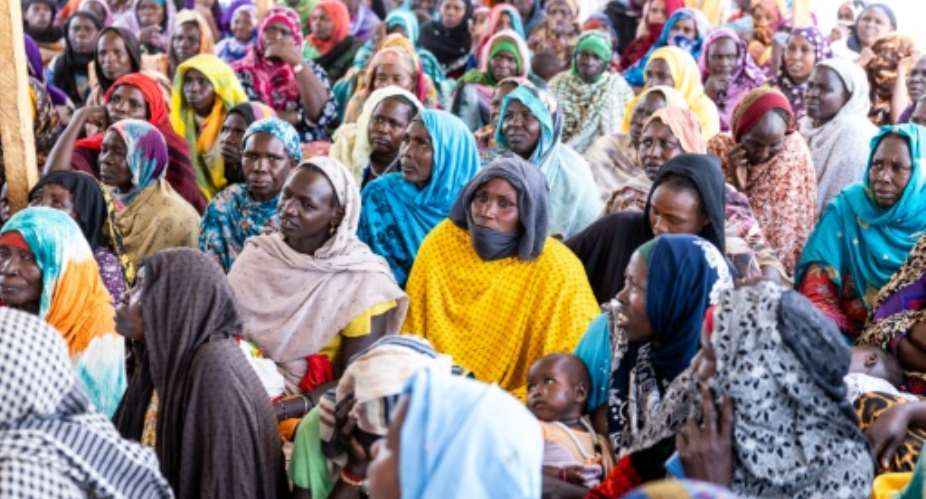
Rising numbers of Chadians fleeing the Sudan war are arriving at the Adre border post in Chad, but funding shortages could force UN agencies on the ground to stop operating.
The civil conflict in Sudan has already cost tens of thousands of lives and forced more than 12 million people to flee their homes, more than a million of them Chadian, according to UN figures.
Government forces and the paramilitary Rapid Support Forces (RSF) have been fighting since April 2023.
A steady stream of horse-carts arrived at the Adre border post, under the region's scorching desert sun, during a recent visit by AFP.
In the swirling dust and the crack of whips, some of the makeshift wagons toppled under the weight of their loads, dragging the horses onto their backs, hooves in the air.
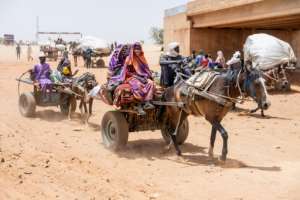 A steady stream of horse-carts arrived at the Adre border post under the region's scorching desert sun. By Joris Bolomey (AFP)
They leave loaded with cans of petrol and food for Sudan, and return to Chad, in some cases carrying people fleeing the war.
Lack of resources
Last week SungAh Lee, deputy director general of the UN's International Organization for Migration, visited Adre as part of a three-day visit to the Assoungha region.
 IOM Deputy Director General SungAh Lee spoke with Chadian returnees in Adre. By Joris Bolomey (AFP)
She met Chadians who had been in Sudan and had fled the war to return home.
"When I go there and meet the beneficiaries and hear from them, then go back and meet ambassadors and the donor community, it is important for them to hear what I have seen in person," she told AFP.
In May, the number of Chadians returning from Sudan passed the 400,000 mark.
They had initially expected to reach that level by the end of June, Lee said, but the flow of returnees has accelerated.
Mahamat Issa Abakar, general secretary of the Assoungha region, confirmed the surge in returnees.
"There are more than 5,000 Chadians getting ready to return to Chad from Sudan in the coming days," said Abakar, himself a former aid worker.
"Their representatives came to ask me how they will be taken in here, but I don't know what to tell them," he added. "On our side, we lack the resources."
"The Chadians from Sudan returning to Chad have exactly the same needs as the refugees," he added.
And yet, he said, looking over at the IOM delegation, they were not as well cared for.
No food, no work
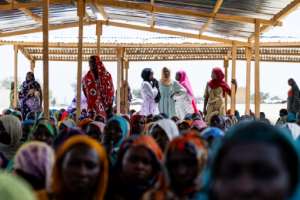 Some returnees complained of a lack of work and being stuck in the camp with nothing to do. By Joris Bolomey (AFP)
According to figures from the UN refugee agency UNHCR, more than 900,000 people have sought refuge in Chad since the start of the war in Sudan. They make up one in three people in the eastern provinces of Chad.
In Tongori camp, where the IOM says 13,000 people are packed in, Chadians who have fled Sudan speak of a sense of abandonment.
"We don't have food!" said 59-year-old Ahmat Mahamat Hassan. "It hasn't been handed out for six months."
"It's the IOM who led us here and it's for you to take responsibility for us," he added, addressing the UN delegation set up under sheets of metal in the middle of some 300 Chadian returnees.
Others among the returnees complained of a lack of work and being stuck in the camp with nothing to do.
"We have a lot of skills here among the women, but we can't put them into practice," said Saide Yaya Abderamanou.
"Most of us have a job in Sudan. Some of us make jewels, perfumes, shoes," she added.
Lee, for the IOM, acknowledged the problem.
"Continuously providing humanitarian aid is not a sustainable model," she told AFP.
"They all want to work, they all have skills. So it's about creating opportunities for them, and I think this is really the most difficult part."
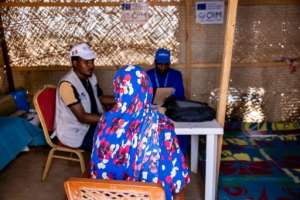 In May, the number of Chadians returning from Sudan passed the 400,000 mark. By Joris Bolomey (AFP)
But she also recognised the growing difficulties in helping the Chadians returning from Sudan.
The $21-million IOM response plan for eastern Chad in 2026 was only 19-percent financed, Lee said.
"After October 2026, we won't be able to provide humanitarian assistance if the finance doesn't arrive," she warned.

 C/R: Missing UCC student found dead at Hutchland Beach
 Man collapses and dies in front of pharmacy at Abura in Cape Coast
 Gov’t Should Have Anticipated Partey Visa Trouble — Asafo-Adjei Ayeh Fires
 Swiss Vote on Population Cap Sparks Fierce Immigration Debate Ahead of Sunday Re...
 Two seriously injured as speeding cargo truck crashes into shop at Ho Civic Cent...
 Suspected armed robber dies after taxi hijacking incident in La
 High Court orders Linda Ocloo be served for alleged contempt of court
 Nkwanta South: Home burials hinders water project in Abotareye
 C/R: Heavy rains disrupt Big Push projects in Ajumako
 Grave at Adevukope cemetery reportedly desecrated, body of 67-year-old woman sto...


