




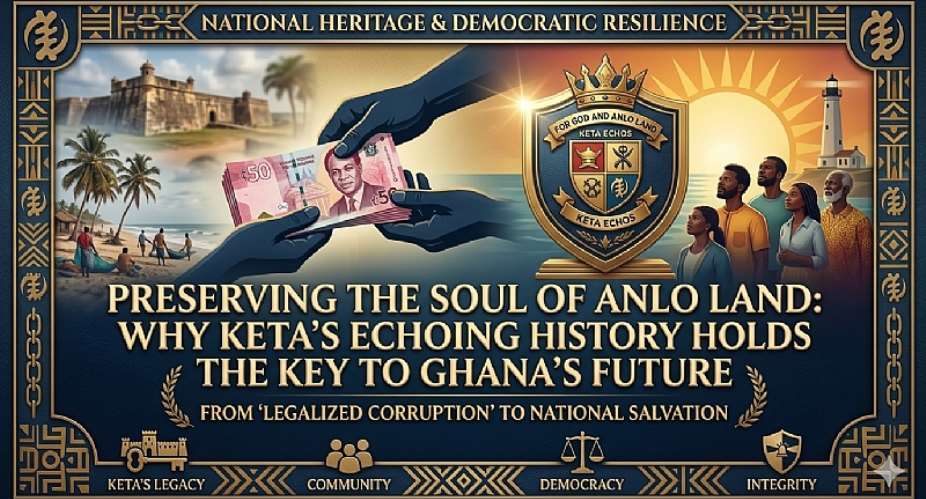
Lessons in Resilience from Africa's Sinking Coastline
History is not merely a collection of silent monuments and dusty archives; it is a living, breathing map that dictates who we are and where we are going. For Ghanaians, few places encapsulate the raw triumphs, harrowing tragedies, and ecological brilliance of our ancestors quite like Keta. Nestled between the relentless waves of the Atlantic Ocean and the vast expanse of the Keta Lagoon, this coastal strip in the Volta Region stands as a profound testament to resilience. Yet, as the sea encroaches and generations shift, the stories of Keta risk being swallowed by time, fueling a heavy exodus of youth seeking opportunities in overcrowded metropolitan capitals.
Understanding the deep convergence of Keta Market, Fort Prinzenstein, and the Keta Lagoon Complex is not just an academic exercise—it is an urgent national economic necessity. For the youth of Ghana, these landmarks, combined with aggressive local governmental leadership, offer a powerful blueprint to turn historical resilience into modern industrial wealth.
Echoes of Ancestral Wisdom: Ewe Oral Traditions
The foundation of Keta’s survival rests on a profound philosophical framework passed down through generations. To understand where Keta must go, we must look backward to the maxims that guided our forebears:
- The Principle of Strategic Foresight: The historic migration of the Anlo Ewe people from the tyrannical kingdom of Notsie teaches that survival requires unconventional, forward-thinking innovation. Oral tradition recounts that to escape under the cover of night, the ancestors walked backward to confuse their pursuers. This acts as a timeless metaphor for the youth: sometimes we must look back into our roots to successfully find our footing for the future.
- The Proverb of Grounded Loyalty: A famous Ewe proverb declares, "Ne èno anyi kpoe la, anyigba me nɔa anyi kpoe o" (If you sit idly, the earth does not sit idly with you). It challenges the youth against passive waiting and dependency; our environment is dynamic, and our economic survival demands active cultivation.
- The Decree of Togbui Wenya: Upon arriving at the sandspit between the sea and the lagoon, the legendary leader Togbui Wenya declared, "Míeɖo afia, míaƒe nɔƒe enye esia; míaƒe lɔ̃ lɔ̃ xɔ anyi" (We have rolled up here; this is our settlement; our love has taken root here). The very name "Anlo" derives from ‘Menlɔ’, meaning "I have rolled up" or shrunk into myself to protect my land. This foundational declaration demands that today's youth do not abandon their heritage, but rather dig deep to build wealth exactly where they stand.
Fort Prinzenstein: A Bastion of Tragedy and Resilience
Built by Danish traders in 1784, Fort Prinzenstein stands as a somber monument to one of humanity's darkest chapters, while simultaneously showcasing the unyielding spirit of the Anlo Ewe people.
- The Tragic Transit Hub: The fort served as a primary dungeon and transit station during the transatlantic slave trade, where human beings captured from across West Africa were branded and held before crossing the Atlantic.
- The Sagbadre War: Its very construction was triggered by colonial conflict; the stone fortress was erected by the Danes following the Sagbadre War to secure military dominance and suppress the local population.
- A Crucible of Sovereignty: After being sold to the British Empire in 1850, it transitioned into an administrative center, court, and prison—a physical symbol of shifting colonial powers until its closure in 1978.
- A Modern Heritage Crisis: Though designated a UNESCO World Heritage Site in 1979, more than half of the fort has already been reclaimed by intense sea erosion, leaving the Ghana Museums and Monuments Board (GMMB) in a race against time to save the remaining ruins.
The Keta Market: The Vibrant Engine of Commerce
Long before colonial fortifications lined the coast, the indigenous people had already engineered a highly sophisticated, self-sustaining economic ecosystem centered around the legendary Keta Market.
- Centuries of Pre-Colonial Trade: Established around the 15th century, the market thrived as a major pre-colonial hub, strategically positioned to connect inland traders with coastal fishermen and lagoon salt panners.
- The Phoenix of 1844: Showing immense resilience, the market completely recovered after being leveled by Danish cannon fire during mid-19th-century conflicts, rebounding by the 1940s into a booming regional distribution center.
- The Four-Day Cultural Cycle: Local life and governance historically revolved around a strict four-day market rotation (Asigbe, Asiḍinki, Domegbe, and Asimloegbe), which dictated social gatherings, marriages, and travel.
- Agricultural Legacy: Despite decades of severe shoreline displacement, the market continues to thrive today, celebrated for its unique open-air atmosphere, fresh lagoon catches, and world-famous local shallot trade.
The Keta Lagoon Complex: An Environmental Masterpiece
The survival of Keta's economy and culture has always been tethered to its natural geography, dominated by the largest lagoon system in Ghana.
- A Sanctuary of International Standing: Spanning a massive 300 square kilometers, this Ramsar Wetland Site is the most critical waterbird sanctuary in Ghana, hosting over 110,000 migratory birds annually.
- Ecological Shielding: The lagoon’s extensive brackish water mangrove forests act as natural nurseries for marine life and provide an essential ecological buffer zone against coastal degradation.
- The Breadbasket of the Coast: The lagoon complex directly sustains the local economy, fueling intensive floodplain agriculture, large-scale salt panning, and traditional aquaculture.
- Modern Vulnerability: Today, the lagoon faces severe ecological stress from climate-induced sea-level rise, residential pollution, and mangrove deforestation for firewood, triggering active restoration projects like the Regenerative Development of Anlo Wetlands (ReDAW).
Redefining the Economy: Industrializing the Keta Basin
To stem the tide of youth migration, Keta cannot rely solely on the informal methods of the past. The region’s vast natural resources must be transformed through modern economic industrialization, transforming natural geography into a global trade asset.
- Industrial Salt Aquaculture: Ghana possesses the natural capacity to produce over 2.5 million metric tonnes of salt annually, yet national production lags drastically behind demand. By introducing modern industrial salt processing and vacuum-evaporation technology to the Keta Lagoon Basin, the region can scale from basic artisanal mining to supply the West African petrochemical, pharmaceutical, and caustic soda industries.
- Commercial Shrimp and Tilapia Farming: Transitioning from traditional wild harvesting to automated cage culture and brackish water aquaculture systems can create sustainable, high-yield fish processing plants. This turns the lagoon into an mechanized food-export center.
- Agro-Processing Value Chains: Rather than exporting raw shallots, peppers, and tomatoes to distant urban markets, setting up local cold-chain storage facilities, automated packaging, and spice-processing factories directly inside Keta will ensure maximum local retention of economic value.
[ RAW LOCAL RESOURCE ] ➔ [ MODERN MMDA PROCESSING ] ➔ [ VALUE-ADDED EXPORT ] (Lagoon Salt / Fish) (Industrial Panning/Canning) (West African Petrochemical / Food Markets)
The Mandate of Public Leadership: MMDAs Taking the Lead
This economic transformation cannot happen in a vacuum. Metropolitan, Municipal, and District Assemblies (MMDAs)—specifically the Keta Municipal Assembly and the Anloga District Assembly—must step out of administrative roles and take the driver's seat as proactive economic developers.
- Creating Public-Private Partnerships (PPPs): District assemblies must design transparent investment frameworks that welcome private industrial capital while strictly protecting the communal land-use rights of traditional clans.
- Zoning and Infrastructure Layouts: MMDAs must take the lead in establishing designated industrial enclaves with dedicated power and access roads around the lagoon basin to lower the entry barriers for agro-processing and salt-refining startups.
- Direct Youth Co-operatives Funding: Local assemblies should allocate a percentage of their Internally Generated Funds (IGF) and District Assemblies Common Fund (DACF) to seed-fund youth-led aquaculture co-operatives, equipping them with modern commercial gear and technical extension training.
Recommendations and Suggestions for the Youth of Ghana
The story of Keta is not just a legacy to inherit; it is a direct call to action for the younger generation of Ghanaians. To ensure this heritage drives national progress, the youth must step forward in the following ways:
- Reject the Migration Myth: The assumption that success can only be found in Accra or abroad must be broken. By looking at local landscapes through an entrepreneurial lens, young people can discover that immense wealth is literally waiting to be mined, farmed, and packaged at home.
- Form Economic Blocs and Co-operatives: Instead of working in fragmentation, young graduates should pull their skills—combining engineering, marketing, and accounting—to form modernized agricultural and aquaculture syndicates capable of securing MMDA partnerships and bank loans.
- Champion Tech-Driven Eco-Tourism: Young entrepreneurs should build digital booking platforms, eco-lodges, and curated water-sport or historical excursions around the Keta Lagoon and Fort Prinzenstein, marketing Keta as a premium global heritage destination.
- Lead Ecological Defense: Youth must be the vanguard of protecting the natural ecosystem by forming community watch groups against mangrove destruction and championing local waste recycling to keep the industrial basin clean.
Keta stands as a living mirror for Ghana—reflecting both the scars of our past and the immense potential of our future. The crumbling stones of Fort Prinzenstein remind us of what we have survived, the bustling aisles of Keta Market prove our inherent entrepreneurial genius, and the waters of the Keta Lagoon challenge us to protect the environment that sustains us. We cannot afford to let these monuments fade into myth or watch our youth drift away in despair. As the ancestors walked backward to secure a glorious future, let the MMDAs, traditional leaders, and youth look back into our historical heritage to build a highly industrialized, self-sustaining coastal economy. By anchoring modern innovations within our deep ancestral roots, the resilient spirit of Anlo Land will continue to illuminate the path forward for all Ghanaians.
Author Bio
About the Author:
Atitso Akpalu is a Ghanaian professional passionate about indigenous history, rural industrialization, and sustainable development. With a keen interest in bridging the gap between ancestral wisdom and modern agro-tech, he advocates for localized economic policies that empower Ghanaian youth to build wealth within their home districts. Follow his work on Modern Ghana platform (https//www.modernghana.com) or reach out for collaborations via email at [email protected].
✍️By A Concerned Retired Senior Citizen
For and on behalf of all Senior Citizens of the Republic of Ghana 🇬🇭
Teshie-Nungua
[email protected]

 Visa rejection dashes World Cup hopes of Ivory Coast and Senegal fans
 'Your citizens will still leave our country' — South African activist fires back...
 Anti-LGBTQ bill: 'It's not true that Parliament cannot reconsider a passed bill'...
 New NAIMOS Operations Director pledges stronger fight against galamsey
 Ghana attracting bad actors through ECOWAS free movement system — GIS laments ab...
 Court grants Abronye DC permission to travel abroad for master’s programme
 Afari Hospital Project: “They slept on a 3-year project for eight years” – Brogy...
 Chairman Wontumi seeks plea deal in GH¢30m Exim Bank fraud case
 GH¢7 million Navrongo Youth Resource Centre stalled for nearly nine years amid l...
 BECE graduate feared dead after drowning in River Osen


