




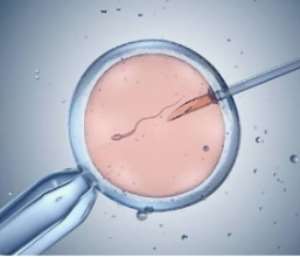
In much of West Africa, a woman who cannot bear children does not merely face a medical condition. She faces a verdict. Her marriage may unravel. Her community may turn cold. Her identity, in a social order that ties womanhood inextricably to motherhood, is placed in question. The pressure is ancient, communal, and immediate felt in every gathering she attends without a child on her back, in every question she cannot answer, in every night she spends calculating the distance between hope and biological possibility.
It is against this backdrop that In Vitro Fertilization IVF has arrived in West Africa not merely as a medical technology but as a kind of social lifeline. And for thousands of couples across Nigeria, Ghana, Senegal, and beyond, the journey toward that lifeline is one of the most expensive, emotionally exhausting, and statistically uncertain ventures a family can undertake.
The Scale of the Need
Infertility in sub-Saharan Africa is not a marginal concern. Infertility poses a significant challenge across Sub-Saharan Africa, with prevalence rates reaching as high as 30 percent in some populations. When measured across the continent broadly, infertility is estimated to affect as many as 49 percent of individuals over their reproductive lifespan a staggering figure in regions where fertility remains a central cultural value and childlessness carries profound social consequences.
The primary underlying cause of high infertility rates in sub-Saharan Africa is attributed to infections, particularly sexually transmitted infections, which when left untreated cause irreversible damage to the reproductive tracts of both men and women. But beyond biology, the consequences of infertility in this region are uniquely amplified by culture. Through a religious lens, infertility is often interpreted as divine punishment for moral failings or transgressions.
Cultural myths such as the notion that it results from curses reinforce fear and discrimination within communities. Infertility is also perceived as a violation of traditional gender roles, with women disproportionately bearing the blame for childlessness, regardless of which partner is medically responsible.
In many African societies, parenthood is central to personal identity and social belonging, with motherhood regarded as a marker of success in marriage. Infertility disrupts these cultural expectations, and women in particular bear the brunt of the resulting stigma accused in some communities of bringing misfortune to their families.
Research conducted across multiple regions of Ghana found that infertile women described enduring feelings of embarrassment and a sense of lost identity, often suffering emotionally for years as they sought treatment and grappled with the fear of a childless future. Women in Accra reported extreme depression, with some contemplating suicide. In the Upper West Region, where childbearing is highly valued as a symbol of success, the psychological distress associated with infertility was notably intensified.
This is the human reality into which IVF has entered.
The State of the Sector
West Africa's fertility care industry has grown substantially over the past two decades, with Nigeria and Ghana emerging as the regional anchors. Ghana and Nigeria now rank among the African countries with the highest number of registered IVF clinics on the continent, alongside Egypt and South Africa.
Lagos in particular has positioned itself as a fertility hub, attracting not only Nigerian couples but diaspora patients returning from Europe and North America.
These clinics have attracted couples from across the continent and the diaspora seeking treatment giving rise to what analysts call "fertility tourism." Beyond the reduced costs compared to the United States, United Kingdom, and Canada, other factors driving the influx include the ease of sourcing donor material and surrogates given similar ethnic and racial profiles, strong success rates, and the increasingly restrictive insurance coverage criteria for IVF in Western countries.
In Nigeria, the fertility care infrastructure is anchored by well-established institutions. The Bridge Clinic, established in 1999, is widely regarded as Nigeria's pioneer in modern fertility care, with branches in Lagos, Abuja, and Port Harcourt, and more than 2,500 successful births on record. Its reputation is built on internationally accredited standards, cutting-edge laboratories, and holistic patient support including counseling at every stage of the process.
In Ghana, the Accra Fertility Centre and the fertility unit at Lister Hospital are among the primary institutional providers, drawing patients from across the sub-region. Into this emerging ecosystem, two Ghanaian-based entities are carving out distinct and complementary roles: Greenplace Healthcare and Cryo Medical Logistics.
Greenplace Healthcare has positioned itself as a patient-centered fertility support organization, working to bridge the gap between clinical treatment and the practical and emotional needs of couples navigating infertility in Ghana. Its model recognizes that a successful IVF outcome depends not only on what happens in the laboratory but on the sustained support patients receive before, during, and after treatment the counseling, the coordination, the continuity of care that overstretched clinic systems frequently cannot provide.
Cryo Medical Logistics addresses a dimension of fertility care that is easily overlooked but clinically critical: the secure, temperature-controlled transportation and storage of reproductive biological materials. IVF depends on the integrity of sperm, eggs, and embryos at every stage of their handling.
In a sub-region where power supply is unreliable, cold-chain infrastructure is thin, and specialist couriers are scarce, Cryo Medical Logistics fills a gap that could otherwise undermine the entire clinical investment of a treatment cycle. Their work is not visible to patients in the way a fertility consultant's is but without it, the most technically accomplished IVF procedure can be compromised by a logistical failure.
Together, these organizations represent a maturing of the Ghanaian fertility sector beyond the clinic walls a recognition that building a functional reproductive healthcare ecosystem requires the full supply chain, from counseling and diagnostics through embryology and into cold-chain integrity.
Senegal, Côte d'Ivoire, and other Francophone West African nations continue to lag further behind in infrastructure, meaning many of their infertile couples still travel to Lagos or Accra for treatment adding an additional layer of cost and disruption to an already grueling process.
The Cost: Who Can Afford to Hope?
If the need for IVF in West Africa is vast, the ability to access it is not. The economics of fertility care in the sub-region are stark, and they function as a brutal sorting mechanism determining which couples get to try, and which must watch their window close.
In Nigeria, a standard IVF cycle costs between ₦4,000,000 and ₦5,000,000, according to 2025 data from leading fertility centers in Lagos, Abuja, and Port Harcourt. Advanced techniques such as genetic testing or donor programmes can increase this figure further. To contextualize that number: Nigeria's minimum wage stands at ₦70,000 per month, meaning a single IVF cycle could cost a minimum-wage worker more than four years of total income.
Civil society organizations working on infertility access have noted that IVF costs in Nigeria have increased sharply over the past five years, rising from approximately ₦1.5 million to between ₦3.5 million and ₦4.5 million a consequence of inflation, foreign currency pressures on imported pharmaceutical inputs, and the general economic deterioration of recent years.
In Ghana, the complete IVF process averages between GHS 20,000 and GHS 40,000 at local clinics, covering medical treatments, fertility procedures including egg retrieval, and related services. Some clinics may also include maternity care, delivery costs, and counseling for intended parents. (YEN News) In Ghana, most health insurance plans do not cover IVF treatment at all. Patients seeking any coverage usually pay out of pocket, though some private insurers may offer limited coverage for infertility diagnostics or medications.
Comparing regionally, a single IVF treatment cycle in Nigeria ranges from approximately USD $3,700 to $5,400 though couples typically require at least two to three cycles before achieving a successful pregnancy. In Ghana, costs range from approximately USD $4,600 to $6,000 per cycle. These figures, while dramatically lower than US or UK prices, remain prohibitive for the majority of West Africans.
Low-income couples often abandon the idea of IVF treatment entirely because of the unaffordable cost. Yet research consistently shows that if they could access treatment at an affordable price, they would pursue it the desire for biological parenthood is not the obstacle, only the means.
The cost burden is further compounded by hidden logistical expenses that rarely feature in the headline price of an IVF cycle. Specialist transport of biological samples, emergency cold-chain interventions, and the cost of travelling between cities or countries for treatment can add significantly to a family's total expenditure. This is precisely the market gap that organizations like Cryo Medical Logistics are designed to address not only improving outcomes but, by reducing the cost of biological sample mishandling and repeat procedures, potentially making the overall fertility journey more economically manageable for families.
Success Rates and Patient Satisfaction
For those who do access IVF, the question of what they can reasonably expect is not straightforward. Success rates in West Africa vary significantly by clinic, patient age, cause of infertility, and number of cycles attempted.
Leading Nigerian fertility centers report success rates of between 45 and 75 percent for women under 35 figures broadly comparable to international benchmarks for equivalent age groups. Some federal teaching hospitals that have recently expanded into assisted reproductive services have reported initial success rates in the 50 to 60 percent range, representing a significant milestone in public healthcare fertility provision in Nigeria.
The patient satisfaction picture, however, is more complex than clinical statistics convey. For many couples, the IVF journey is not a single cycle but a multi-year emotional and financial odyssey. One physician who built a foundation on infertility support after personally waiting 13 years before having children has described affordability as the primary barrier to fertility care and has sought to bridge the gap through discounted rates and structured programmes for lower-income couples.
The emotional dimensions of IVF in West Africa are shaped by cultural pressures that intensify both the hope attached to treatment and the devastation of failure. A failed IVF cycle in Lagos or Accra does not merely represent a medical setback. For many women, it represents another installment in a running social crisis more questions they cannot answer, more sympathy they do not want, more pressure they cannot escape.
This is where patient-centered support organizations like Greenplace Healthcare become indispensable. The clinical success of IVF is only one dimension of a couple's experience. Satisfaction in the fullest sense depends on how well the system holds them through the waiting, the uncertainty, the hormonal disruption, the financial strain, and the emotional whiplash of a process that can deliver the greatest joy or the deepest disappointment within the span of a single fortnight. Organizations that work at this human interface of fertility care are not auxiliary to the sector they are central to it.
What Governments and Health Systems Must Do
The current landscape, in which IVF access in West Africa is determined almost entirely by private wealth, is a public health failure dressed up as a market outcome. Infertility is a recognized medical condition. Its treatment should not be the exclusive preserve of the affluent.
Several evidence-based interventions are available and implementable. National health insurance schemes in both Ghana and Nigeria should be amended to include at least partial coverage for infertility diagnostics and a defined number of IVF cycles for couples meeting clinical criteria. Public teaching hospitals the University of Lagos Teaching Hospital, Korle Bu Teaching Hospital in Accra, and their regional equivalents should be resourced to develop and expand fertility units, bringing costs down through volume and public subsidy.
Governments should also invest in the primary prevention of infertility particularly the aggressive treatment of STIs in young people, which remains the leading cause of tubal-factor infertility in the sub-region. A naira or cedi spent on treating Chlamydia in a 22-year-old is a fraction of the cost of the IVF cycle that same person may need at 32.
Regulatory frameworks governing fertility clinics also need urgent attention. In a sector where patients are at their most vulnerable emotionally desperate, financially stretched, and biologically racing a clock the absence of robust national standards, transparent reporting of success rates, and regulated cold-chain and sample-handling requirements creates conditions for exploitation and clinical failure. The work of organizations like Cryo Medical Logistics in establishing professional standards for biological sample transport points the way toward what sector-wide regulation should codify.
The women and men of West Africa who want children and cannot conceive them without help deserve more than a private market's answer to a deeply human need. They deserve a public health system that sees them, counts them, and includes them in the definition of care.
Mustapha Bature Sallama.
Medical/ Science Communicator,
Private Investigator, Criminal investigation and Intelligence Analysis.
International Conflict Management and Peace Building.USIP
[email protected]
+233-555-275-880


 Israel must win 'because we’ve got no other choice’, PM Netanyahu tells UN
 Mahama reiterates Ghana's commitment to two-state solution to Palestine-Israel c...
 Ablakwa calls for Return of African Artefacts held abroad
 Madina MP Francis-Xavier Sosu reportedly collapses while speaking at GIMPA
 Kumasi drivers, passengers react to 8% transport fare increase
 I will unite Africa, Caribbean and Latin America into world's biggest trading bl...
 Mahama petitioned to halt Sentuo Airport Garden City construction after sod cutt...
 Government should not fund the $4 billion Accra-Kumasi Expressway project — Alan
 Democracy must deliver tangible social benefits to citizens – Mahama
 Court to rule on bail applications of six accused in 3.9-tonne cocaine seized in...


