




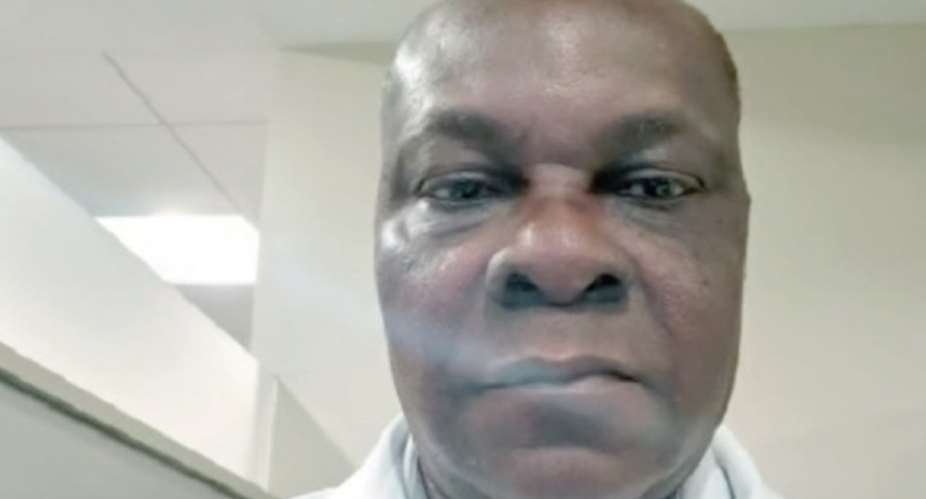
Dr Arthur Kobina Kennedy, a United States-based Ghanaian physician and former presidential aspirant of the New Patriotic Party (NPP), has criticised the findings of the Prof Agyeman Badu Akosa Committee on the death of 29-year-old engineer Charles Amissah.
While acknowledging the efforts of the committee, Dr Kennedy argued that placing blame on a few frontline health workers ignores what he described as a longstanding systemic failure within Ghana’s healthcare sector.
In a statement issued on May 8, 2026, Dr Kennedy said the tragic death of Mr Amissah was not an isolated incident but the predictable consequence of a broken healthcare system and institutional culture.
He rejected suggestions that the committee’s findings exposed anything new, noting that the “no bed syndrome” has existed in Ghana’s health system for decades, even before Prof Akosa’s tenure as Director General of the Ghana Health Service.
“The idea that the findings of the committee are new is astonishing,” Dr Kennedy stated, describing the crisis as the result of years of institutional neglect by successive governments.
The committee was established to investigate the circumstances surrounding the death of Charles Amissah, who died on February 6, 2026, in an ambulance after reportedly being denied emergency treatment at the Police Hospital, the Greater Accra Regional Hospital, and the Korle Bu Teaching Hospital.
Although he arrived alive at all three health facilities, he was allegedly refused treatment because of claims that there were no available beds.
The Prof Akosa committee concluded in its report that Mr Amissah died from avoidable blood loss caused by what it described as “medical neglect.”
The report recommended disciplinary action against three doctors and three triage nurses involved in the case.
However, Dr Kennedy argued that focusing on a few healthcare professionals amounted to scapegoating frontline workers while shielding senior officials and policymakers from responsibility.
“The idea that three bad doctors and three bad triage nurses in three of our best hospitals just happened to be at work on this particular day beggars belief,” he stated.
According to him, the health professionals involved were operating within a system that has normalised delayed emergency care, weak triage structures, and poor institutional compassion.
He maintained that on the day of the incident, the healthcare system functioned exactly as it had been structured to function — “inefficiently and without compassion.”
Dr Kennedy further criticised generations of political leaders for failing to address the persistent “no bed syndrome” and the “cash and carry” system in the country’s healthcare delivery.
He called for major structural reforms to prevent similar incidents in future.
Among the reforms he proposed was a complete overhaul of the ambulance service to eliminate the practice of demanding fuel money during emergencies and to ensure that all ambulances are staffed with trained emergency medical technicians.
He also called for a national health reform law that would compel hospitals to maintain adequate preparedness for common emergencies such as trauma cases, strokes, and heart attacks.
Additionally, he advocated greater administrative accountability, insisting that senior hospital administrators and political leaders should be held responsible for inadequate equipment and bed shortages instead of placing the blame solely on healthcare workers at the bedside.
Dr Kennedy noted that in countries such as Spain and Portugal, failures of this nature often result in accountability at the highest political and administrative levels.
While expressing hope that the committee’s recommendations would be implemented, he warned that the country would continue to witness similar tragedies unless the deeper structural problems within the healthcare system are addressed.
“When these are done,” he stated, “hopefully, our leaders will abandon the practice of heading abroad whenever they are sick.”
 National Teaching Council to phase out unqualified teachers with new fast-track ...
 GES advocates replacement of Women’s Commissioner role with Gender Commissioner ...
 Ellembelle DCE laments vandalism of NDC party office project at Awiaso Junction
 Tension rises at Central Tongu District assembly as man attempts to allegedly at...
 Dr Arthur Kennedy criticises Akosa Committee findings on Charles Amissah’s death
 'People expect results' — Mamponghene tells Mahama on affordable housing
 Dozens of Nigerian fishermen feared dead after Chad army strikes jihadists: loca...
 NDC sleepwalking into 2028 defeat due to deep internal greed, neglect — GFL warn...
 CHRAJ empowers Pantang nursing and midwifery students on anti-corruption


