




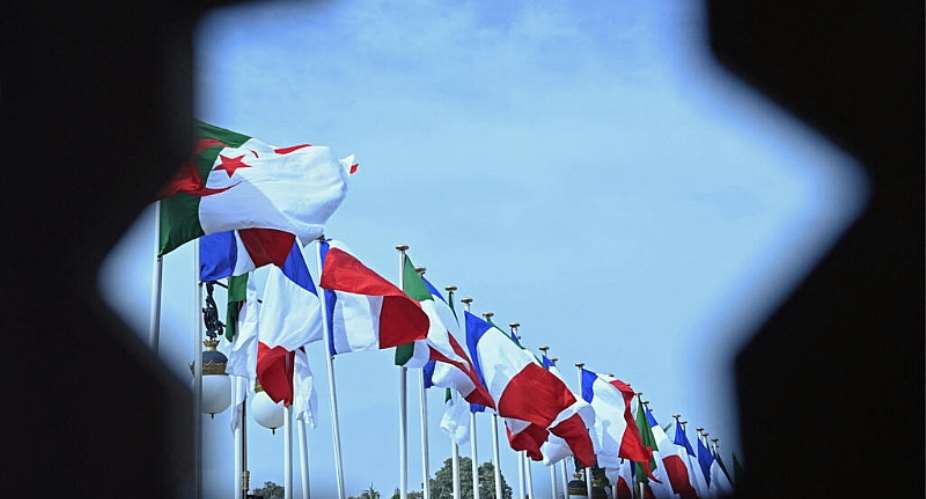
RFI: You've just returned from a four-day visit to Algeria, where you kept a relatively low profile. Perhaps because given tensions over last two years it's best not to say anything that might cause offence?
Patrick Martin: I wouldn't say I kept a low profile. Algerian media, for instance, covered the visit quite extensively. But by accepting the invitation of my Algerian counterpart at the council for Algerian economic renewal (CREA), I do think I've helped to stabilise what are important and historic relations between France and Algeria.
RFI: Since the diplomatic rift in 2024, Algeria has been importing far fewer French products – cereals, cattle, for example. Do you expect those exports to pick up again after your visit?
PM: I certainly hope so. But we shouldn't overstate things either. France remains, for example, Algeria's second-largest foreign investor. I saw some excellent French companies operating there, often run by dual nationals. So yes, our exports have fallen, and others are taking our place. Italy comes to mind, but also Germany and Turkey. We need to be attentive, because Algeria has real potential. It has a sizeable domestic market – nearly 47 million people – and like I said, there are some very strong businesses there. That said, there are a number of issues where the state is interfering, and clearly we would like those to be resolved. French employers' lobby group Medef president Patrick Martin in 2024.
France calls Algeria colonisation law 'hostile' and blow to dialogue
RFI: After Interior Minister Laurent Nuñez's visit, now the head of the Medef – does this mean France and Algeria are patching things up through security and business ties?
PM: I firmly believe, in my own role, in economic diplomacy. That's what led me, for example, to travel to China last year with the foreign minister, to help resolve the very sensitive issue of our Cognac and Armagnac exports. It's also in that spirit that, a few years ago, we helped mend relations between Italy and France when they had briefly deteriorated diplomatically. I also travelled to Morocco several times in the first half of 2024, and I think it's fair to say that, together with our Moroccan counterparts, we helped strengthen state-to-state relations there as well. Without overstating our influence, I do believe economic diplomacy plays an important role in international relations.
RFI: So are you effectively a second foreign minister?
PM: Certainly not. I think the economy is important enough to stand on its own.
RFI: Another major event is the upcoming Africa-France summit in Nairobi, with a large business forum expecting around 2,000 African and French participants. Does this suggest French business is turning away from francophone Africa in favour of English-speaking countries?
PM: No, not at all. I'd point out that five years ago the Medef launched the Alliance of Francophone Employers' Organisations – a business initiative alongside long-standing political and cultural ties. But in the major reshuffle of global trade, we have to take an interest in all kinds of countries, whether they're francophone or not, if there is demand.
China opens tariff-free trade to nearly all African countries
RFI: Are French companies sometimes more cautious than their Chinese or Turkish competitors in certain African markets?
PM: French companies have a strength – and perhaps it's true of the French more generally – when they set up somewhere, they're there for the long term. It hasn't escaped me that the Chinese, in particular, are very aggressive in certain sectors. But we also see that they can leave as quickly as they arrived. They're highly competitive because they are very predatory, very aggressive on pricing. We're fairly convinced that, in a number of cases, on major contracts, they are operating at a loss – and that's probably part of a state-driven strategy of influence. A photograph shows the port of Algiers, Algeria, on 16 February, 2026.
RFI: In which sectors, for example?
PM: Infrastructure.
RFI: So they're building stadiums, roads, bridges at a loss?
PM: At the very least, it's hard to see how they're making money at the prices they're offering on certain contracts.
Despite pause on US tariffs, African economies face uncertain future
RFI: On the sidelines of this year's G7 summit in France, the Medef is organising a B7 – a business summit bringing together employers' organisations from the seven richest Western economies. What impact could that have for Africa?
PM: Any impact for Africa would be indirect. Our priority – shared by my counterparts in the United States, Germany, the UK, Japan and Italy – is to restore rules to economic and trade relations, because what we're seeing at the moment is a form of savagery creeping into global trade.
RFI: What are you referring to?
PM: Tariffs. We need international trade, we need well-designed, sensible free trade agreements. Otherwise – to put it simply – the 20 percent of French workers whose jobs depend on exports could see those jobs come under threat. So the seven business organisations I've mentioned are calling for this, and we will be telling our governments that rules need to be restored.
RFI: Would that also benefit American businesses?
PM: Of course. They themselves are unsettled. I won't go any further than that, but they are clearly affected by the back-and-forth decisions their own administration is making in international relations.
This interview, adapted from the original in French by Christophe Boisbouvier, has been lightly edited for clarity

 May 6: Cedi sells at GHS12.10 on forex market, drops to GHS11.25 on BoG interban...
 Release ex-Buffer Stock CEO and wife immediately — Afenyo-Markin to EOCO, AG
 EOCO’s re-arrest of ex-Buffer Stock CEO and wife a face-saving, shameful move — ...
 Delay in operationalising Weija Paediatric Hospital due to misprocurement — Heal...
 My comment on transfer to the north was a slip — Greater Accra Regional Minister...
 BoG gets clean audit opinion but KPMG flags investment risk areas
 Amaniampong SHS student beaten for refusing to attend all-night service
 Ghanaian evacuated from South Africa after xenophobic attacks
 I'll transfer you to North as punishment if you approve illegal buildings—Linda ...
 Former scholarship secretariat boss Dr. Kingsley Agyemang denies BNI arrest


