




Cultural Flaws in Ghanaian and African Leadership – “From Children cannot speak while elders are speaking” at home to Public Account Comm.
The heated exchange at the Public Accounts Committee (PAC) sitting on March 30, 2026, was more than just another parliamentary spat. It exposed a troubling pattern that runs far beyond the walls of Ghana’s legislature. When Hon. Eric Edem Agbana, the Member of Parliament for Ketu North and a member of the committee, pressed a former procurement officer from the Ministry of Food and Agriculture for clarity on who exactly the mysterious “party people” were that allegedly hijacked warehouses and disrupted the distribution of GH¢19 million worth of rice during a dry spell, he was doing what every oversight committee member should do: demanding accountability on public funds.
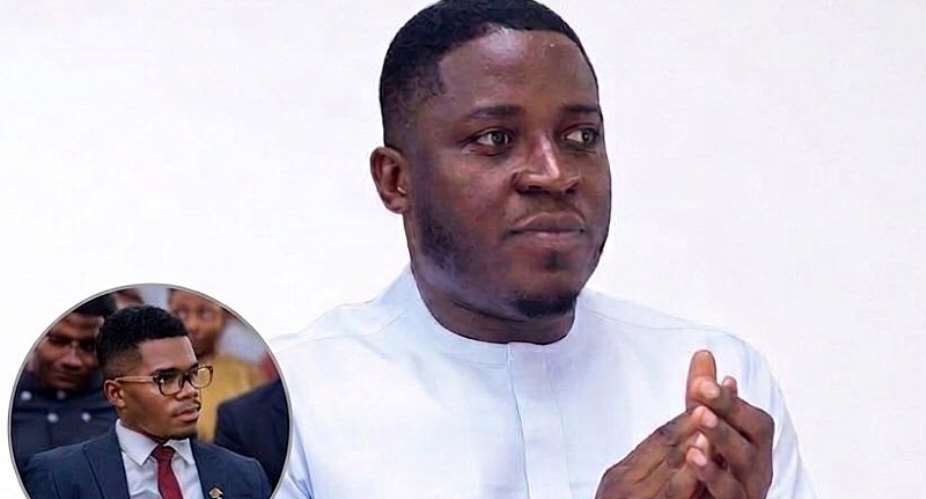
Instead of engaging the substance of the question, the PAC leadership, Chairperson Hon. Abena Osei-Asare and Ranking Member Hon. Samuel Atta-Mills chose to shut him down. Atta-Mills rebuked Agbana, essentially questioning whether he was accusing the committee of failing in its duties. The chairperson went further, declaring, “I’m in charge here, quiet! Why can’t you guys show a little bit of respect?” and addressing her fellow MP and committee colleague as “young man.” In that moment, the focus shifted from transparency in governance to age-based condescension. A duly elected representative of the people was reduced to his relative youth rather than respected for the office he holds and the legitimate point he was raising.
This was not merely poor decorum. It was a classic case of sidelining the salient issue the potential politicisation and sabotage of public procurement in favour of enforcing hierarchical control. By dismissing Agbana’s persistence, the leadership overlooked the very essence of the PAC’s mandate: to probe without fear or favour. The “young man” label was not a slip of the tongue; it was a deliberate diminishment of a colleague’s status, treating him as a junior subordinate rather than an equal stakeholder in the democratic process.
Such behavior is, unfortunately, not isolated to Parliament. It is deeply ingrained in Ghanaian and to a larger extent African social fabric. We have normalised a culture where age and perceived experience automatically trump competence, evidence, or the right to speak. Consider the everyday adage that many of us grew up hearing (often phrased as “when a child and an adult have an issue, the adult is always right, regardless”). In family disputes, schoolyard conflicts, or community disagreements, the younger person is expected to defer silently, even when their rights are violated or their perspective is valid. Children are frequently told to “shut up” during adult conversations, even when they have salient contributions to make. The message is clear: your input only matters once you have “earned” grey hairs or a title that commands automatic deference.
A recent and telling illustration came from the bold interview by young brilliant Okomfo Black, son of renowned musician Mzbel where he shared thoughtful predictions and critiques about the Black Stars ahead of key matches, including insights relevant to games like the one against Germany (and his reaction to Ghana’s recent heavy loss to Austria). While many Ghanaians applauded the youngster for his intelligence, confidence, and bravery, a section of traditional commentators on social media (particularly Facebook) sneered: “What does this small boy know about football?” The dismissal was swift and familiar not based on the merit of his analysis, but on his age and parentage.
These attitudes must not be condoned or accepted. They must be called out, criticised, and actively stopped. When we silence the young whether in homes, schools, media, or the corridors of power, we breed a generation of timid, conformist adults who lack the courage to challenge wrongdoing or innovate. We raise children who internalise that their voice is secondary, their ideas secondary, their potential forever on probation until “elders” approve. This cultural reflex stifles national progress. It explains why so many bright young Ghanaians feel compelled to seek validation abroad rather than contribute boldly at home.
Yet, there is hope and it is shining through the very political realm where this incident occurred. Young leaders like Hon. Eric Edem Agbana, Sammy Gyamfi, the prime Sam George and several others have refused to play by the old rules. They ask the uncomfortable questions, demand evidence over platitudes, and stand firm even when senior figures try to belittle them. Far from being resented, they have earned widespread admiration across party lines precisely because they embody the confident, self-assured youth Ghana desperately needs. Their approach is not disrespect; it is the responsible exercise of democratic duty and intellectual honesty. And again, these categorized young men, the likes of Dr. Frank Amoakohene and those mentioned earlier have gained the admiration of millions of Ghanaians and showed that youngsters can do it better.
The lesson from the PAC drama is clear: respect in public life and in our broader society must be earned through integrity, competence, and service, not automatically granted by age or position.
Addressing a fellow MP as “young man” on the floor of oversight is not only disrespectful to him and his constituents; it is an insult to the democratic institutions we claim to uphold which calls for an unqualified apology to be rendered. It is time we retired these outdated hierarchies.
Let us celebrate and protect the voices of the young who dare to speak truth to power whether in Parliament, on the football pitch, or around the family table. Only then can we build a Ghana, and indeed an Africa, where every citizen, regardless of age, feels empowered to stand tall, speak boldly, and contribute meaningfully to the nation’s future. The alternative is a society that remains forever stuck in yesterday’s deference while tomorrow passes us by.
Ebenezer Nii Kwartey Quartey
64th Legal Affairs Commissioner, KNUST.

 Ghana lost 1.1 million ounces of gold to smuggling in 2023 – GHEITI report
 Stranded Ghanaian fishermen narrate how they ate fresh fish, drunk sea water to ...
 How notorious armed robber died on the way whiles leading police to arrest accom...
 'We must continuously improve cargo handling, coordination among port operators'...
 GPHA honours industry players, former leaders and staff at 40th anniversary awar...
 Nii Lante Vanderpuye confident of winning NDC national chairmanship despite Gold...
 Agalga dismisses critics, assures Builsa North of progress on Sandema–Wiaga Road
 NDC Lawra constituency polls: We are not going to disappoint you – Chairman Bati...
 Ghana's President Mahama calls for new West African security accord, stronger AU...


