




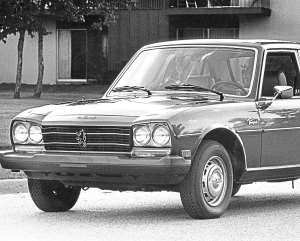
The history of Nigeria’s automobile industry cannot be told without highlighting the role of Peugeot cars and the government-backed assembly plant known as Peugeot Automobile Nigeria. During the 1970s through the 1990s, Peugeot vehicles became a dominant force on Nigerian roads, especially as official government cars.
Origin of Peugeot: A French Brand
Peugeot is originally a product of France, manufactured by the company Peugeot. Known for durability and simple engineering, Peugeot cars were well suited to Nigeria’s road conditions and climate.
Because of these qualities, the Nigerian government chose Peugeot as a key partner in developing the local automobile industry.
Establishment of PAN in Nigeria
In 1972, the Nigerian government partnered with Peugeot to establish Peugeot Automobile Nigeria in Kaduna State.
Objectives:
Promote industrialization
Reduce dependence on imported vehicles
Create jobs for Nigerians
Encourage technology transfer
PAN assembled Peugeot vehicles locally rather than importing fully built cars.
Peugeot as Government Cars
During this period, Peugeot cars became the official vehicles for government use across Nigeria.
Common models included:
Peugeot 404
Peugeot 504
These cars were widely used by:
Civil servants
Military officers
Government ministries and agencies
The Peugeot 504, in particular, became a symbol of authority, reliability, and prestige. Seeing a Peugeot often meant the presence of a government official.
Impact on Nigeria’s Economy and People
Job Creation
PAN provided employment for thousands of Nigerians:
Factory workers
Engineers
Technicians
It also trained local workers in automobile assembly and maintenance.
Development of Local Industry
The presence of PAN encouraged:
Production of spare parts locally
Growth of mechanic workshops
Expansion of transport services
This helped build a strong automotive support system in Nigeria.
Affordability and Accessibility
Locally assembled Peugeot cars were:
More affordable than fully imported vehicles
Easier to maintain due to available spare parts
This made them popular among middle-class Nigerians and taxi operators.
Social Importance
Owning a Peugeot car became a sign of success and stability. Many families aspired to own one, while government workers relied heavily on them for official and personal use.
Challenges and Decline
Despite its early success, PAN faced several problems:
Economic crisis in the 1980s
Currency devaluation
Dependence on imported components
Poor policy continuity
These factors reduced production and weakened Nigeria’s automobile industry.
Legacy of Peugeot in Nigeria
Even today, the legacy of Peugeot remains strong:
The Peugeot 504 is still remembered for its strength and durability
Many Nigerian mechanics built their expertise on Peugeot vehicles
PAN symbolizes a time when Nigeria had a thriving local automobile industry
Conclusion
Peugeot, a car brand from France, played a major role in shaping Nigeria’s automobile industry through Peugeot Automobile Nigeria. With strong government support, Peugeot cars became the standard official vehicles and a common sight across the country. This period highlights how foreign partnerships and local policies can drive industrial growth and influence everyday life.
Mustapha Bature Sallama.
Medical/ Science Communicator,
Private Investigator, Criminal investigation and Intelligence Analysis.
International Conflict Management and Peace Building.USIP
[email protected]
+233-555-275-880

 One dead, fire officer hospitalised after bee attack at Quarry Site in Sokode Gb...
 Israel and Iran step back from further strikes after renewed clashes
 Patients stranded as doctors, nurses refuse to see new patients over KATH CEO su...
 Avenor Rural Bank CEO’s house destroyed by fire
 Three arrested in Winneba for illegal mining near GWL water lines
 Two pupils of Alice Elite Academy laid to rest after fatal school bus crash
 Here are areas to be affected by ECG's planned maintenance on Tuesday
 Family of civil engineer killed in alleged military shooting demands justice
 SHS teacher allegedly beats female student over unpaid hostel fees
 Blow to EU defence cooperation as France, Germany abandon joint fighter jet prog...


