




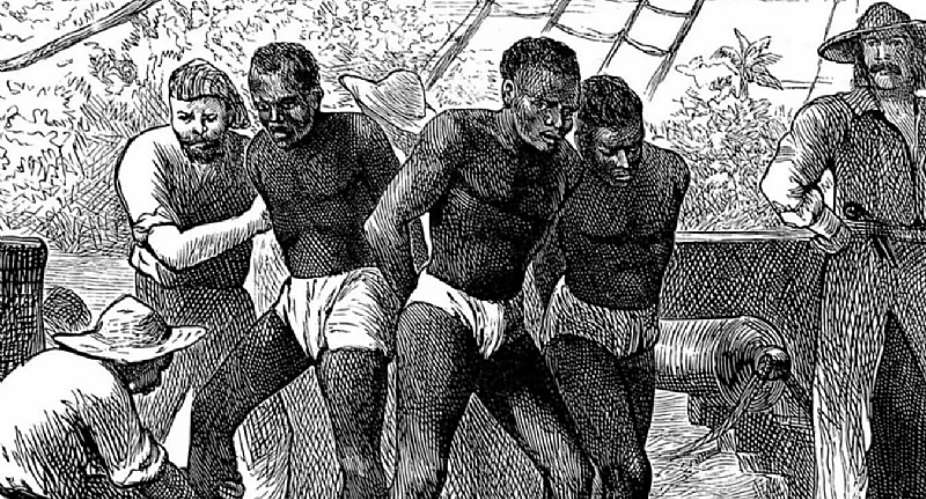
The question of whether to classify slavery as a crime against humanity and whether reparations are appropriate remains among the most complex moral, legal, and historical debates in contemporary discourse. This discussion demands a disciplined, analytical approach that recognizes the multiplicity of actors, the historical context, and the enduring consequences of the transatlantic trade. It also requires an honest examination of dissenting views, particularly regarding feasibility, accountability, and the moral foundations of justice.
I. Classification as a Crime Against Humanity
The modern category of “crime against humanity” was formalized after the Second World War, notably through the Nuremberg Trials, to describe acts so egregious that they violate the very essence of human dignity. The transatlantic slave trade exhibits many characteristics aligned with this classification: it was systematic, organized, transnational, and inflicted mass dehumanization.
Critics, however, highlight a central legal tension: slavery was, at the time, legal under most national and international laws. Retroactively applying the label “crime against humanity” risks anachronism and selective application, since numerous other historical atrocities—such as conquests, imperial expansions, and forced labor systems—are not similarly categorized. The question thus arises: is the classification a moral declaration clothed in legal terminology? From a strictly legal standpoint, the retroactive application is contestable; from a moral and ethical perspective, the classification is compelling.
II. Origins of Slavery: Internal and External Causation
Slavery in Africa predates European involvement by centuries. Many African polities—including the Ashanti Confederacy, Kingdom of Dahomey, Oyo Empire, Sokoto Caliphate, Bono State, Kong Empire, Kongo and Kasanje kingdoms, the Imamate of Futa Jallon and Futa Toro, the Swahili Coast and Sultanate of Zanzibar, the Kanem-Bornu Empire, and roving intermediaries like the Imbangala and Nyamwezi—actively participated in capturing, trading, and managing enslaved people. These states often engaged in militaristic campaigns, raiding neighboring communities, and supplying captives to local and European markets. Merchant elites in regions like the Niger Delta acted as intermediaries between inland communities and European traders.
African participation was significant: historians estimate that around 90% of Africans sold into the transatlantic trade were enslaved by fellow Africans. This points to a shared responsibility. Yet, it is essential to recognize that European actors—Portugal, Britain, France, the Netherlands, Spain, and Denmark—drove the industrialization, permanence, and global scale of slavery. Without European demand, financing, maritime logistics, and plantation economies, slavery would have remained a localized practice. While African polities provided captives, European involvement amplified extraction, racialization, and profit on a scale previously unseen. Responsibility, therefore, is shared but unequal.
III. The Debate on Reparations: Feasibility and Morality
Calls for reparations face formidable logistical and moral challenges. Temporal distance complicates accountability; no direct perpetrators or victims survive today, making it difficult to assign individual or national responsibility. Determining who qualifies as a beneficiary or payer is equally complex. Furthermore, some descendants of enslaved or slave-trading societies now live in Western countries and benefit from contemporary economies, adding another layer of complexity.
Critics argue that an emphasis on reparations risks fostering dependency and externalization of responsibility, potentially undermining agency, discipline, and national development. Proponents counter that structural inequalities today—economic disparities, institutional weaknesses, and enduring social consequences—are rooted in historical exploitation. Thus, historical recognition can inform policy, strengthen identity, and support meaningful reparative actions. The tension is clear: acknowledgment of history must not replace present responsibility, but ignoring history distorts the foundations of contemporary society.
IV. Targeting Responsibility: Why the West?
The focus on Western nations arises from the disproportionate role these states played in creating, financing, and sustaining the transatlantic system. Western economies were built on slave-generated wealth; modern global inequalities trace their roots to this period. Yet, selective accountability remains contentious. Many African intermediaries and internal actors are excluded from reparative claims, even though they participated directly in capturing and selling people. Additionally, modern beneficiaries are not identical to historical actors, complicating direct claims. Responsibility, therefore, must be viewed through the lens of historical benefit and system creation, not just immediate participation.
V. Dependency Versus Structural Justice
The concern over dependency emphasizes the risk of overemphasizing historical grievances at the expense of self-determination and present action. National development relies on discipline, institutional reform, and internal accountability. Ignoring history, however, risks misdiagnosing contemporary challenges. Recognition of past injustices can strengthen national identity and inform strategic reforms. The debate is not binary; historical consciousness can either empower or entrench victimhood depending on its framing and utilization.
VI. International Politics and the United Nations
The March 2026 UN resolution, supported by Ghana, officially recognized the transatlantic slave trade as the “gravest crime against humanity” and recommended reparations. Opposition from the United States, Argentina, and Israel, alongside widespread abstentions by European states, reflects political calculations as much as principled positions. Economic exposure, legal liability, and geopolitical considerations shape these decisions. Symbolic recognition is important, yet global consensus remains incomplete, highlighting the intersection of principle and power politics.
VII. Philosophical Reflection: Justice Across Time
At its core, this discourse raises the question: what constitutes justice across centuries? If justice is timeless, historical wrongs demand acknowledgment and, where feasible, restitution. If justice is context-bound, retroactive judgment becomes problematic. A nuanced approach recognizes that while direct legal accountability may be impossible, moral responsibility, structural consequences, and historical memory remain critical to shaping present and future society.
VIII. Synthesis: A Disciplined Position
A rigorous, non-emotional synthesis acknowledges that slavery, particularly in its transatlantic form, meets the moral threshold of a crime against humanity. Legal classification is complex due to retroactivity. Responsibility is distributed among African and European actors but remains unequal; European states drove scale, permanence, and economic exploitation. Reparations face serious conceptual and practical challenges, yet ignoring historical injustice risks intellectual and societal dishonesty.
A society must remember clearly and act decisively. Memory without action leads to paralysis; action without memory results in blindness. The debate over slavery is not merely about financial redress—it is about shaping identity, understanding structural consequences, and determining what forms of justice—symbolic, institutional, or economic—strengthen societies today.


 COPEC Boss Urges GoldBod CEO to Embrace Criticism for Better Performance
 Otumfuo Departs Kumasi for Two‑Week Working Visit to the United States
 Minority Challenges GoldBod CEO, Signals Next Steps
 COKA Urges NPP Executives to Return to Core Values and Rebuild for 2028
 'We don't reject partnerships, but those partnerships must be on our terms' — Ma...
 Police arrest suspect in GH¢1.1m fake gold deal in Berekum
 C/R: Wildlife Guard shot dead by suspected poacher at Kakum Forest Reserve
 Here are areas affected by planned power interruption on Sunday from 3 AM to 6 P...
 Upper East youth raise concern over ‘snail-paced’ development
 Gold buyer reportedly shot dead in daylight robbery at Manso Adubia

